1
1999
... 海洋是一个不断运动的巨大水体,存在多种尺度的运动.大规模、相对稳定的海水流动称为海流[1],在10~100 km量级水体旋转的流动现象称为中尺度涡旋(mesoscale eddy)[2].在北半球通常表现出顺时针和逆时针旋转,分别称为反气旋涡旋(Anticyclonic Eddy, AC)和气旋涡旋(Cyclonic Eddy, CE)(南半球方向相反).时间尺度为月到年,是海洋中的“天气”现象. ...
1
1999
... 海洋是一个不断运动的巨大水体,存在多种尺度的运动.大规模、相对稳定的海水流动称为海流[1],在10~100 km量级水体旋转的流动现象称为中尺度涡旋(mesoscale eddy)[2].在北半球通常表现出顺时针和逆时针旋转,分别称为反气旋涡旋(Anticyclonic Eddy, AC)和气旋涡旋(Cyclonic Eddy, CE)(南半球方向相反).时间尺度为月到年,是海洋中的“天气”现象. ...
Mesoscale eddies
1
2019
... 海洋是一个不断运动的巨大水体,存在多种尺度的运动.大规模、相对稳定的海水流动称为海流[1],在10~100 km量级水体旋转的流动现象称为中尺度涡旋(mesoscale eddy)[2].在北半球通常表现出顺时针和逆时针旋转,分别称为反气旋涡旋(Anticyclonic Eddy, AC)和气旋涡旋(Cyclonic Eddy, CE)(南半球方向相反).时间尺度为月到年,是海洋中的“天气”现象. ...
Some further deep current measurements using neutrally-buoyant floats
1
1957
... 在发现中尺度涡以前,人们一直认为海洋在缓慢而又规则地运动.1955年,斯华罗引进中性浮力的声学浮标(也称作斯华罗浮标)测量中深层洋流[3].1959年西北大西洋深海观测实验在百慕大以西马尾藻海深处释放了这种浮标,发现浮标并没有像预测的那样向北缓慢漂移,而是快速而不规则地运动.观测实验说明涡旋运动比长期平均的环流要快得多[4]. ...
Velocity measurements in the deep water of the western North Atlantic: Summary
1
1962
... 在发现中尺度涡以前,人们一直认为海洋在缓慢而又规则地运动.1955年,斯华罗引进中性浮力的声学浮标(也称作斯华罗浮标)测量中深层洋流[3].1959年西北大西洋深海观测实验在百慕大以西马尾藻海深处释放了这种浮标,发现浮标并没有像预测的那样向北缓慢漂移,而是快速而不规则地运动.观测实验说明涡旋运动比长期平均的环流要快得多[4]. ...
The mid-ocean dynamics experiment
1
1978
... 利用浮标发现的中尺度变化或海洋涡旋(百公里量级),从根本上改变了人们对深海流的认知,激发了人们的进一步研究热情.为此,20世纪70年代多国科学家联合设计了中纬度海洋动力学实验(Mid-Ocean Dynamics Experiment,MODE)来调查中纬度的中尺度涡旋[5].观测表明,大洋内部叠加在弱的洋盆尺度平均环流上的中尺度涡旋具有强的能量和组织化的结构.在北大西洋西部,存在一个大约100天周期和70 km尺度的涡旋带:其水平上各向同性,垂直可深至整层海水.该实验为大洋涡旋的存在提供了确凿的证据,并为以后的多边形实验(POLYgon Mid-Ocean Dynamics Experiment,POLYMODE)[6]提供了基础. ...
Large-scale multi-buoy experiment in the tropical Atlantic
1
1971
... 利用浮标发现的中尺度变化或海洋涡旋(百公里量级),从根本上改变了人们对深海流的认知,激发了人们的进一步研究热情.为此,20世纪70年代多国科学家联合设计了中纬度海洋动力学实验(Mid-Ocean Dynamics Experiment,MODE)来调查中纬度的中尺度涡旋[5].观测表明,大洋内部叠加在弱的洋盆尺度平均环流上的中尺度涡旋具有强的能量和组织化的结构.在北大西洋西部,存在一个大约100天周期和70 km尺度的涡旋带:其水平上各向同性,垂直可深至整层海水.该实验为大洋涡旋的存在提供了确凿的证据,并为以后的多边形实验(POLYgon Mid-Ocean Dynamics Experiment,POLYMODE)[6]提供了基础. ...
Mechanisms of physical-biological-biogeochemical interaction at the oceanic mesoscale
4
2016
... 中尺度涡旋通常携带与周围环境不同特性的水体,使得它们能够在海洋中传输热、盐和碳等.涡旋的水动力特性在向海岸地带和表层海洋提供营养方面起着重要作用,会导致浮游生物大量繁殖[7].中尺度涡旋在全球海洋热量平衡中发挥着重要作用,通常向上输送热量以平衡平均流和扩散向海洋深处传输的热量[8]. ...
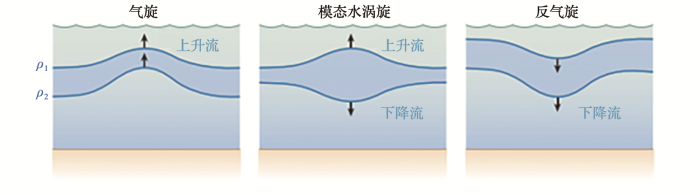
... 对中尺度涡旋三维结构认识最直接有效的手段是海上现场调查.早期的观测表明[31],在海表以下存在着流速很强、流向反向的海流,这种中尺度涡具有很强的斜压性,且满足准地转平衡关系[32].持续时间超过10年的大西洋百慕大时间序列研究(Bermuda Atlantic Time-series Study, BATS)[33]表明,中尺度涡三维结构至少有3种形态:气旋、反气旋和模态水涡旋[7,34,35](图2).气旋涡旋抬升季节和永久性跃层、反气旋涡旋下压跃层,模态水涡旋(也称次表层涡旋、温跃层内涡旋)呈现透镜状,即抬升季节性跃层、下压永久性跃层.Dong等[36]将流矢量法推广到三维涡旋的探测,发现南加州湾能够穿透400 m的三维涡旋分为碗状、腰鼓状和圆台状3类. ...
... [
7]
Schematic diagram of classifications of mesoscale eddies<sup>[<xref ref-type="bibr" rid="R7">7</xref>]</sup>Fig.2![]()
Hu等[37]对南海西南部一个涡旋对(CE和AC)进行了调查,该涡旋在水平和垂直方向上都不对称.CE靠近AC的东南侧流速较强,随着深度增加,涡旋逐渐减弱,且中心轴是倾斜的.Holte等[38]对东南太平洋海岸生成的涡旋进行了现场调查,发现CE 和AC在26.5 kg/m3等密度面上呈现正的盐度异常,意味着涡旋可以捕获并输送沿岸水离岸运动.Kurczyn等[39]对东北太平洋热带—副热带海域的一个CE 进行了观测,该气旋生成与沿海上升流事件期间.在其生长阶段,涡旋深达750 m,并在100 m水柱内混合水体,涡旋轴从海面到水下向东偏移约1.5个经度,因此在上层产生了南向经向热传输.Mao等[40]在距离澳大利亚西海岸几百公里的印度洋东南部的一次走航观测中发现来自于利文海流的两个反向旋转的中尺度涡旋.这两个涡旋具有不同的垂直结构:AC在200 m以上具有较强的垂直剪切,在混合层下方具有较小的分层温跃层,而CE在上部500 m处具有更多的正压结构.Zhang等[41]精细化观测了黑潮延伸体(Kuroshio Extension,KE)海域一个冷涡,发现温度异常在主温跃层中表现出垂直单极锥状结构,最高降温达7.3 ℃;盐度异常显示为垂直双核结构,主温跃层为盐度负异常,北太平洋中层水为盐度正异常. ...
... [
7]
Fig.2![]()
Hu等[37]对南海西南部一个涡旋对(CE和AC)进行了调查,该涡旋在水平和垂直方向上都不对称.CE靠近AC的东南侧流速较强,随着深度增加,涡旋逐渐减弱,且中心轴是倾斜的.Holte等[38]对东南太平洋海岸生成的涡旋进行了现场调查,发现CE 和AC在26.5 kg/m3等密度面上呈现正的盐度异常,意味着涡旋可以捕获并输送沿岸水离岸运动.Kurczyn等[39]对东北太平洋热带—副热带海域的一个CE 进行了观测,该气旋生成与沿海上升流事件期间.在其生长阶段,涡旋深达750 m,并在100 m水柱内混合水体,涡旋轴从海面到水下向东偏移约1.5个经度,因此在上层产生了南向经向热传输.Mao等[40]在距离澳大利亚西海岸几百公里的印度洋东南部的一次走航观测中发现来自于利文海流的两个反向旋转的中尺度涡旋.这两个涡旋具有不同的垂直结构:AC在200 m以上具有较强的垂直剪切,在混合层下方具有较小的分层温跃层,而CE在上部500 m处具有更多的正压结构.Zhang等[41]精细化观测了黑潮延伸体(Kuroshio Extension,KE)海域一个冷涡,发现温度异常在主温跃层中表现出垂直单极锥状结构,最高降温达7.3 ℃;盐度异常显示为垂直双核结构,主温跃层为盐度负异常,北太平洋中层水为盐度正异常. ...
Vertical heat transport in eddying ocean models
1
2008
... 中尺度涡旋通常携带与周围环境不同特性的水体,使得它们能够在海洋中传输热、盐和碳等.涡旋的水动力特性在向海岸地带和表层海洋提供营养方面起着重要作用,会导致浮游生物大量繁殖[7].中尺度涡旋在全球海洋热量平衡中发挥着重要作用,通常向上输送热量以平衡平均流和扩散向海洋深处传输的热量[8]. ...
Eddy dynamics from satellite altimetry
1
2010
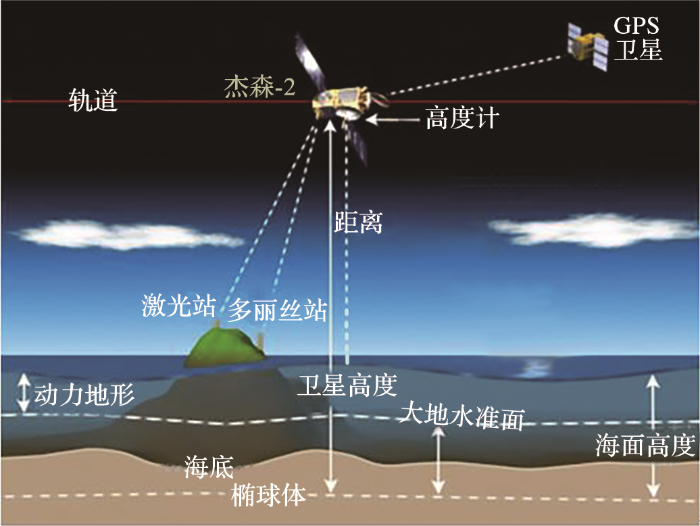
... 自20世纪90年代以来,2个同时在轨的高度计卫星测量的海表面高度异常(Sea Level Anomaly,SLA)数据(图1)为全球海洋中尺度涡的识别提供了前所未有的观测支撑[9].卫星观测中尺度涡的基本原理是涡旋除了强烈的旋转特性之外,还伴随着辐聚辐散运动.AC(CE)内一般为辐聚(辐散)下沉(上升)运动,对应正(负)SLA. ...
Global observations of nonlinear mesoscale eddies
4
2011
... SLA闭合等值线方法的基本原理是利用涡旋的几何特征[10].涡旋中心海水比周围高(AC)或低(CE),形状类似于圆锥体.该方法首先在一个移动窗口内通过寻找内部SLA最大(最小)值来判断可能的中心.之后,对于每一个可能的AC(CE)中心,从其内部通过逐渐减小(增加)SLA向外寻找等值线,最外围包含着涡旋中心的闭合等值线即为涡旋的外边缘. ...
... Chelton等[10]利用该方法对全球中尺度涡进行了详细识别,并统计了相关特征(识别的中尺度涡数据集下载自[11]:https://www.aviso.altimetry.fr/en/data/products/value-added-products/global-mesoscale-eddy-trajectory-product.html). ...
... Chelton等[10]分析了由2台同时工作的高度计卫星测量值融合而成的16年SLA数据,研究了全球海洋的中尺度涡表面特征.下面主要介绍该文的研究成果. ...
... 根据Chelton等[10]的研究成果,总的来说,海洋中CE略多一些,而长寿命和长传播距离的涡旋更倾向于AC.但是在南半球,大振幅(>10 cm)和强旋转(>20 cm/s)的涡旋分布更倾向于CE.相比之下,北半球各个尺度的涡旋都倾向于AC分布.平均而言,大洋中的涡旋并非各向异性.在涡旋2/3范围内,平均形状接近于钟型(高斯)分布.尽管如此,仍有相当多的大涡旋为二项式分布,在动力学上意味着流体运动近似刚性旋转. ...
A new sea surface height-Based code for oceanic mesoscale eddy tracking
1
2014
... Chelton等[10]利用该方法对全球中尺度涡进行了详细识别,并统计了相关特征(识别的中尺度涡数据集下载自[11]:https://www.aviso.altimetry.fr/en/data/products/value-added-products/global-mesoscale-eddy-trajectory-product.html). ...
Identification of marine eddies from altimetric maps
1
2003
... Isern-Fontanet等[12]借鉴数值模式研究中的OW数[13,14]检测流体的旋转和形变的方法,使用卫星高度计资料来自动检测追踪中尺度涡旋.OW数定义如下: ...
Horizontal dispersion of floatable particles in the vicinity of velocity singularities such as convergences
1
1970
... Isern-Fontanet等[12]借鉴数值模式研究中的OW数[13,14]检测流体的旋转和形变的方法,使用卫星高度计资料来自动检测追踪中尺度涡旋.OW数定义如下: ...
Bankruptcy resolution: Direct costs and violation of priority of claims
1
1990
... Isern-Fontanet等[12]借鉴数值模式研究中的OW数[13,14]检测流体的旋转和形变的方法,使用卫星高度计资料来自动检测追踪中尺度涡旋.OW数定义如下: ...
Global observations of large oceanic eddies
1
2007
... OW数方法一般用于检测区域海洋中尺度涡.第一个用来提取全球中尺度涡来自Chelton等[15]的研究,发现全球50%以上的涡旋振幅为5~25 cm,直径为100~200 km,且绝大部分涡旋都是非线性的. ...
Coherent motions in the turbulent boundary layer
1
1991
... WA方法的基本原则是“涡旋存在的必要条件是映射到垂直于涡核的平面上的瞬时流线呈现大致圆形或螺旋形图案”[16],即通过几何图形的方法来识别涡旋.该方法通过SLA极值点作为涡旋的中心.然后,通过流线螺旋式围绕一个中心点来确定涡旋的范围.主要包括两个阶段:通过(为各流线段之间的夹角)判断属于一个完整的涡旋;将属于选定涡流的流线进行聚类,并选定最外围流线作为涡旋的边界.与OW方法类似,该方法的主要缺点是基于SLA获得的地转速度场放大了噪声,尤其在低纬度处被因子放大. ...
Mesoscale eddies off Peru in altimeter records: Identification algorithms and eddy spatio-temporal patterns
1
2008
... Chaigneau等[17]使用WA方法对秘鲁沿岸的中尺度涡进行了识别,发现相比于OW方法,基于流函数拐角的WA方法在这一区域更为精确. ...
A vector geometry-based eddy detection algorithm and its application to a high-resolution numerical model product and high-frequency radar surface velocities in the Southern California Bight
2
2010
... 该方法的基本原理和WA方法类似,即涡旋可以直观地定义为速度场呈现旋转流动的区域[18]:速度矢量围绕中心顺时针或逆时针旋转.流矢量法从以下4个条件筛选涡旋:沿东西方向,南北向流()通过涡旋中心时必须反向,且流速离中心越远越大;沿着南北方向,东西向流(u)通过涡旋中心时必须反向,且流速离中心越远越大;和的旋转方向必须同向,流速大小在涡旋中心有个极小值;在涡旋中心周围,流矢量的方向必须以恒定的旋转方向改变,并且2个相邻速度矢量的方向必须位于相同或2个相邻的象限内(4个象限定义为南北和东西轴:第一象限包含从东到北的所有方向,第二象限包含从北到西的方向,第三象限包括从西到南的方向,第四象限包括从西到南的方向). ...
... 使用流场矢量几何特征识别和追踪中尺度涡方法可以很好地适用于高分辨率数值模式和高频雷达观测的流场数据,并可推广到三维涡旋的识别.该方法应用海表面高度数据识别中尺度涡存在的主要问题为:使用到2个参数(a和b)来约束涡旋的选取,尽管为算法提供了灵活性,但需仔细选择,且值的选取依赖于流场数据集的空间分辨率;对不同尺寸涡旋的识别有一定的敏感性,在小涡旋的识别方面存在局限性.Nencioli等[18]使用该方法对高分辨率数值模式和高频雷达测量海表面流场进行中尺度涡识别,证明该方法具有较好的适用性. ...
Automated eddy detection using geometric approach, eddy datasets and their application
1
2017
... 本文介绍的涡旋识别方法都属于欧拉方法[19].此外,还可以使用拉格朗日轨迹中的“回路”部分对全球漂流浮标数据(Global Drifter Program,GDP)来探测涡旋(详见参考文献[22]). ...
海洋涡旋自动探测几何方法, 涡旋数据库及其应用
1
2017
... 本文介绍的涡旋识别方法都属于欧拉方法[19].此外,还可以使用拉格朗日轨迹中的“回路”部分对全球漂流浮标数据(Global Drifter Program,GDP)来探测涡旋(详见参考文献[22]). ...
Cambridge:Cambridge University Press
0
2007
A scheme to identify loops from trajectories of oceanic surface drifters: An application in the Kuroshio extension region
0
2011
1
2015
... 本文介绍的涡旋识别方法都属于欧拉方法[19].此外,还可以使用拉格朗日轨迹中的“回路”部分对全球漂流浮标数据(Global Drifter Program,GDP)来探测涡旋(详见参考文献[22]). ...
1
2015
... 本文介绍的涡旋识别方法都属于欧拉方法[19].此外,还可以使用拉格朗日轨迹中的“回路”部分对全球漂流浮标数据(Global Drifter Program,GDP)来探测涡旋(详见参考文献[22]). ...
Global observations of oceanic Rossby waves
1
1996
... 由于中尺度涡旋与一阶斜压Rossby波有众多相似的地方,如在SLA都表现为高低交替分布、以相近的传播速度西传等,早期利用单个卫星高度计将SLA西传信号归结为Rossby波信号[23].但由于线性Rossby波只能传递能量,无法传输质点,这也是线性波动和非线性涡旋的一个本质区别.此外,使用SLA信号得出的传播速度比经典Rossby波相速度快20%~30%.风应力的强迫、海洋中存在非静止的基流、海底地形、Rossby波的不稳定等[24]等理论被提出来解释这种“加速”现象. ...
Rossby waves in the North Pacific Ocean: A review
1
2009
... 由于中尺度涡旋与一阶斜压Rossby波有众多相似的地方,如在SLA都表现为高低交替分布、以相近的传播速度西传等,早期利用单个卫星高度计将SLA西传信号归结为Rossby波信号[23].但由于线性Rossby波只能传递能量,无法传输质点,这也是线性波动和非线性涡旋的一个本质区别.此外,使用SLA信号得出的传播速度比经典Rossby波相速度快20%~30%.风应力的强迫、海洋中存在非静止的基流、海底地形、Rossby波的不稳定等[24]等理论被提出来解释这种“加速”现象. ...
北太平洋 Rossby 波研究进展
1
2009
... 由于中尺度涡旋与一阶斜压Rossby波有众多相似的地方,如在SLA都表现为高低交替分布、以相近的传播速度西传等,早期利用单个卫星高度计将SLA西传信号归结为Rossby波信号[23].但由于线性Rossby波只能传递能量,无法传输质点,这也是线性波动和非线性涡旋的一个本质区别.此外,使用SLA信号得出的传播速度比经典Rossby波相速度快20%~30%.风应力的强迫、海洋中存在非静止的基流、海底地形、Rossby波的不稳定等[24]等理论被提出来解释这种“加速”现象. ...
Influence of mesoscale eddies on new production in the Sargasso Sea
1
1998
... 根据判据/(为涡旋外围地转流速最大一圈的平均值,为涡旋平移速度)得出基本所有热带(20°S~20°N)以外的中尺度涡均为非线性./>1表示涡旋内部可以捕获质点随着涡旋一起移动,如营养盐[25]、叶绿素浓度[26]、水量[27]、盐度和热量[28]等.热带外涡旋大部分为高度非线性,其中48%的涡旋/>5,21%的涡旋/>10.即使在热带,也有近90%的涡旋为非线性. ...
The influence of nonlinear mesoscale eddies on near-surface oceanic chlorophyll
1
2011
... 根据判据/(为涡旋外围地转流速最大一圈的平均值,为涡旋平移速度)得出基本所有热带(20°S~20°N)以外的中尺度涡均为非线性./>1表示涡旋内部可以捕获质点随着涡旋一起移动,如营养盐[25]、叶绿素浓度[26]、水量[27]、盐度和热量[28]等.热带外涡旋大部分为高度非线性,其中48%的涡旋/>5,21%的涡旋/>10.即使在热带,也有近90%的涡旋为非线性. ...
Oceanic mass transport by mesoscale eddies
1
2014
... 根据判据/(为涡旋外围地转流速最大一圈的平均值,为涡旋平移速度)得出基本所有热带(20°S~20°N)以外的中尺度涡均为非线性./>1表示涡旋内部可以捕获质点随着涡旋一起移动,如营养盐[25]、叶绿素浓度[26]、水量[27]、盐度和热量[28]等.热带外涡旋大部分为高度非线性,其中48%的涡旋/>5,21%的涡旋/>10.即使在热带,也有近90%的涡旋为非线性. ...
Global heat and salt transports by eddy movement
1
2014
... 根据判据/(为涡旋外围地转流速最大一圈的平均值,为涡旋平移速度)得出基本所有热带(20°S~20°N)以外的中尺度涡均为非线性./>1表示涡旋内部可以捕获质点随着涡旋一起移动,如营养盐[25]、叶绿素浓度[26]、水量[27]、盐度和热量[28]等.热带外涡旋大部分为高度非线性,其中48%的涡旋/>5,21%的涡旋/>10.即使在热带,也有近90%的涡旋为非线性. ...
On the β-induced movement of isolated baroclinic eddies
2
1981
... 另外一个支持将观测到的SLA西传特征解释为非线性涡旋的证据是它们几近正西方传播,只具有小径向偏转(分别为气旋极向和反气旋赤道向),传播速度几乎等于长斜压Rossby波相速度.这些特征与非线性涡旋的理论预测一致[29,30].虽然传播速度对涡极性没有明显的依赖性,但相对于长Rossby波相速度,涡旋速度在南半球比北半球快约20%. ...
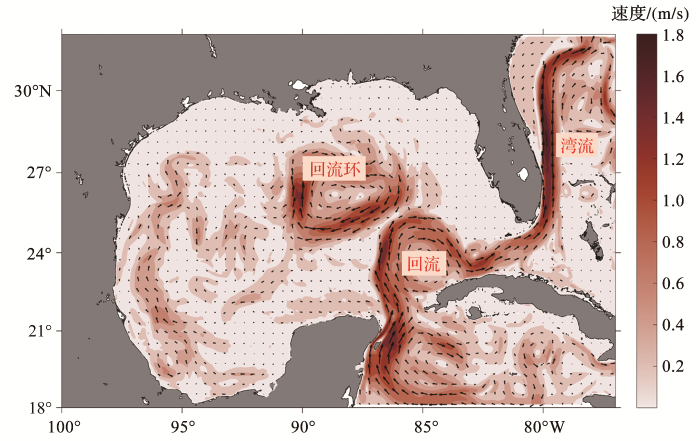
... 海洋中尺度涡的生成、演变和消亡是一个复杂的非线性问题.中尺度涡生成所需的能量来源于有效位能的释放(斜压不稳定过程)和平均流的水平剪切(正压不稳定过程)等[64].海洋中尺度涡一旦生成,在效应(科氏力随纬度变化)作用下向西传播[29,30],但会稍微的南北向偏离(AC向赤道、CE向极地)[65],造成中尺度涡耗散、并最终消亡的物理过程包括西边界流[66]、海气相互作用[67]、激发惯性—重力内波[68]和地形等.由于对中尺度涡生消演变过程中能量收支的认识仍存在不足,海洋环流数值模式对中尺度涡的模拟普遍存在“过度耗散”问题[69],即模式中的涡旋动能弱于观测值.本节从涡旋的生成、演变和消亡角度介绍两类普遍存在于海洋中的涡旋,包括墨西哥湾的回流环和大西洋的地中海涡旋. ...
Westward motion of mesoscale eddies
2
1990
... 另外一个支持将观测到的SLA西传特征解释为非线性涡旋的证据是它们几近正西方传播,只具有小径向偏转(分别为气旋极向和反气旋赤道向),传播速度几乎等于长斜压Rossby波相速度.这些特征与非线性涡旋的理论预测一致[29,30].虽然传播速度对涡极性没有明显的依赖性,但相对于长Rossby波相速度,涡旋速度在南半球比北半球快约20%. ...
... 海洋中尺度涡的生成、演变和消亡是一个复杂的非线性问题.中尺度涡生成所需的能量来源于有效位能的释放(斜压不稳定过程)和平均流的水平剪切(正压不稳定过程)等[64].海洋中尺度涡一旦生成,在效应(科氏力随纬度变化)作用下向西传播[29,30],但会稍微的南北向偏离(AC向赤道、CE向极地)[65],造成中尺度涡耗散、并最终消亡的物理过程包括西边界流[66]、海气相互作用[67]、激发惯性—重力内波[68]和地形等.由于对中尺度涡生消演变过程中能量收支的认识仍存在不足,海洋环流数值模式对中尺度涡的模拟普遍存在“过度耗散”问题[69],即模式中的涡旋动能弱于观测值.本节从涡旋的生成、演变和消亡角度介绍两类普遍存在于海洋中的涡旋,包括墨西哥湾的回流环和大西洋的地中海涡旋. ...
Reminiscences of MODE
1
2006
... 对中尺度涡旋三维结构认识最直接有效的手段是海上现场调查.早期的观测表明[31],在海表以下存在着流速很强、流向反向的海流,这种中尺度涡具有很强的斜压性,且满足准地转平衡关系[32].持续时间超过10年的大西洋百慕大时间序列研究(Bermuda Atlantic Time-series Study, BATS)[33]表明,中尺度涡三维结构至少有3种形态:气旋、反气旋和模态水涡旋[7,34,35](图2).气旋涡旋抬升季节和永久性跃层、反气旋涡旋下压跃层,模态水涡旋(也称次表层涡旋、温跃层内涡旋)呈现透镜状,即抬升季节性跃层、下压永久性跃层.Dong等[36]将流矢量法推广到三维涡旋的探测,发现南加州湾能够穿透400 m的三维涡旋分为碗状、腰鼓状和圆台状3类. ...
Estimation and prediction of oceanic eddy fields
1
1985
... 对中尺度涡旋三维结构认识最直接有效的手段是海上现场调查.早期的观测表明[31],在海表以下存在着流速很强、流向反向的海流,这种中尺度涡具有很强的斜压性,且满足准地转平衡关系[32].持续时间超过10年的大西洋百慕大时间序列研究(Bermuda Atlantic Time-series Study, BATS)[33]表明,中尺度涡三维结构至少有3种形态:气旋、反气旋和模态水涡旋[7,34,35](图2).气旋涡旋抬升季节和永久性跃层、反气旋涡旋下压跃层,模态水涡旋(也称次表层涡旋、温跃层内涡旋)呈现透镜状,即抬升季节性跃层、下压永久性跃层.Dong等[36]将流矢量法推广到三维涡旋的探测,发现南加州湾能够穿透400 m的三维涡旋分为碗状、腰鼓状和圆台状3类. ...
Overview of the US JGOFS Bermuda Atlantic Time-series Study (BATS): A decade-scale look at ocean biology and biogeochemistry
1
2001
... 对中尺度涡旋三维结构认识最直接有效的手段是海上现场调查.早期的观测表明[31],在海表以下存在着流速很强、流向反向的海流,这种中尺度涡具有很强的斜压性,且满足准地转平衡关系[32].持续时间超过10年的大西洋百慕大时间序列研究(Bermuda Atlantic Time-series Study, BATS)[33]表明,中尺度涡三维结构至少有3种形态:气旋、反气旋和模态水涡旋[7,34,35](图2).气旋涡旋抬升季节和永久性跃层、反气旋涡旋下压跃层,模态水涡旋(也称次表层涡旋、温跃层内涡旋)呈现透镜状,即抬升季节性跃层、下压永久性跃层.Dong等[36]将流矢量法推广到三维涡旋的探测,发现南加州湾能够穿透400 m的三维涡旋分为碗状、腰鼓状和圆台状3类. ...
Mesoscale and submesoscale physical-biological interactions
1
2002
... 对中尺度涡旋三维结构认识最直接有效的手段是海上现场调查.早期的观测表明[31],在海表以下存在着流速很强、流向反向的海流,这种中尺度涡具有很强的斜压性,且满足准地转平衡关系[32].持续时间超过10年的大西洋百慕大时间序列研究(Bermuda Atlantic Time-series Study, BATS)[33]表明,中尺度涡三维结构至少有3种形态:气旋、反气旋和模态水涡旋[7,34,35](图2).气旋涡旋抬升季节和永久性跃层、反气旋涡旋下压跃层,模态水涡旋(也称次表层涡旋、温跃层内涡旋)呈现透镜状,即抬升季节性跃层、下压永久性跃层.Dong等[36]将流矢量法推广到三维涡旋的探测,发现南加州湾能够穿透400 m的三维涡旋分为碗状、腰鼓状和圆台状3类. ...
Eddy/wind interactions stimulate extraordinary mid-ocean plankton blooms
1
2007
... 对中尺度涡旋三维结构认识最直接有效的手段是海上现场调查.早期的观测表明[31],在海表以下存在着流速很强、流向反向的海流,这种中尺度涡具有很强的斜压性,且满足准地转平衡关系[32].持续时间超过10年的大西洋百慕大时间序列研究(Bermuda Atlantic Time-series Study, BATS)[33]表明,中尺度涡三维结构至少有3种形态:气旋、反气旋和模态水涡旋[7,34,35](图2).气旋涡旋抬升季节和永久性跃层、反气旋涡旋下压跃层,模态水涡旋(也称次表层涡旋、温跃层内涡旋)呈现透镜状,即抬升季节性跃层、下压永久性跃层.Dong等[36]将流矢量法推广到三维涡旋的探测,发现南加州湾能够穿透400 m的三维涡旋分为碗状、腰鼓状和圆台状3类. ...
Three‐dimensional oceanic eddy analysis in the Southern California Bight from a numerical product
1
2012
... 对中尺度涡旋三维结构认识最直接有效的手段是海上现场调查.早期的观测表明[31],在海表以下存在着流速很强、流向反向的海流,这种中尺度涡具有很强的斜压性,且满足准地转平衡关系[32].持续时间超过10年的大西洋百慕大时间序列研究(Bermuda Atlantic Time-series Study, BATS)[33]表明,中尺度涡三维结构至少有3种形态:气旋、反气旋和模态水涡旋[7,34,35](图2).气旋涡旋抬升季节和永久性跃层、反气旋涡旋下压跃层,模态水涡旋(也称次表层涡旋、温跃层内涡旋)呈现透镜状,即抬升季节性跃层、下压永久性跃层.Dong等[36]将流矢量法推广到三维涡旋的探测,发现南加州湾能够穿透400 m的三维涡旋分为碗状、腰鼓状和圆台状3类. ...
Observed three‐dimensional structure of a cold eddy in the southwestern South China Sea
1
2011
... Hu等[37]对南海西南部一个涡旋对(CE和AC)进行了调查,该涡旋在水平和垂直方向上都不对称.CE靠近AC的东南侧流速较强,随着深度增加,涡旋逐渐减弱,且中心轴是倾斜的.Holte等[38]对东南太平洋海岸生成的涡旋进行了现场调查,发现CE 和AC在26.5 kg/m3等密度面上呈现正的盐度异常,意味着涡旋可以捕获并输送沿岸水离岸运动.Kurczyn等[39]对东北太平洋热带—副热带海域的一个CE 进行了观测,该气旋生成与沿海上升流事件期间.在其生长阶段,涡旋深达750 m,并在100 m水柱内混合水体,涡旋轴从海面到水下向东偏移约1.5个经度,因此在上层产生了南向经向热传输.Mao等[40]在距离澳大利亚西海岸几百公里的印度洋东南部的一次走航观测中发现来自于利文海流的两个反向旋转的中尺度涡旋.这两个涡旋具有不同的垂直结构:AC在200 m以上具有较强的垂直剪切,在混合层下方具有较小的分层温跃层,而CE在上部500 m处具有更多的正压结构.Zhang等[41]精细化观测了黑潮延伸体(Kuroshio Extension,KE)海域一个冷涡,发现温度异常在主温跃层中表现出垂直单极锥状结构,最高降温达7.3 ℃;盐度异常显示为垂直双核结构,主温跃层为盐度负异常,北太平洋中层水为盐度正异常. ...
Structure and surface properties of eddies in the southeast Pacific Ocean
1
2013
... Hu等[37]对南海西南部一个涡旋对(CE和AC)进行了调查,该涡旋在水平和垂直方向上都不对称.CE靠近AC的东南侧流速较强,随着深度增加,涡旋逐渐减弱,且中心轴是倾斜的.Holte等[38]对东南太平洋海岸生成的涡旋进行了现场调查,发现CE 和AC在26.5 kg/m3等密度面上呈现正的盐度异常,意味着涡旋可以捕获并输送沿岸水离岸运动.Kurczyn等[39]对东北太平洋热带—副热带海域的一个CE 进行了观测,该气旋生成与沿海上升流事件期间.在其生长阶段,涡旋深达750 m,并在100 m水柱内混合水体,涡旋轴从海面到水下向东偏移约1.5个经度,因此在上层产生了南向经向热传输.Mao等[40]在距离澳大利亚西海岸几百公里的印度洋东南部的一次走航观测中发现来自于利文海流的两个反向旋转的中尺度涡旋.这两个涡旋具有不同的垂直结构:AC在200 m以上具有较强的垂直剪切,在混合层下方具有较小的分层温跃层,而CE在上部500 m处具有更多的正压结构.Zhang等[41]精细化观测了黑潮延伸体(Kuroshio Extension,KE)海域一个冷涡,发现温度异常在主温跃层中表现出垂直单极锥状结构,最高降温达7.3 ℃;盐度异常显示为垂直双核结构,主温跃层为盐度负异常,北太平洋中层水为盐度正异常. ...
Anatomy and evolution of a cyclonic mesoscale eddy observed in the northeastern Pacific tropical‐subtropical transition zone
1
2013
... Hu等[37]对南海西南部一个涡旋对(CE和AC)进行了调查,该涡旋在水平和垂直方向上都不对称.CE靠近AC的东南侧流速较强,随着深度增加,涡旋逐渐减弱,且中心轴是倾斜的.Holte等[38]对东南太平洋海岸生成的涡旋进行了现场调查,发现CE 和AC在26.5 kg/m3等密度面上呈现正的盐度异常,意味着涡旋可以捕获并输送沿岸水离岸运动.Kurczyn等[39]对东北太平洋热带—副热带海域的一个CE 进行了观测,该气旋生成与沿海上升流事件期间.在其生长阶段,涡旋深达750 m,并在100 m水柱内混合水体,涡旋轴从海面到水下向东偏移约1.5个经度,因此在上层产生了南向经向热传输.Mao等[40]在距离澳大利亚西海岸几百公里的印度洋东南部的一次走航观测中发现来自于利文海流的两个反向旋转的中尺度涡旋.这两个涡旋具有不同的垂直结构:AC在200 m以上具有较强的垂直剪切,在混合层下方具有较小的分层温跃层,而CE在上部500 m处具有更多的正压结构.Zhang等[41]精细化观测了黑潮延伸体(Kuroshio Extension,KE)海域一个冷涡,发现温度异常在主温跃层中表现出垂直单极锥状结构,最高降温达7.3 ℃;盐度异常显示为垂直双核结构,主温跃层为盐度负异常,北太平洋中层水为盐度正异常. ...
Mesoscale eddy characteristics in the interior subtropical southeast Indian Ocean, tracked from the Leeuwin Current system
1
2019
... Hu等[37]对南海西南部一个涡旋对(CE和AC)进行了调查,该涡旋在水平和垂直方向上都不对称.CE靠近AC的东南侧流速较强,随着深度增加,涡旋逐渐减弱,且中心轴是倾斜的.Holte等[38]对东南太平洋海岸生成的涡旋进行了现场调查,发现CE 和AC在26.5 kg/m3等密度面上呈现正的盐度异常,意味着涡旋可以捕获并输送沿岸水离岸运动.Kurczyn等[39]对东北太平洋热带—副热带海域的一个CE 进行了观测,该气旋生成与沿海上升流事件期间.在其生长阶段,涡旋深达750 m,并在100 m水柱内混合水体,涡旋轴从海面到水下向东偏移约1.5个经度,因此在上层产生了南向经向热传输.Mao等[40]在距离澳大利亚西海岸几百公里的印度洋东南部的一次走航观测中发现来自于利文海流的两个反向旋转的中尺度涡旋.这两个涡旋具有不同的垂直结构:AC在200 m以上具有较强的垂直剪切,在混合层下方具有较小的分层温跃层,而CE在上部500 m处具有更多的正压结构.Zhang等[41]精细化观测了黑潮延伸体(Kuroshio Extension,KE)海域一个冷涡,发现温度异常在主温跃层中表现出垂直单极锥状结构,最高降温达7.3 ℃;盐度异常显示为垂直双核结构,主温跃层为盐度负异常,北太平洋中层水为盐度正异常. ...
Anatomy of a cyclonic eddy in the kuroshio extension based on high-resolution observations
1
2019
... Hu等[37]对南海西南部一个涡旋对(CE和AC)进行了调查,该涡旋在水平和垂直方向上都不对称.CE靠近AC的东南侧流速较强,随着深度增加,涡旋逐渐减弱,且中心轴是倾斜的.Holte等[38]对东南太平洋海岸生成的涡旋进行了现场调查,发现CE 和AC在26.5 kg/m3等密度面上呈现正的盐度异常,意味着涡旋可以捕获并输送沿岸水离岸运动.Kurczyn等[39]对东北太平洋热带—副热带海域的一个CE 进行了观测,该气旋生成与沿海上升流事件期间.在其生长阶段,涡旋深达750 m,并在100 m水柱内混合水体,涡旋轴从海面到水下向东偏移约1.5个经度,因此在上层产生了南向经向热传输.Mao等[40]在距离澳大利亚西海岸几百公里的印度洋东南部的一次走航观测中发现来自于利文海流的两个反向旋转的中尺度涡旋.这两个涡旋具有不同的垂直结构:AC在200 m以上具有较强的垂直剪切,在混合层下方具有较小的分层温跃层,而CE在上部500 m处具有更多的正压结构.Zhang等[41]精细化观测了黑潮延伸体(Kuroshio Extension,KE)海域一个冷涡,发现温度异常在主温跃层中表现出垂直单极锥状结构,最高降温达7.3 ℃;盐度异常显示为垂直双核结构,主温跃层为盐度负异常,北太平洋中层水为盐度正异常. ...
The Argo program: Observing the global ocean with profiling floats
1
2009
... 现场测量中尺度涡的方法虽然直接有效,但是耗时耗力,费用较高,一般只能对单个涡旋或多个涡旋进行个例观测,且大部分观测局限在近海或大洋的边缘.自1999年开始部分海域使用、2004年已覆盖全球海洋的自沉浮式剖面探测浮标Argo为了解海洋水下结构提供一个有效手段[42].将卫星高度计观测海表面高度数据和Argo浮标的水下数据相结合,利用涡旋识别程序,可以合成出中尺度涡三维结构. ...
Oceanic Eddies in the Kuroshio Extension Region and Eddy Induced Dual Mixing
1
2017
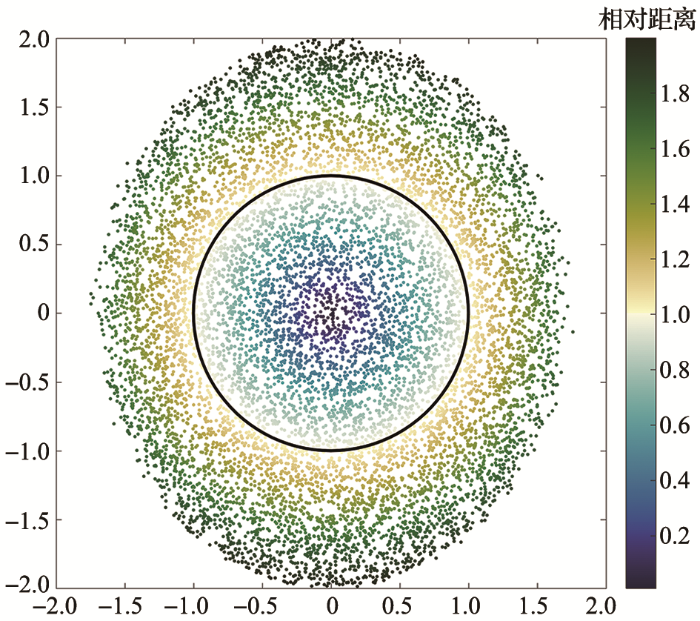
... 首先将Argo浮标分为3类:位于气旋涡内、位于反气旋涡内以及位于涡旋外部.其合成步骤为[43]:选择需要合成的区域.区域越小,涡旋的性质越均匀,性质越接近.但区域越小,包含的Argo浮标数量相对减少,使得用来合成的有效样本不足.将选择区域内的Argo浮标与涡旋进行配对.需要挑选出在时间与Argo剖面观测时间最相近的那一次高度计观测.为了比较涡旋内外性质的差异,可选择1倍半径、1~2倍半径的浮标进行合成(图3).对每一个Argo浮标,将其温盐数据转化到涡旋的相对坐标系内(如1倍半径,1~2倍半径),并插值到网格点上. ...
黑潮延续体区域伴随涡旋的垂向分布及涡致双重混合
1
2017
... 首先将Argo浮标分为3类:位于气旋涡内、位于反气旋涡内以及位于涡旋外部.其合成步骤为[43]:选择需要合成的区域.区域越小,涡旋的性质越均匀,性质越接近.但区域越小,包含的Argo浮标数量相对减少,使得用来合成的有效样本不足.将选择区域内的Argo浮标与涡旋进行配对.需要挑选出在时间与Argo剖面观测时间最相近的那一次高度计观测.为了比较涡旋内外性质的差异,可选择1倍半径、1~2倍半径的浮标进行合成(图3).对每一个Argo浮标,将其温盐数据转化到涡旋的相对坐标系内(如1倍半径,1~2倍半径),并插值到网格点上. ...
Vertical structure anomalies of oceanic eddies in the Kuroshio Extension region
1
2017
... (1)太平洋中尺度涡三维结构特征.KE是北太平洋涡旋活动最活跃的海区.Sun等[44]对该海区的中尺度涡垂直结构进行了合成研究,结果表明,由涡旋调制的物理参数变化主要限制在800 m以上,该海域中尺度涡旋整体外观呈“子弹状”,涡旋上部半径大,下部半径小,垂向厚度为800 m.Dong等[45]的研究表明,涡旋在KE南北两侧分别具有次表层和近表层温盐异常强化特征,这主要是两侧层结背景不同导致的. ...
Mesoscale eddies in the Northwestern Pacific Ocean: Three‐dimensional eddy structures and heat/salt transports
1
2017
... (1)太平洋中尺度涡三维结构特征.KE是北太平洋涡旋活动最活跃的海区.Sun等[44]对该海区的中尺度涡垂直结构进行了合成研究,结果表明,由涡旋调制的物理参数变化主要限制在800 m以上,该海域中尺度涡旋整体外观呈“子弹状”,涡旋上部半径大,下部半径小,垂向厚度为800 m.Dong等[45]的研究表明,涡旋在KE南北两侧分别具有次表层和近表层温盐异常强化特征,这主要是两侧层结背景不同导致的. ...
Mesoscale eddies in the northwestern subtropical Pacific Ocean: Statistical characteristics and three‐dimensional structures
1
2013
... 副热带逆流是北太平洋涡旋第二活动强烈的海域.Yang等[46]对该海域的中尺度涡旋特性进行了研究,发现该区域中尺度涡旋发生频率和动能普遍较高,并且向西逐渐增强.由于主温跃层中存在模态水,涡旋诱导的温度异常呈现出双核垂直结构,这在CE图像中尤为明显.由于垂直海水分层,盐度异常具有夹心状图案,这在AC图像中更明显.王茹等[47]比较了副热带逆流和KE两个区域的涡旋特征,发现中尺度涡的分布、振幅和能量等方面都存在差异. ...
Mesoscale eddies energy characteristic in the Kuroshio Extension and north Pacific subtropical countercurrent region
1
2019
... 副热带逆流是北太平洋涡旋第二活动强烈的海域.Yang等[46]对该海域的中尺度涡旋特性进行了研究,发现该区域中尺度涡旋发生频率和动能普遍较高,并且向西逐渐增强.由于主温跃层中存在模态水,涡旋诱导的温度异常呈现出双核垂直结构,这在CE图像中尤为明显.由于垂直海水分层,盐度异常具有夹心状图案,这在AC图像中更明显.王茹等[47]比较了副热带逆流和KE两个区域的涡旋特征,发现中尺度涡的分布、振幅和能量等方面都存在差异. ...
北太平洋黑潮延伸体区域和副热带逆流区域中尺度涡能量特征研究
1
2019
... 副热带逆流是北太平洋涡旋第二活动强烈的海域.Yang等[46]对该海域的中尺度涡旋特性进行了研究,发现该区域中尺度涡旋发生频率和动能普遍较高,并且向西逐渐增强.由于主温跃层中存在模态水,涡旋诱导的温度异常呈现出双核垂直结构,这在CE图像中尤为明显.由于垂直海水分层,盐度异常具有夹心状图案,这在AC图像中更明显.王茹等[47]比较了副热带逆流和KE两个区域的涡旋特征,发现中尺度涡的分布、振幅和能量等方面都存在差异. ...
Observed characteristics and vertical structure of mesoscale eddies in the Southwest Tropical Pacific
1
2018
... 在西南太平洋,众多岛屿深刻影响着涡旋特征.由于大多数涡旋形成于岛屿的背风面,向西传播遇到浅水时会衰减[48].在斐济北部的热带地区,涡旋稀疏且短暂,只影响200 m以浅的海水特征.在珊瑚海不同来源海流之间的横向剪切区域中,涡旋更多,且更有活力.它们的影响深度至少为500 m,这有助于上层温跃层水的混合和输运.在新喀里多尼亚南部,中尺度涡旋广泛存在,寿命超过5个月.它们影响的温度、盐度和速度深度可达1 000 m,但对较低的温跃层水的混合作用很小. ...
Vertical structure of mesoscale eddies in the eastern South Pacific Ocean: A composite analysis from altimetry and Argo profiling floats
1
2011
... 在南大洋东边界流秘鲁—智利海域,Chaigneau等[49]研究了南太平洋东部环流系统中尺度涡旋的三维结构.结果表明,CE的核心集中在温跃层的25.2~26.0 kg/m3位势密度面内150 m深度处.相比之下,AC的核心位于约400 m深的温跃层下方,影响26.0~26.8 kg/m3位势密度层.这种差异归因于涡旋产生机制的不同.温跃层内CE由赤道向表面沿岸流的不稳定形成,而温跃层内AC由秘鲁—智利潜流产生.在涡旋核心中,AC(CE)最高温度和盐度异常为±1 °C和±0.1. ...
Mesoscale eddies in the South Atlantic Bight and the Gulf Stream recirculation region: Vertical structure
1
2014
... (2)大西洋中尺度涡三维结构特征.大西洋中尺度涡分布特征与太平洋相似.在西边界流的湾流海域,涡旋引起的温盐异常主要体现在500~1 000 m深度和海表附近,位于中间的北大西洋副热带模态水中变化较小.且AC引起的异常更为显著,影响的深度更深[50].南大西洋的西边界流巴西—马尔维纳斯海域,中尺度涡活动同样活跃,会深刻影响水团的生成和变性,也是大西洋经向翻转环流的重要组成部分[51]. ...
Subregional characterization of mesoscale eddies across the Brazil‐Malvinas Confluence
1
2017
... (2)大西洋中尺度涡三维结构特征.大西洋中尺度涡分布特征与太平洋相似.在西边界流的湾流海域,涡旋引起的温盐异常主要体现在500~1 000 m深度和海表附近,位于中间的北大西洋副热带模态水中变化较小.且AC引起的异常更为显著,影响的深度更深[50].南大西洋的西边界流巴西—马尔维纳斯海域,中尺度涡活动同样活跃,会深刻影响水团的生成和变性,也是大西洋经向翻转环流的重要组成部分[51]. ...
Coherent mesoscale eddies in the North Atlantic subtropical gyre: 3‐D structure and transport with application to the salinity maximum
1
2017
... 具有海面盐度最大值的副热带东部海域的突出特征是相对较低的涡旋动能.虽然涡旋在表面具有相对较弱的信号(幅度仅在3~7 cm),但是合成结果显示涡旋可作用深达1 200 m[52].此外,涡旋温度/盐度与上部300 m层的速度异常之间的存在相位相干性,会显著传输热盐. ...
SIDDIES Corridor: A major east‐west pathway of long‐lived surface and subsurface eddies crossing the subtropical south Indian Ocean
1
2018
... (3)印度洋中尺度涡三维结构特征.南印度洋副热带海域存在一个涡旋活动的带状区域,称之为“南印度洋涡旋走廊”,活跃着大量表面强化和次表层强化涡旋[53].其中,次表层强化涡旋在表层和次表层呈现相反的温度异常核心.在东南热带印度洋,涡旋诱导的异常主要局限于30 MPa以上[54].在涡旋核心,CE(AC)可以在6~18 MPa引起2 °C的变冷(变暖),且在上部5(11) MPa中引起最大正(负)盐度异常0.1(-0.3). ...
Characteristics, vertical structures, and heat/salt transports of mesoscale eddies in the southeastern tropical Indian Ocean
1
2015
... (3)印度洋中尺度涡三维结构特征.南印度洋副热带海域存在一个涡旋活动的带状区域,称之为“南印度洋涡旋走廊”,活跃着大量表面强化和次表层强化涡旋[53].其中,次表层强化涡旋在表层和次表层呈现相反的温度异常核心.在东南热带印度洋,涡旋诱导的异常主要局限于30 MPa以上[54].在涡旋核心,CE(AC)可以在6~18 MPa引起2 °C的变冷(变暖),且在上部5(11) MPa中引起最大正(负)盐度异常0.1(-0.3). ...
Southern Ocean eddy phenomenology
2
2015
... (4)南大洋中尺度涡三维结构特征.南大洋强劲风场驱动的南极绕极流(Antarctic Circumpolar Current,ACC)是中尺度涡频发的海域[55],也是涡流相互作用显著的海域.AC和CE分别在ACC的南侧和北侧占主导.这种区域依赖性的主要原因是涡旋传播过程中会合并同性涡旋,进而增加该类涡旋的生命期、尺寸和强度.涡旋垂直向延伸至2 000 m深度以深,温盐异常最大值分布在近表面处.涡旋的捕获(远距离传播)和搅拌(局地作用)共同作用导致了这种结果. ...
... 中尺度涡旋生成后,在地球旋转的作用下,一边自转,一边西传.由于其非线性的特征,能够维持源地水的物理特性.且各个大洋中水团分布各异,中尺度涡影响的效果也各不相同.影响中尺度涡温盐特性的物理机制包括非局地的捕获和局地的混合作用[55].前者能够最大限度保持涡旋源地的特性,如温度、盐度、溶解氧等;后者与当地海洋环境混合,从而改变涡旋的固有特性.两者在不同位置、不同深度发挥的作用也不相同.在海表面处,海洋上层受到大气的热通量、风应力以及海洋本身流场的作用,温盐特性受到显著影响.在海洋内部,涡旋能够相对保持稳定的结构.Hassanzadeh等[60]推导出涡旋的纵横比(深度/半径).统计结果表明,在中纬度对应于低纵横比,即大而浅;而高纬度是小而深的结构[61]. ...
Progress in research of mesoscale eddies in the South China Sea
1
2017
... (5)边缘海中尺度涡三维结构特征.南海是北太平洋最大的边缘海,也是涡旋活动频繁的海域之一.郑全安等[56]对南海中尺度涡研究发展史和最新研究进展进行了评述.He等[57]通过分析22年(1993—2015年)的逐日高度计资料,结合超过7 000个Argo剖面数据,更新了南海地区的表面涡旋特性.结果表明,两种极性涡旋具有长的圆锥形状,在合成CE(AC)涡旋中, 60 m(90 m)处的最大(最小)密度异常为0.55 kg/m3(-0.51 kg/m3).谢旭丹等[58]合成了南海及南海各区域中尺度涡的三维结构,结果表明涡旋对温、盐异常的影响程度并不完全相同,可能与各区域涡旋的生成机制及背景温盐场有关. ...
南海中尺度涡研究进展
1
2017
... (5)边缘海中尺度涡三维结构特征.南海是北太平洋最大的边缘海,也是涡旋活动频繁的海域之一.郑全安等[56]对南海中尺度涡研究发展史和最新研究进展进行了评述.He等[57]通过分析22年(1993—2015年)的逐日高度计资料,结合超过7 000个Argo剖面数据,更新了南海地区的表面涡旋特性.结果表明,两种极性涡旋具有长的圆锥形状,在合成CE(AC)涡旋中, 60 m(90 m)处的最大(最小)密度异常为0.55 kg/m3(-0.51 kg/m3).谢旭丹等[58]合成了南海及南海各区域中尺度涡的三维结构,结果表明涡旋对温、盐异常的影响程度并不完全相同,可能与各区域涡旋的生成机制及背景温盐场有关. ...
A new assessment of mesoscale eddies in the South China Sea: Surface features, three‐dimensional structures, and thermohaline transports
1
2018
... (5)边缘海中尺度涡三维结构特征.南海是北太平洋最大的边缘海,也是涡旋活动频繁的海域之一.郑全安等[56]对南海中尺度涡研究发展史和最新研究进展进行了评述.He等[57]通过分析22年(1993—2015年)的逐日高度计资料,结合超过7 000个Argo剖面数据,更新了南海地区的表面涡旋特性.结果表明,两种极性涡旋具有长的圆锥形状,在合成CE(AC)涡旋中, 60 m(90 m)处的最大(最小)密度异常为0.55 kg/m3(-0.51 kg/m3).谢旭丹等[58]合成了南海及南海各区域中尺度涡的三维结构,结果表明涡旋对温、盐异常的影响程度并不完全相同,可能与各区域涡旋的生成机制及背景温盐场有关. ...
Three-dimensional thermohaline anomaly structures of mesoscale eddies in the South China Sea
1
2018
... (5)边缘海中尺度涡三维结构特征.南海是北太平洋最大的边缘海,也是涡旋活动频繁的海域之一.郑全安等[56]对南海中尺度涡研究发展史和最新研究进展进行了评述.He等[57]通过分析22年(1993—2015年)的逐日高度计资料,结合超过7 000个Argo剖面数据,更新了南海地区的表面涡旋特性.结果表明,两种极性涡旋具有长的圆锥形状,在合成CE(AC)涡旋中, 60 m(90 m)处的最大(最小)密度异常为0.55 kg/m3(-0.51 kg/m3).谢旭丹等[58]合成了南海及南海各区域中尺度涡的三维结构,结果表明涡旋对温、盐异常的影响程度并不完全相同,可能与各区域涡旋的生成机制及背景温盐场有关. ...
南海中尺度涡温盐异常三维结构
1
2018
... (5)边缘海中尺度涡三维结构特征.南海是北太平洋最大的边缘海,也是涡旋活动频繁的海域之一.郑全安等[56]对南海中尺度涡研究发展史和最新研究进展进行了评述.He等[57]通过分析22年(1993—2015年)的逐日高度计资料,结合超过7 000个Argo剖面数据,更新了南海地区的表面涡旋特性.结果表明,两种极性涡旋具有长的圆锥形状,在合成CE(AC)涡旋中, 60 m(90 m)处的最大(最小)密度异常为0.55 kg/m3(-0.51 kg/m3).谢旭丹等[58]合成了南海及南海各区域中尺度涡的三维结构,结果表明涡旋对温、盐异常的影响程度并不完全相同,可能与各区域涡旋的生成机制及背景温盐场有关. ...
On the 3D structure of eddies in the Arabian Sea
1
2019
... 在阿拉伯海,波斯湾水从北部流出,红海水从西北流出.这些从边缘海域流出的咸水团受到盆地西部中尺度涡旋的强烈影响[59].使用Argo浮标合成发现,在阿曼湾和亚丁湾,涡旋核心的水比边缘更淡,说明海湾中大多数涡旋都是在阿拉伯海产生的.在这些涡旋中,与波斯湾和红海溢流相对应的盐度异常在其边缘处平均比在核心处更强,表明海湾中的涡旋通过平流作用影响其周围海域. ...
The universal aspect ratio of vortices in rotating stratified flows: Theory and simulation
1
2012
... 中尺度涡旋生成后,在地球旋转的作用下,一边自转,一边西传.由于其非线性的特征,能够维持源地水的物理特性.且各个大洋中水团分布各异,中尺度涡影响的效果也各不相同.影响中尺度涡温盐特性的物理机制包括非局地的捕获和局地的混合作用[55].前者能够最大限度保持涡旋源地的特性,如温度、盐度、溶解氧等;后者与当地海洋环境混合,从而改变涡旋的固有特性.两者在不同位置、不同深度发挥的作用也不相同.在海表面处,海洋上层受到大气的热通量、风应力以及海洋本身流场的作用,温盐特性受到显著影响.在海洋内部,涡旋能够相对保持稳定的结构.Hassanzadeh等[60]推导出涡旋的纵横比(深度/半径).统计结果表明,在中纬度对应于低纵横比,即大而浅;而高纬度是小而深的结构[61]. ...
e2019JC
1
2019
... 中尺度涡旋生成后,在地球旋转的作用下,一边自转,一边西传.由于其非线性的特征,能够维持源地水的物理特性.且各个大洋中水团分布各异,中尺度涡影响的效果也各不相同.影响中尺度涡温盐特性的物理机制包括非局地的捕获和局地的混合作用[55].前者能够最大限度保持涡旋源地的特性,如温度、盐度、溶解氧等;后者与当地海洋环境混合,从而改变涡旋的固有特性.两者在不同位置、不同深度发挥的作用也不相同.在海表面处,海洋上层受到大气的热通量、风应力以及海洋本身流场的作用,温盐特性受到显著影响.在海洋内部,涡旋能够相对保持稳定的结构.Hassanzadeh等[60]推导出涡旋的纵横比(深度/半径).统计结果表明,在中纬度对应于低纵横比,即大而浅;而高纬度是小而深的结构[61]. ...
Analysis of the eddy vertical structure in different areas in the North Pacific
1
2017
... 综上所述,中尺度涡三维结构受到生成地和当地温盐背景环境的共同影响[62].一般来说,温度异常在垂直方向上一般为单核,若涡旋流经含有中层水海域则盐度异常一般为上下层反向的双核结构.值得注意的是,使用卫星高度计结合Argo浮标的合成方法,由于假设了涡旋的形状为圆,因此合成结果只能反映中尺度涡的一维或二维结构.而精细化观测表明,中尺度涡水平方向并不是完全对称,在垂直方向也会倾斜[63].如何准确刻画中尺度涡真正的三维结构,需要结合现场调查和数值模拟进一步研究. ...
北太平洋中尺度涡温度垂直结构区域差别分析
1
2017
... 综上所述,中尺度涡三维结构受到生成地和当地温盐背景环境的共同影响[62].一般来说,温度异常在垂直方向上一般为单核,若涡旋流经含有中层水海域则盐度异常一般为上下层反向的双核结构.值得注意的是,使用卫星高度计结合Argo浮标的合成方法,由于假设了涡旋的形状为圆,因此合成结果只能反映中尺度涡的一维或二维结构.而精细化观测表明,中尺度涡水平方向并不是完全对称,在垂直方向也会倾斜[63].如何准确刻画中尺度涡真正的三维结构,需要结合现场调查和数值模拟进一步研究. ...
Observed 3D structure, generation, and dissipation of oceanic mesoscale eddies in the South China Sea
1
2016
... 综上所述,中尺度涡三维结构受到生成地和当地温盐背景环境的共同影响[62].一般来说,温度异常在垂直方向上一般为单核,若涡旋流经含有中层水海域则盐度异常一般为上下层反向的双核结构.值得注意的是,使用卫星高度计结合Argo浮标的合成方法,由于假设了涡旋的形状为圆,因此合成结果只能反映中尺度涡的一维或二维结构.而精细化观测表明,中尺度涡水平方向并不是完全对称,在垂直方向也会倾斜[63].如何准确刻画中尺度涡真正的三维结构,需要结合现场调查和数值模拟进一步研究. ...
The geography of linear baroclinic instability in Earth's oceans
1
2007
... 海洋中尺度涡的生成、演变和消亡是一个复杂的非线性问题.中尺度涡生成所需的能量来源于有效位能的释放(斜压不稳定过程)和平均流的水平剪切(正压不稳定过程)等[64].海洋中尺度涡一旦生成,在效应(科氏力随纬度变化)作用下向西传播[29,30],但会稍微的南北向偏离(AC向赤道、CE向极地)[65],造成中尺度涡耗散、并最终消亡的物理过程包括西边界流[66]、海气相互作用[67]、激发惯性—重力内波[68]和地形等.由于对中尺度涡生消演变过程中能量收支的认识仍存在不足,海洋环流数值模式对中尺度涡的模拟普遍存在“过度耗散”问题[69],即模式中的涡旋动能弱于观测值.本节从涡旋的生成、演变和消亡角度介绍两类普遍存在于海洋中的涡旋,包括墨西哥湾的回流环和大西洋的地中海涡旋. ...
The evolution and propagation of quasigeostrophic ocean eddies
1
2011
... 海洋中尺度涡的生成、演变和消亡是一个复杂的非线性问题.中尺度涡生成所需的能量来源于有效位能的释放(斜压不稳定过程)和平均流的水平剪切(正压不稳定过程)等[64].海洋中尺度涡一旦生成,在效应(科氏力随纬度变化)作用下向西传播[29,30],但会稍微的南北向偏离(AC向赤道、CE向极地)[65],造成中尺度涡耗散、并最终消亡的物理过程包括西边界流[66]、海气相互作用[67]、激发惯性—重力内波[68]和地形等.由于对中尺度涡生消演变过程中能量收支的认识仍存在不足,海洋环流数值模式对中尺度涡的模拟普遍存在“过度耗散”问题[69],即模式中的涡旋动能弱于观测值.本节从涡旋的生成、演变和消亡角度介绍两类普遍存在于海洋中的涡旋,包括墨西哥湾的回流环和大西洋的地中海涡旋. ...
Significant sink of ocean-eddy energy near western boundaries
1
2010
... 海洋中尺度涡的生成、演变和消亡是一个复杂的非线性问题.中尺度涡生成所需的能量来源于有效位能的释放(斜压不稳定过程)和平均流的水平剪切(正压不稳定过程)等[64].海洋中尺度涡一旦生成,在效应(科氏力随纬度变化)作用下向西传播[29,30],但会稍微的南北向偏离(AC向赤道、CE向极地)[65],造成中尺度涡耗散、并最终消亡的物理过程包括西边界流[66]、海气相互作用[67]、激发惯性—重力内波[68]和地形等.由于对中尺度涡生消演变过程中能量收支的认识仍存在不足,海洋环流数值模式对中尺度涡的模拟普遍存在“过度耗散”问题[69],即模式中的涡旋动能弱于观测值.本节从涡旋的生成、演变和消亡角度介绍两类普遍存在于海洋中的涡旋,包括墨西哥湾的回流环和大西洋的地中海涡旋. ...
Remarkable control of western boundary currents by eddy killing, a mechanical air‐sea coupling process
1
2019
... 海洋中尺度涡的生成、演变和消亡是一个复杂的非线性问题.中尺度涡生成所需的能量来源于有效位能的释放(斜压不稳定过程)和平均流的水平剪切(正压不稳定过程)等[64].海洋中尺度涡一旦生成,在效应(科氏力随纬度变化)作用下向西传播[29,30],但会稍微的南北向偏离(AC向赤道、CE向极地)[65],造成中尺度涡耗散、并最终消亡的物理过程包括西边界流[66]、海气相互作用[67]、激发惯性—重力内波[68]和地形等.由于对中尺度涡生消演变过程中能量收支的认识仍存在不足,海洋环流数值模式对中尺度涡的模拟普遍存在“过度耗散”问题[69],即模式中的涡旋动能弱于观测值.本节从涡旋的生成、演变和消亡角度介绍两类普遍存在于海洋中的涡旋,包括墨西哥湾的回流环和大西洋的地中海涡旋. ...
The interior energy pathway: Inertia-gravity wave emission by oceanic flows
1
2019
... 海洋中尺度涡的生成、演变和消亡是一个复杂的非线性问题.中尺度涡生成所需的能量来源于有效位能的释放(斜压不稳定过程)和平均流的水平剪切(正压不稳定过程)等[64].海洋中尺度涡一旦生成,在效应(科氏力随纬度变化)作用下向西传播[29,30],但会稍微的南北向偏离(AC向赤道、CE向极地)[65],造成中尺度涡耗散、并最终消亡的物理过程包括西边界流[66]、海气相互作用[67]、激发惯性—重力内波[68]和地形等.由于对中尺度涡生消演变过程中能量收支的认识仍存在不足,海洋环流数值模式对中尺度涡的模拟普遍存在“过度耗散”问题[69],即模式中的涡旋动能弱于观测值.本节从涡旋的生成、演变和消亡角度介绍两类普遍存在于海洋中的涡旋,包括墨西哥湾的回流环和大西洋的地中海涡旋. ...
Toward consistent subgrid momentum closures in ocean models
1
2019
... 海洋中尺度涡的生成、演变和消亡是一个复杂的非线性问题.中尺度涡生成所需的能量来源于有效位能的释放(斜压不稳定过程)和平均流的水平剪切(正压不稳定过程)等[64].海洋中尺度涡一旦生成,在效应(科氏力随纬度变化)作用下向西传播[29,30],但会稍微的南北向偏离(AC向赤道、CE向极地)[65],造成中尺度涡耗散、并最终消亡的物理过程包括西边界流[66]、海气相互作用[67]、激发惯性—重力内波[68]和地形等.由于对中尺度涡生消演变过程中能量收支的认识仍存在不足,海洋环流数值模式对中尺度涡的模拟普遍存在“过度耗散”问题[69],即模式中的涡旋动能弱于观测值.本节从涡旋的生成、演变和消亡角度介绍两类普遍存在于海洋中的涡旋,包括墨西哥湾的回流环和大西洋的地中海涡旋. ...
Temporal and spatial characteristics of mesoscale eddies in the Northern South China Sea: Statistics analysis based on altimeter data
1
2019
... 由细长蜿蜒强流挤压形成的环在其他西边界流也广泛存在,如南海[70]、黑潮、东澳大利亚,以及阿古拉斯(厄加勒斯)[71]等.这种环携带与周围水体不同的温度、盐度、营养物,对流经的海域产生深远影响,如吕宋海峡弯曲脱落形成暖涡将高温、高盐和低叶绿素浓度的太平洋水输送到南海[72]. ...
南海北部中尺度涡的时空分布特征:基于卫星高度计资料的统计分析
1
2019
... 由细长蜿蜒强流挤压形成的环在其他西边界流也广泛存在,如南海[70]、黑潮、东澳大利亚,以及阿古拉斯(厄加勒斯)[71]等.这种环携带与周围水体不同的温度、盐度、营养物,对流经的海域产生深远影响,如吕宋海峡弯曲脱落形成暖涡将高温、高盐和低叶绿素浓度的太平洋水输送到南海[72]. ...
Shedding of an Agulhas ring observed at sea
1
1987
... 由细长蜿蜒强流挤压形成的环在其他西边界流也广泛存在,如南海[70]、黑潮、东澳大利亚,以及阿古拉斯(厄加勒斯)[71]等.这种环携带与周围水体不同的温度、盐度、营养物,对流经的海域产生深远影响,如吕宋海峡弯曲脱落形成暖涡将高温、高盐和低叶绿素浓度的太平洋水输送到南海[72]. ...
Anticyclonic eddy sheddings from Kuroshio loop and the accompanying cyclonic eddy in the northeastern South China Sea
1
2017
... 由细长蜿蜒强流挤压形成的环在其他西边界流也广泛存在,如南海[70]、黑潮、东澳大利亚,以及阿古拉斯(厄加勒斯)[71]等.这种环携带与周围水体不同的温度、盐度、营养物,对流经的海域产生深远影响,如吕宋海峡弯曲脱落形成暖涡将高温、高盐和低叶绿素浓度的太平洋水输送到南海[72]. ...
Meddies and Sub-Surface Eddies
1
2018
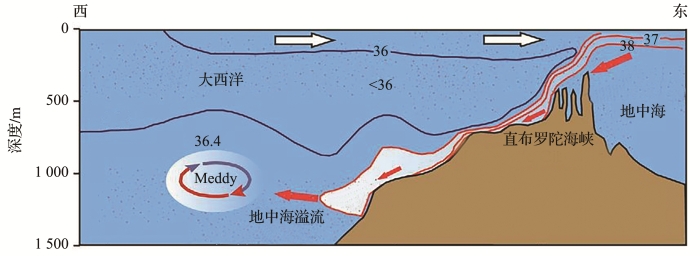
... 除了海表常见的AC和CE,在海洋内部,会存在形状为非常薄的透镜,其核心为旋转的实心圆盘,与周围区域有强剪切的模态水涡旋[73](图2c),也称为次表层涡旋或温跃层内涡旋.这种类型涡旋中最大、最引人注目的是地中海涡旋(Mediterranean eddies,Meddies)(图5).其产生的主要机制是地中海的高蒸发率导致该海盆的盐度显著增加,咸水和相对温暖的地中海水流经直布罗陀海峡,沿伊比利亚半岛流入东北大西洋.在一个中等深度(800~1 200 m),它流经一个复杂的水下峡谷和海角系统.在这个过程中,强烈的涡流从主流中分离出来,并扩散到海洋内部.Meddies在海洋中游弋,同时顺时针旋转,包围着咸水和温水,直径超过100 km,寿命跨度以年为单位. ...
Mediterranean outflow mixing and dynamics
2
1993
... 数值代表盐度(单位:PSU);地中海通过直布罗陀海峡沿地形向大西洋溢流高盐、高密度海水,在大西洋中等深度形成反气旋式涡旋(据参考文献[74]修改) ...
... The numerical values are the salinity (unit: PSU). Through the strait of Gibraltar, the Mediterranean Sea flooded the Atlantic Ocean with high-salt and high-density water, forming an anticyclonic eddy in the middle depth of the Atlantic Ocean(modified after reference [74]) ...
Lagrangian exploration of the California Undercurrent, 1992-95
1
1999
... 此外,在加利福尼亚潜流中产生的长寿次表层涡旋被称为Cuddies(California Undercurrent eddies)[75],以及红海向阿拉伯海溢出的高盐涡旋Reddy(Red Sea Water)[76]等. ...
The reddy maker
1
2002
... 此外,在加利福尼亚潜流中产生的长寿次表层涡旋被称为Cuddies(California Undercurrent eddies)[75],以及红海向阿拉伯海溢出的高盐涡旋Reddy(Red Sea Water)[76]等. ...
Submesoscale processes
1
2018
... 对中尺度涡理论认识源于准地转平衡动力学,其中流体的运动速度(和是特征水平速度和长度尺度)比地球的旋转速率()小10~100倍,即.中尺度涡的准地转特性被卫星测高数据所证实[77].但是,随着更高分辨率观测手段的不断丰富,发现海洋中存在水平尺度为1~10 km,罗斯贝数()接近于1的运动,称之为次中尺度过程[78].次中尺度过程包括涡丝、锋面、次中尺度涡旋等现象,产生的机制包括混合层不稳定、锋生、湍热成风、岛屿尾流和再层化等[79].计划于2021年发射的地表水和海洋地形(Surface Water and Ocean Topography,SWOT)卫星将测量海面高度的水平分辨率提高到15~30 km[80],与目前100 km量级的分辨率相比,能更多地揭示次中尺度过程,这为研究中尺度—次中尺度的尺度分离[81]、次中尺度的现象和机理提供了重要的观测依据. ...
(
1
2008
... 对中尺度涡理论认识源于准地转平衡动力学,其中流体的运动速度(和是特征水平速度和长度尺度)比地球的旋转速率()小10~100倍,即.中尺度涡的准地转特性被卫星测高数据所证实[77].但是,随着更高分辨率观测手段的不断丰富,发现海洋中存在水平尺度为1~10 km,罗斯贝数()接近于1的运动,称之为次中尺度过程[78].次中尺度过程包括涡丝、锋面、次中尺度涡旋等现象,产生的机制包括混合层不稳定、锋生、湍热成风、岛屿尾流和再层化等[79].计划于2021年发射的地表水和海洋地形(Surface Water and Ocean Topography,SWOT)卫星将测量海面高度的水平分辨率提高到15~30 km[80],与目前100 km量级的分辨率相比,能更多地揭示次中尺度过程,这为研究中尺度—次中尺度的尺度分离[81]、次中尺度的现象和机理提供了重要的观测依据. ...
Submesoscale currents in the ocean
1
2016
... 对中尺度涡理论认识源于准地转平衡动力学,其中流体的运动速度(和是特征水平速度和长度尺度)比地球的旋转速率()小10~100倍,即.中尺度涡的准地转特性被卫星测高数据所证实[77].但是,随着更高分辨率观测手段的不断丰富,发现海洋中存在水平尺度为1~10 km,罗斯贝数()接近于1的运动,称之为次中尺度过程[78].次中尺度过程包括涡丝、锋面、次中尺度涡旋等现象,产生的机制包括混合层不稳定、锋生、湍热成风、岛屿尾流和再层化等[79].计划于2021年发射的地表水和海洋地形(Surface Water and Ocean Topography,SWOT)卫星将测量海面高度的水平分辨率提高到15~30 km[80],与目前100 km量级的分辨率相比,能更多地揭示次中尺度过程,这为研究中尺度—次中尺度的尺度分离[81]、次中尺度的现象和机理提供了重要的观测依据. ...
Global observations of fine-scale ocean surface topography with the Surface Water and Ocean Topography (SWOT) Mission
1
2019
... 对中尺度涡理论认识源于准地转平衡动力学,其中流体的运动速度(和是特征水平速度和长度尺度)比地球的旋转速率()小10~100倍,即.中尺度涡的准地转特性被卫星测高数据所证实[77].但是,随着更高分辨率观测手段的不断丰富,发现海洋中存在水平尺度为1~10 km,罗斯贝数()接近于1的运动,称之为次中尺度过程[78].次中尺度过程包括涡丝、锋面、次中尺度涡旋等现象,产生的机制包括混合层不稳定、锋生、湍热成风、岛屿尾流和再层化等[79].计划于2021年发射的地表水和海洋地形(Surface Water and Ocean Topography,SWOT)卫星将测量海面高度的水平分辨率提高到15~30 km[80],与目前100 km量级的分辨率相比,能更多地揭示次中尺度过程,这为研究中尺度—次中尺度的尺度分离[81]、次中尺度的现象和机理提供了重要的观测依据. ...
Observation of submesoscale turbulence in a cyclonic eddy
1
2020
... 对中尺度涡理论认识源于准地转平衡动力学,其中流体的运动速度(和是特征水平速度和长度尺度)比地球的旋转速率()小10~100倍,即.中尺度涡的准地转特性被卫星测高数据所证实[77].但是,随着更高分辨率观测手段的不断丰富,发现海洋中存在水平尺度为1~10 km,罗斯贝数()接近于1的运动,称之为次中尺度过程[78].次中尺度过程包括涡丝、锋面、次中尺度涡旋等现象,产生的机制包括混合层不稳定、锋生、湍热成风、岛屿尾流和再层化等[79].计划于2021年发射的地表水和海洋地形(Surface Water and Ocean Topography,SWOT)卫星将测量海面高度的水平分辨率提高到15~30 km[80],与目前100 km量级的分辨率相比,能更多地揭示次中尺度过程,这为研究中尺度—次中尺度的尺度分离[81]、次中尺度的现象和机理提供了重要的观测依据. ...
Large-scale impacts of the mesoscale environment on mixing from wind-driven internal waves
1
2018
... 海洋从大气中获得动能,驱动大尺度环流系统,生成中尺度涡旋.为了维持全球海洋能量平衡,中尺度的动能势必向更小尺度转移,最终在湍流尺度转换为热能耗散.在这个正向能量串级过程中,海洋中内波破碎是能量耗散的主要途径,而中尺度涡可以显著增强由于风产生内波引起的湍流混合[82].但由于CE/AC对内波的传播效果不同[83],如何量化介于大尺度和小尺度之间的中尺度涡在能量耗散过程中起的作用是一个值得深入研究的问题. ...
Near-inertial wave propagation in geostrophic shear
1
1985
... 海洋从大气中获得动能,驱动大尺度环流系统,生成中尺度涡旋.为了维持全球海洋能量平衡,中尺度的动能势必向更小尺度转移,最终在湍流尺度转换为热能耗散.在这个正向能量串级过程中,海洋中内波破碎是能量耗散的主要途径,而中尺度涡可以显著增强由于风产生内波引起的湍流混合[82].但由于CE/AC对内波的传播效果不同[83],如何量化介于大尺度和小尺度之间的中尺度涡在能量耗散过程中起的作用是一个值得深入研究的问题. ...
Main eddy vertical structures observed in the four major Eastern Boundary Upwelling Systems
1
2015
... 与有着闭合流线、海表面高度异常升高/降低的表面强化涡旋(图2a,c)相比,模态水涡旋(次表层涡旋或温跃层内涡旋)(图2b)的表面特征并不明显,无法使用本文介绍的方法进行识别和三维结构合成.且由于观测样本较小,对其生消演变规律也缺乏足够的认识.但这种次表层强化的涡旋广泛存在与世界大洋的各个海域,尤其在潜在大洋东边界流系内[84].次表层强化涡旋通常表现为透镜状的AC,对这类涡旋的观测通常依赖于零星的现场观测.如何探测并合成出次表层涡旋三维结构需要进一步研究. ...
Global observing needs in the deep ocean
1
2019
... Argo浮标的出现,使得我们对海表至2 000 m深度海洋内部物理过程有了更深入的认识.但受限于成本、Argo本身的特性,在观测空间、时间分辨率以及深、底层海洋观测方面仍然存在很大缺陷.“深海观测策略”[85]等大型观测计划的出现是对深海大洋观测的有效补充,尤其对可深入深海的强涡旋和次表层涡旋的观测有着很大的帮助.此外,水下滑翔机(Seaglider)是一种自主的水下航行器,可通过更改其浮力来垂直运动并使用机翼水平移动[86,87].利用其高水平分辨率、机动性的特点,可以对特定中尺度涡进行现场强化观测实验[88,89],加深对中尺度涡三维结构的理解和认识. ...
Ocean research enabled by underwater gliders
1
2016
... Argo浮标的出现,使得我们对海表至2 000 m深度海洋内部物理过程有了更深入的认识.但受限于成本、Argo本身的特性,在观测空间、时间分辨率以及深、底层海洋观测方面仍然存在很大缺陷.“深海观测策略”[85]等大型观测计划的出现是对深海大洋观测的有效补充,尤其对可深入深海的强涡旋和次表层涡旋的观测有着很大的帮助.此外,水下滑翔机(Seaglider)是一种自主的水下航行器,可通过更改其浮力来垂直运动并使用机翼水平移动[86,87].利用其高水平分辨率、机动性的特点,可以对特定中尺度涡进行现场强化观测实验[88,89],加深对中尺度涡三维结构的理解和认识. ...
OceanGliders: A component of the integrated GOOS
1
2019
... Argo浮标的出现,使得我们对海表至2 000 m深度海洋内部物理过程有了更深入的认识.但受限于成本、Argo本身的特性,在观测空间、时间分辨率以及深、底层海洋观测方面仍然存在很大缺陷.“深海观测策略”[85]等大型观测计划的出现是对深海大洋观测的有效补充,尤其对可深入深海的强涡旋和次表层涡旋的观测有着很大的帮助.此外,水下滑翔机(Seaglider)是一种自主的水下航行器,可通过更改其浮力来垂直运动并使用机翼水平移动[86,87].利用其高水平分辨率、机动性的特点,可以对特定中尺度涡进行现场强化观测实验[88,89],加深对中尺度涡三维结构的理解和认识. ...
Field-observation for an anticyclonic mesoscale eddy consisted of twelve gliders and sixty-two expendable probes in the northern South China Sea during summer 2017
1
2019
... Argo浮标的出现,使得我们对海表至2 000 m深度海洋内部物理过程有了更深入的认识.但受限于成本、Argo本身的特性,在观测空间、时间分辨率以及深、底层海洋观测方面仍然存在很大缺陷.“深海观测策略”[85]等大型观测计划的出现是对深海大洋观测的有效补充,尤其对可深入深海的强涡旋和次表层涡旋的观测有着很大的帮助.此外,水下滑翔机(Seaglider)是一种自主的水下航行器,可通过更改其浮力来垂直运动并使用机翼水平移动[86,87].利用其高水平分辨率、机动性的特点,可以对特定中尺度涡进行现场强化观测实验[88,89],加深对中尺度涡三维结构的理解和认识. ...
Glider-observed anticyclonic eddy in northern South China Sea
1
2016
... Argo浮标的出现,使得我们对海表至2 000 m深度海洋内部物理过程有了更深入的认识.但受限于成本、Argo本身的特性,在观测空间、时间分辨率以及深、底层海洋观测方面仍然存在很大缺陷.“深海观测策略”[85]等大型观测计划的出现是对深海大洋观测的有效补充,尤其对可深入深海的强涡旋和次表层涡旋的观测有着很大的帮助.此外,水下滑翔机(Seaglider)是一种自主的水下航行器,可通过更改其浮力来垂直运动并使用机翼水平移动[86,87].利用其高水平分辨率、机动性的特点,可以对特定中尺度涡进行现场强化观测实验[88,89],加深对中尺度涡三维结构的理解和认识. ...
Mesoscale eddies release pelagic sharks from thermal constraints to foraging in the ocean twilight zone
1
2019
... 海洋中尺度涡不仅改变海洋的物理特性,如温度、盐度、流场等,对海洋生物、化学等也有重要影响.如反气旋涡旋由于内部的下沉运动一般被认为是海洋中的“沙漠”.但观测研究表面,暖涡中异常温暖的海水将以表面为导向的食肉动物与中生代地球上最丰富的鱼类群落联系在一起,为鲨鱼到海洋透光层觅食提供有利环境[90].涡旋也通过改变海水的层结稳定性抑制浮游植物的垂直混合过程,从而导致春季水华的发生[91]. ...
Eddy-driven stratification initiates North Atlantic spring phytoplankton blooms
1
2012
... 海洋中尺度涡不仅改变海洋的物理特性,如温度、盐度、流场等,对海洋生物、化学等也有重要影响.如反气旋涡旋由于内部的下沉运动一般被认为是海洋中的“沙漠”.但观测研究表面,暖涡中异常温暖的海水将以表面为导向的食肉动物与中生代地球上最丰富的鱼类群落联系在一起,为鲨鱼到海洋透光层觅食提供有利环境[90].涡旋也通过改变海水的层结稳定性抑制浮游植物的垂直混合过程,从而导致春季水华的发生[91]. ...
Review of the atmospheric response to the ocean mesoscale eddies
1
2017
... 相对于大尺度海洋环流,中尺度涡是海洋中的一种小尺度现象.而相对于内波、次中尺度过程等非平衡运动,中尺度涡又是一种结构化、满足准地转关系的平衡运动.中尺度涡旋介于海盆尺度和湍流尺度的特性决定了涡旋运动的复杂性.本文主要对中尺度涡的表观特性和三维结构进行了综述,而中尺度涡对大气[92]、生物[93]都会产生广泛而深远影响,这些本文并未涉及. ...
大气对海洋中尺度涡响应的研究进展
1
2017
... 相对于大尺度海洋环流,中尺度涡是海洋中的一种小尺度现象.而相对于内波、次中尺度过程等非平衡运动,中尺度涡又是一种结构化、满足准地转关系的平衡运动.中尺度涡旋介于海盆尺度和湍流尺度的特性决定了涡旋运动的复杂性.本文主要对中尺度涡的表观特性和三维结构进行了综述,而中尺度涡对大气[92]、生物[93]都会产生广泛而深远影响,这些本文并未涉及. ...
The response of phytoplankton to mesoscale eddies in Western South China Sea
1
2013
... 相对于大尺度海洋环流,中尺度涡是海洋中的一种小尺度现象.而相对于内波、次中尺度过程等非平衡运动,中尺度涡又是一种结构化、满足准地转关系的平衡运动.中尺度涡旋介于海盆尺度和湍流尺度的特性决定了涡旋运动的复杂性.本文主要对中尺度涡的表观特性和三维结构进行了综述,而中尺度涡对大气[92]、生物[93]都会产生广泛而深远影响,这些本文并未涉及. ...
中国南海西部浮游植物对中尺度涡的响应
1
2013
... 相对于大尺度海洋环流,中尺度涡是海洋中的一种小尺度现象.而相对于内波、次中尺度过程等非平衡运动,中尺度涡又是一种结构化、满足准地转关系的平衡运动.中尺度涡旋介于海盆尺度和湍流尺度的特性决定了涡旋运动的复杂性.本文主要对中尺度涡的表观特性和三维结构进行了综述,而中尺度涡对大气[92]、生物[93]都会产生广泛而深远影响,这些本文并未涉及. ...




 甘公网安备62010202000687


