
Charcoal Morphology as a Proxy for Paleofire Reconstruction: A Review of Advances and Applications
Received date: 2025-05-27
Revised date: 2025-07-19
Online published: 2025-08-31
Supported by
the National Natural Science Foundation of China(42271169)
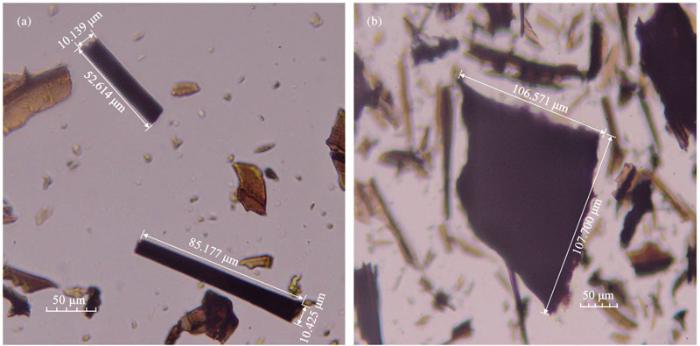
Fire, an integral component of the Earth’s ecosystem, interacts closely with climate, vegetation, and human activities, profoundly influencing ecological environments and societal development. Paleofire research enhances our understanding of the complex relationships among fire, climate, and human activities, providing critical insights for addressing increasing wildfire risks under extreme climate events. Charcoal particles, as direct proxies for palaeofire activity, offer critical information through their morphological characteristics for reconstructing fuel sources, fire types, and fire environment feedback mechanisms. This review synthesizes current research on charcoal morphology and summarizes key findings. Simulated combustion experiments reveal significant morphological differences (shape characteristics and parameters) in charcoal particles derived from distinct fuel types (e.g., woody vs. herbaceous vegetation), with the Length-to-Width ration (L/W) proving effective for distinguishing vegetation types. Comprehensive analysis of simulated combustion data shows that charcoal from herbaceous plants exhibits a significantly larger ratio compared to charcoal from other vegetation types, with herbaceous charcoal typically exceeding ratios of 3~3.5. Although post-depositional processes and combustion temperatures may alter charcoal morphology, the L/W ratio remains a robust indicator for vegetation type identification. Thus, charcoal morphology provides a methodological approach for inferring fuel and fire types. Future efforts should focus on refining experimental protocols that simulate natural fire conditions, quantifying taphonomic biases, and integrating charcoal morphology with other paleoenvironmental proxies (e.g., pollen and stable carbon isotopes) to refine vegetation-fire-climate relationship reconstructions.
Key words: Length-to-Width ratio; Fire activity; Fuel type; Climate.
Haicheng ZHENG , Qiaoyu CUI , Jianhui CHEN . Charcoal Morphology as a Proxy for Paleofire Reconstruction: A Review of Advances and Applications[J]. Advances in Earth Science, 2025 , 40(9) : 890 -901 . DOI: 10.11867/j.issn.1001-8166.2025.075
| [1] | BOWMAN D M J S, BALCH J K, ARTAXO P, et al. Fire in the Earth system[J]. Science, 2009, 324(5 926): 481-484. |
| [2] | CARCAILLET C, ALMQUIST H, ASNONG H, et al. Holocene biomass burning and global dynamics of the carbon cycle[J]. Chemosphere, 2002, 49(8): 845-863. |
| [3] | LASSLOP G, COPPOLA A I, VOULGARAKIS A, et al. Influence of fire on the carbon cycle and climate[J]. Current Climate Change Reports, 2019, 5(2): 112-123. |
| [4] | NASI R, DENNIS R, MEIJAARD E, et al. Forest fire and biological diversity[J]. Unasylva, 2002, 53(209): 36-40. |
| [5] | CLARK F R S, RUSSELL D A. Fossil charcoal and the palaeoatmosphere[J]. Nature, 1981, 290. DOI:10.1038/290428b0 . |
| [6] | TROUET V, TAYLOR A H, WAHL E R, et al. Fire-climate interactions in the American West since 1400 CE[J]. Geophysical Research Letters, 2010, 37(4). DOI:10.1029/2009GL041695 . |
| [7] | FANG K Y, YAO Q C, GUO Z T, et al. ENSO modulates wildfire activity in China[J]. Nature Communications, 2021, 12(1). DOI:10.1038/s41467-021-21988-6 . |
| [8] | ALPERSON-AFIL N, SHARON G, KISLEV M, et al. Spatial organization of hominin activities at Gesher Benot Ya’Aqov, Israel[J]. Science, 2009, 326(5 960): 1 677-1 680. |
| [9] | GAO X, ZHANG S Q, ZHANG Y, et al. Evidence of hominin use and maintenance of fire at Zhoukoudian[J]. Current Anthropology, 2017, 58(): S267-S277. |
| [10] | SAYEDI S S, ABBOTT B W, VANNIèRE B, et al. Assessing changes in global fire regimes[J]. Fire Ecology, 2024, 20(1): 1-22. |
| [11] | IPCC. Climate change 2023: synthesis report[M]// Core Writing Team, LEE H, ROMERO J, et al. Contribution of working groups I, II and III to the sixth assessment report of the Intergovernmental Panel on Climate Change. Geneva: IPCC, 2023: 184. |
| [12] | CONEDERA M, TINNER W, NEFF C, et al. Reconstructing past fire regimes: methods, applications, and relevance to fire management and conservation[J]. Quaternary Science Reviews, 2009, 28(5/6): 555-576. |
| [13] | SCOTT A C, JONES T P. Fossil charcoal: a plant‐fossil record preserved by fire[J]. Geology Today, 1991, 7(6): 214-216. |
| [14] | PATTERSON W A, EDWARDS K J, MAGUIRE D J. Microscopic charcoal as a fossil indicator of fire[J]. Quaternary Science Reviews, 1987, 6(1): 3-23. |
| [15] | MOONEY S, TINNER W. The analysis of charcoal in peat and organic sediments[J]. Mires and Peat, 2011, 7(9): 1-18. |
| [16] | IVERSEN J. Land occupation in Denmark’s Stone Age: danmarks geologiske unders?gelse[J]. Danmarks Geologiske Undersogelse II, 1941, 66: 1-68. |
| [17] | IVERSEN J. Origin of the flora of western Greenland in the light of pollen analysis[J]. Oikos, 1952, 4( 2): 85-103. |
| [18] | WINKLER M G. Charcoal analysis for paleoenvironmental interpretation: a chemical assay[J]. Quaternary Research, 1985, 23(3): 313-326. |
| [19] | WHITE E M, HANNUS L A. Approximate method for estimating soil charcoal contents[J]. Communications in Soil Science and Plant Analysis, 1981, 12(4): 363-371. |
| [20] | de LAFONTAINE G, COUILLARD P L, PAYETTE S. Permineralization process promotes preservation of Holocene macrofossil charcoal in soils[J]. Journal of Quaternary Science, 2011, 26(6): 571-575. |
| [21] | CLARK J S. Particle motion and the theory of charcoal analysis: source area, transport, deposition, and sampling[J]. Quaternary Research, 1988, 30(1): 67-80. |
| [22] | HIGUERA P E, PETERS M E, BRUBAKER L B, et al. Understanding the origin and analysis of sediment-charcoal records with a simulation model[J]. Quaternary Science Reviews, 2007, 26(13/14): 1 790-1 809. |
| [23] | VACHULA R S, REHN E. Modeled dispersal patterns for wood and grass charcoal are different: implications for paleofire reconstruction[J]. The Holocene, 2023, 33(2): 159-166. |
| [24] | ITTER M S, FINLEY A O, HOOTEN M B, et al. A model‐based approach to wildland fire reconstruction using sediment charcoal records[J]. Environmetrics, 2017, 28(7). DOI:10.1002/env.2450 . |
| [25] | REHN E, REHN A, POSSEMIERS A. Fossil charcoal particle identification and classification by two convolutional neural networks[J]. Quaternary Science Reviews, 2019, 226. DOI:10.1016/j.quascirev.2019.106038 . |
| [26] | ZOU Y G, MIAO Y F, YANG S L, et al. A new automatic statistical microcharcoal analysis method based on image processing, demonstrated in the Weiyuan section, northwest China[J]. Frontiers in Earth Science, 2021, 9. DOI:10.3389/feart.2021.609916 . |
| [27] | de RODRIGUES O N R, FERREIRA R L, MARI J F, et al. Automatic identification of charcoal origin based on deep learning[J]. Maderas: Ciencia y Tecnología, 2021, 23(65): 1-12. |
| [28] | RUIZ-PéREZ J, ALEMAN J C, VELDMAN J W. Reproducible protocol for the extraction and semi-automated quantification of macroscopic charcoal from soil[J]. PLoS ONE, 2024, 19(7). DOI:10.1371/journal.pone.0304198 . |
| [29] | ZOU Y G, MIAO Y F, LI Y M, et al. A new method of automatic microcharcoal identification and its demonstration in revealing the spatial heterogeneity of fire over the past 40,000 years in China[J]. Quaternary International, 2025, 725. DOI:10.1016/j.quaint.2025.109743 . |
| [30] | HIGUERA P E, GAVIN D G, BARTLEIN P J, et al. Peak detection in sediment-charcoal records: impacts of alternative data analysis methods on fire-history interpretations[J]. International Journal of Wildland Fire, 2010, 19(8): 996-1 014. |
| [31] | GAVIN D G, HU F S, LERTZMAN K, et al. Weak climatic control of stand‐scale fire history during the late Holocene[J]. Ecology, 2006, 87(7): 1 722-1 732. |
| [32] | BLARQUEZ O, VANNIèRE B, MARLON J R, et al. paleofire: an R package to analyse sedimentary charcoal records from the Global Charcoal Database to reconstruct past biomass burning[J]. Computers & Geosciences, 2014, 72: 255-261. |
| [33] | POWER M J, MARLON J R, BARTLEIN P J, et al. Fire history and the global charcoal database: a new tool for hypothesis testing and data exploration[J]. Palaeogeography, Palaeoclimatology, Palaeoecology, 2010, 291(1/2): 52-59. |
| [34] | MARLON J R, BARTLEIN P J, DANIAU A L, et al. Global biomass burning: a synthesis and review of Holocene paleofire records and their controls[J]. Quaternary Science Reviews, 2013, 65: 5-25. |
| [35] | MOLINARI C, LEHSTEN V, BRADSHAW R H W, et al. Exploring potential drivers of European biomass burning over the Holocene: a data‐model analysis[J]. Global Ecology and Biogeography, 2013, 22(12): 1 248-1 260. |
| [36] | LEYS B A, MARLON J R, UMBANHOWAR C, et al. Global fire history of grassland biomes[J]. Ecology and Evolution, 2018, 8(17): 8 831-8 852. |
| [37] | XU X, LI F, LIN Z D, et al. Holocene fire history in China: responses to climate change and human activities[J]. Science of the Total Environment, 2021, 753. DOI:10.1016/j.scitotenv.2020.142019 . |
| [38] | ZHANG D L, HUANG X Z, LIU Q, et al. Holocene fire records and their drivers in the westerlies-dominated Central Asia[J]. Science of the Total Environment, 2022, 833. DOI:10.1016/j.scitotenv.2022.155153 . |
| [39] | BREMOND L, ALEMAN J C, FAVIER C, et al. Past fire dynamics in sub-Saharan Africa during the last 25, 000 years: climate change and increasing human impacts[J]. Quaternary International, 2024, 711: 49-58. |
| [40] | CUI Qiaoyu. Wildfire responses to millennial- and orbit-scale climate variability and vegetation changes during the Last Glacial-interglacial periods[J]. Quaternary Sciences, 2020, 40(6): 1 513-1 521. |
| 崔巧玉. 末次间冰期以来古火对千年及轨道尺度气候和植被变化的响应[J]. 第四纪研究, 2020, 40(6): 1 513-1 521. | |
| [41] | BLACK M P, MOONEY S D, MARTIN H A. A >43,000-year vegetation and fire history from Lake Baraba, New South Wales, Australia[J]. Quaternary Science Reviews, 2006, 25(21/22): 3 003-3 016. |
| [42] | MOONEY S D, MALTBY E L. Two proxy records revealing the late Holocene fire history at a site on the central coast of New South Wales, Australia[J]. Austral Ecology, 2006, 31(6): 682-695. |
| [43] | BLACK M P, MOONEY S D, HABERLE S G. The fire, human and climate nexus in the Sydney Basin, eastern Australia[J]. The Holocene, 2007, 17(4): 469-480. |
| [44] | CUI Haiting, LI Yiyin, HU Jinming, et al. Vegetation reconstruction of Bronze Age by using microscopic structure of charcoals[J]. Chinese Science Bulletin, 2002, 47(23): 2 014-2 017. |
| 崔海亭,李宜垠,胡金明,等. 利用炭屑显微结构复原青铜时代的植被[J].科学通报,2002, 47(19): 1 504-1 507, 1 522. | |
| [45] | LI Xiaoqiang, GAO Qiang, HOU Yamei, et al. The vegetation and environment at the Wulamulun Site in the Ordos Plateau, Inner Mongolia during MIS3 Period[J]. Acta Anthropologica Sinica, 2014, 33(1): 60-69. |
| 李小强,高强,侯亚梅,等.内蒙古鄂尔多斯乌兰木伦遗址MIS3阶段的植被与环境[J].人类学学报,2014,33(1):60-69. | |
| [46] | LENNOX S J, BAMFORD M K. Identifying Asteraceae, particularly Tarchonanthus parvicapitulatus, in archaeological charcoal from the Middle Stone Age[J]. Quaternary International, 2017, 457: 155-171. |
| [47] | SCOTT A C. Charcoal recognition, taphonomy and uses in palaeoenvironmental analysis[J]. Palaeogeography, Palaeoclimatology, Palaeoecology, 2010, 291(1/2): 11-39. |
| [48] | ENACHE M D, CUMMING B F. Tracking recorded fires using charcoal morphology from the sedimentary sequence of Prosser Lake, British Columbia (Canada)[J]. Quaternary Research, 2006, 65(2): 282-292. |
| [49] | JENSEN K, LYNCH E A, CALCOTE R, et al. Interpretation of charcoal morphotypes in sediments from Ferry Lake, Wisconsin, USA: do different plant fuel sources produce distinctive charcoal morphotypes [J]. The Holocene, 2007, 17(7): 907-915. |
| [50] | WALSH M K, WHITLOCK C, BARTLEIN P J. 1200 years of fire and vegetation history in the Willamette Valley, Oregon and Washington, reconstructed using high-resolution macroscopic charcoal and pollen analysis[J]. Palaeogeography, Palaeoclimatology, Palaeoecology, 2010, 297(2): 273-289. |
| [51] | MUSTAPHI C J C, PISARIC M F J. A classification for macroscopic charcoal morphologies found in Holocene lacustrine sediments[J]. Progress in Physical Geography: Earth and Environment, 2014, 38(6): 734-754. |
| [52] | FRANK-DEPUE L, VACHULA R S, BALASCIO N L, et al. Trends in sedimentary charcoal shapes correspond with broad-scale land-use changes: insights gained from a 300-year lake sediment record from eastern Virginia, USA[J]. Journal of Paleolimnology, 2023, 69(1): 21-36. |
| [53] | TORRES-RODRíGUEZ E, FIGUEROA-RANGEL B L, CABALLERO M, et al. Charcoal morphotypes as indicators of fire fuel types and fire events along eight centuries in east-central Mexico[J]. Journal of Quaternary Science, 2025, 40(2): 303-318. |
| [54] | FEURDEAN A, VACHULA R S, HANGANU D, et al. Charcoal morphologies and morphometrics of a Eurasian grass-dominated system for robust interpretation of past fuel and fire type[J]. Biogeosciences, 2023, 20(24): 5 069-5 085. |
| [55] | ZHANG Jianping, Houyuan Lü. Preliminary study of charcoal morphology and environmental significance [J]. Quaternary Sciences, 2006, 26(5): 857-863. |
| 张健平, 吕厚远. 现代植物炭屑形态的初步分析及其古环境意义[J]. 第四纪研究, 2006, 26(5): 857-863. | |
| [56] | VANNIèRE B, BOSSUET G, WALTER-SIMONNET A V, et al. Land use change, soil erosion and alluvial dynamic in the lower Doubs Valley over the 1st millenium AD (Neublans, Jura, France)[J]. Journal of Archaeological Science, 2003, 30(10): 1 283-1 299. |
| [57] | MUSTAPHI C J C, VOS H C, MARCHANT R, et al. Charcoal whirlwinds and post-fire observations in Serengeti National Park savannahs[J]. Tanzania Journal of Science, 2022, 48(2): 460-473. |
| [58] | VACHULA R S, SAE-LIM J, LI R C. A critical appraisal of charcoal morphometry as a paleofire fuel type proxy[J]. Quaternary Science Reviews, 2021, 262. DOI:10.1016/j.quascirev.2021.106979 . |
| [59] | UMBANHOWAR Jr C E, MCGRATH M J. Experimental production and analysis of microscopic charcoal from wood, leaves and grasses[J]. The Holocene, 1998, 8(3): 341-346. |
| [60] | CRAWFORD A J, BELCHER C M. Charcoal morphometry for paleoecological analysis: the effects of fuel type and transportation on morphological parameters[J]. Applications in Plant Sciences, 2014, 2(8). DOI:10.3732/apps.1400004 . |
| [61] | PEREBOOM E M, VACHULA R S, HUANG Y S, et al. The morphology of experimentally produced charcoal distinguishes fuel types in the Arctic tundra[J]. The Holocene, 2020, 30(7): 1 091-1 096. |
| [62] | LI Cheng, LI Ge, LI Rencheng, et al. Study on the ratio of microcharcoal particles to phytoliths derived from plant combustion[J]. Acta Micropalaeontologica Sinica, 2019, 36(1): 79-86. |
| 李成, 李戈, 李仁成, 等. 植物燃烧微炭屑与植硅体的比值研究[J]. 微体古生物学报, 2019, 36(1): 79-86. | |
| [63] | FEURDEAN A. Experimental production of charcoal morphologies to discriminate fuel source and fire type in the Siberian taiga[J]. Biogeosciences Discussions, 2021, 2021: 1-26. |
| [64] | VACHULA R S, CULLEN T M, GALINGER M R, et al. Morphometric characteristics of charcoal produced from plants native to the southeastern United States of America (USA)[J]. The Holocene, 2024, 34(12): 1 743-1 751. |
| [65] | HU Y F, ZHOU B, LU Y H, et al. Abundance and morphology of charcoal in sediments provide no evidence of massive slash-and-burn agriculture during the Neolithic Kuahuqiao culture, China[J]. PLoS ONE, 2020, 15(8). DOI:10.1371/journal.pone.0237592 . |
| [66] | DANIAU A L, SáNCHEZ-GO?I M F, BEAUFORT L, et al. Dansgaard-Oeschger climatic variability revealed by fire emissions in southwestern Iberia[J]. Quaternary Science Reviews, 2007, 26(9/10): 1 369-1 383. |
| [67] | DANIAU A L, GO?I M F S, MARTINEZ P, et al. Orbital-scale climate forcing of grassland burning in southern Africa[J]. Proceedings of the National Academy of Sciences of the United States of America, 2013, 110(13): 5 069-5 073. |
| [68] | ZHAO W W, ZHAO Y, QIN F. Holocene fire, vegetation, and climate dynamics inferred from charcoal and pollen record in the eastern Tibetan Plateau[J]. Journal of Asian Earth Sciences, 2017, 147: 9-16. |
| [69] | MARRINER N, KANIEWSKI D, GAMBIN T, et al. Fire as a motor of rapid environmental degradation during the earliest peopling of Malta 7500 years ago[J]. Quaternary Science Reviews, 2019, 212: 199-205. |
| [70] | HERRMANN M, LU X, BERKING J, et al. Tracing fire in early european history of Nam Co area (Tibet), using pollen and other palynomorphs[J]. Quaternary International, 2010, 218(1/2): 45-57. |
| [71] | MIAO Y F, WU F L, WARNY S, et al. Miocene fire intensification linked to continuous aridification on the Tibetan Plateau[J]. Geology, 2019, 47(4): 303-307. |
| [72] | MIAO Y F, SONG Y G, LI Y, et al. Late Pleistocene fire in the Ili Basin, Central Asia, and its potential links to paleoclimate change and human activities[J]. Palaeogeography, Palaeoclimatology, Palaeoecology, 2020, 547. DOI:10.1016/j.palaeo.2020.109700 . |
| [73] | ALEMAN J C, BLARQUEZ O, BENTALEB I, et al. Tracking land-cover changes with sedimentary charcoal in the Afrotropics[J]. The Holocene, 2013, 23(12): 1 853-1 862. |
| [74] | BROWN K J, HEBDA N J, CONDER N, et al. Changing climate, vegetation, and fire disturbance in a sub-boreal pine-dominated forest, British Columbia, Canada[J]. Canadian Journal of Forest Research, 2017, 47(5): 615-627. |
| [75] | REHN E, ROWE C, ULM S, et al. Integrating charcoal morphology and stable carbon isotope analysis to identify non-grass elongate charcoal in tropical savannas[J]. Vegetation History and Archaeobotany, 2022, 31(1): 37-48. |
| [76] | THEVENON F, WILLIAMSON D, VINCENS A, et al. A late-Holocene charcoal record from Lake Masoko, SW Tanzania: climatic and anthropologic implications[J]. The Holocene, 2003, 13(5): 785-792. |
| [77] | LEBRETON V, BERTINI A, RUSSO E E, et al. Tracing fire in early European prehistory: microcharcoal quantification in geological and archaeological records from Molise (southern Italy)[J]. Journal of Archaeological Method and Theory, 2019, 26: 247-275. |
| [78] | LEYS B A, COMMERFORD J L, MCLAUCHLAN K K. Reconstructing grassland fire history using sedimentary charcoal: considering count, size and shape[J]. PloS ONE, 2017, 12(4). DOI:10.1371/journal.pone.0176445 . |
| [79] | ZHOU Xuewen, WEI Xiao, CHEN Peng, et al. Charcoal records during the Middle Miocene and its paleoclimatic significance in the Wushan Basin, northeastern Tibetan Plateau[J]. Arid Land Geography, 2022, 45(3): 826-835. |
| 周学文,魏晓,陈鹏,等.青藏高原东北缘武山盆地中中新世炭屑记录及其古气候意义[J].干旱区地理,2022,45(3):826-835. | |
| [80] | XU Han, CHENG Zhongjing, LIU Yan, et al. Marine sedimentary records reveal paleofire history and its driving mechanisms in the northern South China Sea during the Last Glacial[J]. Quaternary Sciences, 2025, 45(2): 546-558. |
| 许涵, 程仲景, 刘演, 等. 海洋沉积记录的南海北部地区末次冰期野火历史及其驱动机制[J]. 第四纪研究, 2025, 45(2): 546-558. | |
| [81] | LIANG Shiqing, LUO Chuanxiu, XIANG Rong, et al. Holocene fire history and its influencing factors in the surrounding areas of the Andaman Sea[J]. Advances in Earth Science, 2024, 39(6): 616-631. |
| 梁诗晴, 罗传秀, 向荣, 等. 全新世安达曼海周边区域火灾历史及其影响因素[J]. 地球科学进展, 2024, 39(6): 616-631. | |
| [82] | WANG Zisha, ZHAO Yongtao, MIAO Yunfa, et al. Statistical problem of microcharcoal in Loess sediments based on the pollen methodology[J]. Arid Land Geography, 2020, 43(3): 661-670. |
| 王梓莎, 赵永涛, 苗运法, 等.以孢粉学方法为例浅论黄土沉积物中微体炭屑的统计问题 [J]. 干旱区地理, 2020, 43(3): 661-670. | |
| [83] | BLARQUEZ O, TALBOT J, PAILLARD J, et al. Late Holocene influence of societies on the fire regime in southern Québec temperate forests[J]. Quaternary Science Reviews, 2018, 180: 63-74. |
| [84] | INOUE J, OKUYAMA C, TAKEMURA K. Long-term fire activity under the East Asian monsoon responding to spring insolation, vegetation type, global climate, and human impact inferred from charcoal records in Lake Biwa sediments in central Japan[J]. Quaternary Science Reviews, 2018, 179: 59-68. |
| [85] | VAUGHAN A, NICHOLS G. Controls on the deposition of charcoal: implications for sedimentary accumulations of fusain[J]. Journal of Sedimentary Research, 1995, 65(1): 129-135. |
| [86] | NICHOLS G J, CRIPPS J A, COLLINSON M E, et al. Experiments in waterlogging and sedimentology of charcoal: results and implications[J]. Palaeogeography, Palaeoclimatology, Palaeoecology, 2000, 164(1/2/3/4): 43-56. |
| [87] | WARD D E, HARDY C C. Smoke emissions from wildland fires[J]. Environment International, 1991, 17(2/3): 117-134. |
| [88] | HUDSPITH V A, HADDEN R M, BARTLETT A I, et al. Does fuel type influence the amount of charcoal produced in wildfires implications for the fossil record[J]. Palaeontology, 2018, 61(2): 159-171. |
| [89] | SIMPSON K J, RIPLEY B S, CHRISTIN P A, et al. Determinants of flammability in savanna grass species[J]. The Journal of Ecology, 2016, 104(1): 138-148. |
| [90] | FUENTES‐RAMIREZ A, VELDMAN J W, HOLZAPFEL C, et al. Spreaders, igniters, and burning shrubs: plant flammability explains novel fire dynamics in grass‐invaded deserts[J]. Ecological Applications, 2016, 26(7): 2 311-2 322. |
| [91] | PAUSAS J G, KEELEY J E, SCHWILK D W. Flammability as an ecological and evolutionary driver[J]. Journal of Ecology, 2017, 105(2): 289-297. |
| [92] | STEVENS N, BOND W, FEURDEAN A, et al. Grassy ecosystems in the Anthropocene[J]. Annual Review of Environment and Resources, 2022, 47(1): 261-289. |
| [93] | BOND W J, WOODWARD F I, MIDGLEY G F. The global distribution of ecosystems in a world without fire[J]. The New Phytologist, 2005, 165(2): 525-537. |
| [94] | YANG H P, YAN R, CHEN H P, et al. Characteristics of hemicellulose, cellulose and lignin pyrolysis[J]. Fuel, 2007, 86(12/13): 1 781-1 788. |
| [95] | VACHULA R S, RICHTER N. Informing sedimentary charcoal-based fire reconstructions with a kinematic transport model[J]. The Holocene, 2018, 28(1): 173-178. |
| [96] | CLARK J S, HUSSEY T C. Estimating the mass flux of charcoal from sedimentary records: effects of particle size, morphology, and orientation[J]. The Holocene, 1996, 6(2): 129-144. |
| [97] | MOORE P D. No smoke without fire[J]. Nature, 1989, 342(6 247): 226-227. |
| [98] | OHLSON M, TRYTERUD E. Interpretation of the charcoal record in forest soils: forest fires and their production and deposition of macroscopic charcoal[J]. The Holocene, 2000, 10(4): 519-525. |
| [99] | LYNCH J A, CLARK J S, STOCKS B J. Charcoal production, dispersal, and deposition from the Fort Providence experimental fire: interpreting fire regimes from charcoal records in boreal forests[J]. Canadian Journal of Forest Research, 2004, 34(8): 1 642-1 656. |
| [100] | PETERS M E, HIGUERA P E. Quantifying the source area of macroscopic charcoal with a particle dispersal model[J]. Quaternary Research, 2007, 67(2): 304-310. |
| [101] | PISARIC M F J. Long-distance transport of terrestrial plant material by convection resulting from forest fires[J]. Journal of Paleolimnology, 2002, 28(3): 349-354. |
| [102] | ORIS F, ALI A A, ASSELIN H, et al. Charcoal dispersion and deposition in boreal lakes from 3 years of monitoring: differences between local and regional fires[J]. Geophysical Research Letters, 2014, 41(19): 6 743-6 752. |
| [103] | LI Y Y, XU X, ZHAO P F. Post-fire dispersal characteristics of charcoal particles in the Daxing’an Mountains of north-east China and their implications for reconstructing past fire activities[J]. International Journal of Wildland Fire, 2016, 26(1): 46-57. |
| [104] | WOODWARD C, HAINES H A. Unprecedented long-distance transport of macroscopic charcoal from a large, intense forest fire in eastern Australia: implications for fire history reconstruction[J]. The Holocene, 2020, 30(7): 947-952. |
| [105] | TINNER W, HOFSTETTER S, ZEUGIN F, et al. Long-distance transport of macroscopic charcoal by an intensive crown fire in the Swiss Alps-implications for fire history reconstruction[J]. The Holocene, 2006, 16(2): 287-292. |
| [106] | GARDNER J J, WHITLOCK C. Charcoal accumulation following a recent fire in the Cascade Range, northwestern USA, and its relevance for fire-history studies[J]. The Holocene, 2001, 11(5): 541-549. |
| [107] | RADKE L F, HEGG D A, HOBBS P V, et al. Particulate and trace gas emissions from large biomass fire in North America[C]// LEVINE J S. Global biomass burning: atmospheric, climatic, and biospheric implications. Cambridge, Massachusetts: the MIT Press, 1991: 209-216. |
| [108] | GARSTANG M, TYSON P D, SWAP R, et al. Horizontal and vertical transport of air over southern Africa[J]. Journal of Geophysical Research: Atmospheres, 1996, 101(D19): 23 721-23 736. |
| [109] | WANG Z S, MIAO Y F, ZOU Y G, et al. Microcharcoals reveal more grass than trees during the mid-Holocene Optimum on the Chinese Loess Plateau[J]. Geophysical Research Letters, 2023, 50(17). DOI:10.1029/2023GL103637 . |
| [110] | VACHULA R S, BALASCIO N L, KARMALKAR A V, et al. Central Appalachian paleofire reconstruction reveals fire-climate-vegetation dynamics across the Last Glacial-interglacial transition[J]. Quaternary Science Reviews, 2024, 338. DOI:10.1016/j.quascirev.2024.108805 . |
| [111] | WANG Zisha, MIAO Yunfa, ZHAO Yongtao, et al. Characteristics of microcharcoal in the lake surface sediments in the northern margin of Qaidam Basin of China and its environmental significance[J]. Journal of Desert Research, 2020, 40(4): 10-17. |
| 王梓莎,苗运法,赵永涛,等.柴达木盆地北缘湖泊表层沉积物炭屑特征及其环境意义[J].中国沙漠,2020,40(4):10-17. | |
| [112] | SCOTT A C, DAMBLON F. Charcoal: taphonomy and significance in geology, botany and archaeology[J]. Palaeogeography, Palaeoclimatology, Palaeoecology, 2010, 291(1/2): 1-10. |
| [113] | PROCTOR L, SMITH A, MATNEY T. Examining long-term fuel and land use patterns at Ziyaret Tepe, Türkiye using an integrated analysis of seeds, wood charcoal, and dung spherulites[J]. Archaeological and Anthropological Sciences, 2024, 16(8). DOI: 10.1007/s12520-024-02013-5 . |
| [114] | MARCHENKO D V, ZHILICH S V, RYBIN E P, et al. Evidence of wildfire versus anthropogenic combustion features: spatial and macro-charcoal analyses of the final middle Paleolithic horizon at Orkhon 7, central Mongolia[J]. Archaeological Research in Asia, 2022, 32. DOI:10.1016/j.ara.2022.100409 . |
| [115] | ZHANG Shurong, SHEN Hui, LI Xiaoqiang, et al. Morphological analysis and environmental significance of charcoal in modern mountain fire in Yunnan Province[J]. Quaternary Sciences, 2024, 44(1): 214-225. |
| 张淑荣, 沈慧, 李小强, 等. 云南现代山火炭屑形态分析及其环境意义[J]. 第四纪研究, 2024, 44(1): 214-225. | |
| [116] | CONSTANTINE IV M, WILLIAMS A N, FRANCKE A, et al. Exploration of the burning question: a long history of fire in eastern Australia with and without people[J]. Fire, 2023, 6(4). DOI:10.3390/fire6040152 . |
/
| 〈 |
|
〉 |
 甘公网安备62010202000687