Production, use, and fate of all plastics ever made
2
2017
... 海洋微塑料是全球共同面对的环境问题和挑战.据统计,自20世纪50年代塑料大规模生产以来,近70年全球累计产生塑料垃圾为4 900 Mt[1 ] ,仅2010年全球沿海地区产生的塑料垃圾就达到275 Mt[2 ] ,预计到2050年塑料垃圾产量将达到12 000 Mt[1 ] .这些塑料垃圾若未经处理堆放在垃圾填埋场或排放到海洋环境中,会经过机械破碎、紫外辐射氧化和生物降解等共同作用逐渐分解成塑料碎屑.粒径在5 mm以下的塑料碎屑统称为“微塑料”(microplastics)[3 ] ,新的研究进一步将微塑料粒径范围限定在0.1 μm~5 mm,将小于0.1 μm的更小碎屑定义为“纳米塑料”(nanoplastics)[4 ] . ...
... [1 ].这些塑料垃圾若未经处理堆放在垃圾填埋场或排放到海洋环境中,会经过机械破碎、紫外辐射氧化和生物降解等共同作用逐渐分解成塑料碎屑.粒径在5 mm以下的塑料碎屑统称为“微塑料”(microplastics)[3 ] ,新的研究进一步将微塑料粒径范围限定在0.1 μm~5 mm,将小于0.1 μm的更小碎屑定义为“纳米塑料”(nanoplastics)[4 ] . ...
Plastic waste inputs from land into the ocean
3
2015
... 海洋微塑料是全球共同面对的环境问题和挑战.据统计,自20世纪50年代塑料大规模生产以来,近70年全球累计产生塑料垃圾为4 900 Mt[1 ] ,仅2010年全球沿海地区产生的塑料垃圾就达到275 Mt[2 ] ,预计到2050年塑料垃圾产量将达到12 000 Mt[1 ] .这些塑料垃圾若未经处理堆放在垃圾填埋场或排放到海洋环境中,会经过机械破碎、紫外辐射氧化和生物降解等共同作用逐渐分解成塑料碎屑.粒径在5 mm以下的塑料碎屑统称为“微塑料”(microplastics)[3 ] ,新的研究进一步将微塑料粒径范围限定在0.1 μm~5 mm,将小于0.1 μm的更小碎屑定义为“纳米塑料”(nanoplastics)[4 ] . ...
... 海洋微塑料的源头包括陆地和海洋两种,与人类污染活动密切相关.微塑料的陆地来源包括河流、排污系统、旅游沙滩、水产养殖海滩、港口码头以及大气等多种输入源,而海洋来源包括海洋渔业、船舶运输和油气钻井平台等.据联合国海洋污染科学问题联合专家小组统计,大约80%的海洋塑料碎屑由陆地来源供给[15 ,16 ,17 ] .2010年,从陆地进入海洋的塑料垃圾量为4.8~12.7 Mt,占全球沿海地区塑料垃圾产量的1.7%~4.6%,预计到2025年陆源塑料垃圾量将增加1个数量级[2 ] . ...
... 河流输入是陆地来源微塑料进入海洋环境的主要方式.据估计,全球河流每年向海洋输送的塑料垃圾量为1.15~2.41 Mt[18 ] (或0.41~4.00 Mt[19 ] ),占沿海地区入海塑料垃圾总量的2.8%~18.6%[18 ] .据相关研究显示,亚洲河流是全世界最大的陆源塑料碎屑贡献源,每年向海洋输送1.00~2.06 Mt塑料碎屑,占全球河流输送量的86%[18 ] .其中,我国长江和珠江可能是世界上输运塑料碎屑最多的河流[20 ,21 ,22 ] ,其次是印度、菲律宾和越南等国的入海河流[2 ,18 ,19 ] . ...
Proceedings of the International Research Workshop on the Occurrence, Effects, and Fate of Microplastic Marine Debris
2
2009
... 海洋微塑料是全球共同面对的环境问题和挑战.据统计,自20世纪50年代塑料大规模生产以来,近70年全球累计产生塑料垃圾为4 900 Mt[1 ] ,仅2010年全球沿海地区产生的塑料垃圾就达到275 Mt[2 ] ,预计到2050年塑料垃圾产量将达到12 000 Mt[1 ] .这些塑料垃圾若未经处理堆放在垃圾填埋场或排放到海洋环境中,会经过机械破碎、紫外辐射氧化和生物降解等共同作用逐渐分解成塑料碎屑.粒径在5 mm以下的塑料碎屑统称为“微塑料”(microplastics)[3 ] ,新的研究进一步将微塑料粒径范围限定在0.1 μm~5 mm,将小于0.1 μm的更小碎屑定义为“纳米塑料”(nanoplastics)[4 ] . ...
... 近10年来,海洋微塑料研究进入快速发展时期,引起国际社会的广泛关注.其实,早在20世纪70年代就有关于海洋塑料碎屑的零星研究[5 ] ,2004年Thompson等[6 ] 首次用“微塑料”命名微小的塑料碎屑,但直到2009年美国国家海洋和大气局才明确定义了微塑料粒径范围[3 ] ,海洋微塑料研究才得以快速发展.2013年,大西洋深海沉积物中首次检测出微塑料[7 ] ,促进了海洋微塑料研究向深海环境的转移.近年来,地中海、太平洋、大西洋和北冰洋,甚至包括全球最深的马里亚纳海沟,相继检测出微塑料碎屑,深海微塑料研究取得显著成果.大量研究表明,微塑料在海洋环境中普遍存在[8 ,9 ,10 ,11 ] . ...
Microplastics and nanoplastics in aquatic environments: Aggregation, deposition, and enhanced contaminant transport
1
2018
... 海洋微塑料是全球共同面对的环境问题和挑战.据统计,自20世纪50年代塑料大规模生产以来,近70年全球累计产生塑料垃圾为4 900 Mt[1 ] ,仅2010年全球沿海地区产生的塑料垃圾就达到275 Mt[2 ] ,预计到2050年塑料垃圾产量将达到12 000 Mt[1 ] .这些塑料垃圾若未经处理堆放在垃圾填埋场或排放到海洋环境中,会经过机械破碎、紫外辐射氧化和生物降解等共同作用逐渐分解成塑料碎屑.粒径在5 mm以下的塑料碎屑统称为“微塑料”(microplastics)[3 ] ,新的研究进一步将微塑料粒径范围限定在0.1 μm~5 mm,将小于0.1 μm的更小碎屑定义为“纳米塑料”(nanoplastics)[4 ] . ...
Polystyrene spherules in coastal waters
1
1972
... 近10年来,海洋微塑料研究进入快速发展时期,引起国际社会的广泛关注.其实,早在20世纪70年代就有关于海洋塑料碎屑的零星研究[5 ] ,2004年Thompson等[6 ] 首次用“微塑料”命名微小的塑料碎屑,但直到2009年美国国家海洋和大气局才明确定义了微塑料粒径范围[3 ] ,海洋微塑料研究才得以快速发展.2013年,大西洋深海沉积物中首次检测出微塑料[7 ] ,促进了海洋微塑料研究向深海环境的转移.近年来,地中海、太平洋、大西洋和北冰洋,甚至包括全球最深的马里亚纳海沟,相继检测出微塑料碎屑,深海微塑料研究取得显著成果.大量研究表明,微塑料在海洋环境中普遍存在[8 ,9 ,10 ,11 ] . ...
Lost at sea: Where is all the plastic?
1
2004
... 近10年来,海洋微塑料研究进入快速发展时期,引起国际社会的广泛关注.其实,早在20世纪70年代就有关于海洋塑料碎屑的零星研究[5 ] ,2004年Thompson等[6 ] 首次用“微塑料”命名微小的塑料碎屑,但直到2009年美国国家海洋和大气局才明确定义了微塑料粒径范围[3 ] ,海洋微塑料研究才得以快速发展.2013年,大西洋深海沉积物中首次检测出微塑料[7 ] ,促进了海洋微塑料研究向深海环境的转移.近年来,地中海、太平洋、大西洋和北冰洋,甚至包括全球最深的马里亚纳海沟,相继检测出微塑料碎屑,深海微塑料研究取得显著成果.大量研究表明,微塑料在海洋环境中普遍存在[8 ,9 ,10 ,11 ] . ...
Microplastic pollution in deep-sea sediments
4
2013
... 近10年来,海洋微塑料研究进入快速发展时期,引起国际社会的广泛关注.其实,早在20世纪70年代就有关于海洋塑料碎屑的零星研究[5 ] ,2004年Thompson等[6 ] 首次用“微塑料”命名微小的塑料碎屑,但直到2009年美国国家海洋和大气局才明确定义了微塑料粒径范围[3 ] ,海洋微塑料研究才得以快速发展.2013年,大西洋深海沉积物中首次检测出微塑料[7 ] ,促进了海洋微塑料研究向深海环境的转移.近年来,地中海、太平洋、大西洋和北冰洋,甚至包括全球最深的马里亚纳海沟,相继检测出微塑料碎屑,深海微塑料研究取得显著成果.大量研究表明,微塑料在海洋环境中普遍存在[8 ,9 ,10 ,11 ] . ...
... 深海海底表层沉积物是微塑料最终的沉积汇,是潜在的海洋微塑料聚集区.大约54%的塑料碎屑密度超过海水,能够沉积到海底.海洋微塑料在河口、海湾和泻湖等区域的沉积物中普遍存在,说明微塑料像陆源碎屑一样,会被困在沉积物堆积的低流速区[21 ,43 ] .深海海底微塑料引起学术界的广泛关注,始于大西洋深海沉积物中首次发现微塑料[7 ] ,随后在地中海、印度洋、太平洋及北冰洋等深海沉积物中同样检测出微塑料[8 ,9 ,10 ,11 ] .但由于采样难度的限制,目前关于深海微塑料丰度和储量的数据仍然有限.北冰洋HAUSGARTEN观测站附近沉积物中检测出的微塑料数量丰度为42~6 595 p/kg[10 ] ,是当前深海沉积物中检测出的微塑料最高含量.最近在马里亚纳海沟沉积物中也检测出微塑料,数量丰度为270~6 200 p/kg(图4 b)[11 ] .深海环境中沉积的微塑料颗粒不断埋藏,很可能聚集了大量的海洋微塑料,有待更多实地调查结果的验证. ...
... 海洋雪聚集有助于增加微塑料颗粒沉降速率,使其快速穿越水柱沉积到海底[7 ,64 ] .海洋雪是由水柱上层飘落的微小颗粒组成的富含有机物的聚集体,通常包含已死或将死的浮游植物和动物、微生物、粪便颗粒、颗粒有机物和无机陆源碎屑等.Zhao等[65 ] 最早在水柱顶部2 m的天然海洋雪中检测出微塑料,Kowalski等[44 ] 则在模拟破浪带机械应力对微塑料的影响时,观测到微塑料与黏土矿物和石英的聚集.实验室内模拟微塑料与浮游藻类聚集和沉降过程,测得微塑料沉降速率在聚集前后从每天数十米增加到数百米[60 ] ,能够在几天或几年内沉积到海底[7 ] .Porter等[66 ] 更详细地测试了聚合物类型、形状和粒径大小对海洋雪沉降速率的影响,观测到微塑料能够引起海洋雪聚集体密度的增加或减少,从而加速或减缓聚集体沉降过程(图7 ).微塑料与海洋雪聚集不仅改变了微塑料在水柱中的行为,同时改变了海洋雪沉降速率,影响水柱中颗粒有机物沉降通量. ...
... [7 ].Porter等[66 ] 更详细地测试了聚合物类型、形状和粒径大小对海洋雪沉降速率的影响,观测到微塑料能够引起海洋雪聚集体密度的增加或减少,从而加速或减缓聚集体沉降过程(图7 ).微塑料与海洋雪聚集不仅改变了微塑料在水柱中的行为,同时改变了海洋雪沉降速率,影响水柱中颗粒有机物沉降通量. ...
The deep sea is a major sink for microplastic debris
2
2014
... 近10年来,海洋微塑料研究进入快速发展时期,引起国际社会的广泛关注.其实,早在20世纪70年代就有关于海洋塑料碎屑的零星研究[5 ] ,2004年Thompson等[6 ] 首次用“微塑料”命名微小的塑料碎屑,但直到2009年美国国家海洋和大气局才明确定义了微塑料粒径范围[3 ] ,海洋微塑料研究才得以快速发展.2013年,大西洋深海沉积物中首次检测出微塑料[7 ] ,促进了海洋微塑料研究向深海环境的转移.近年来,地中海、太平洋、大西洋和北冰洋,甚至包括全球最深的马里亚纳海沟,相继检测出微塑料碎屑,深海微塑料研究取得显著成果.大量研究表明,微塑料在海洋环境中普遍存在[8 ,9 ,10 ,11 ] . ...
... 深海海底表层沉积物是微塑料最终的沉积汇,是潜在的海洋微塑料聚集区.大约54%的塑料碎屑密度超过海水,能够沉积到海底.海洋微塑料在河口、海湾和泻湖等区域的沉积物中普遍存在,说明微塑料像陆源碎屑一样,会被困在沉积物堆积的低流速区[21 ,43 ] .深海海底微塑料引起学术界的广泛关注,始于大西洋深海沉积物中首次发现微塑料[7 ] ,随后在地中海、印度洋、太平洋及北冰洋等深海沉积物中同样检测出微塑料[8 ,9 ,10 ,11 ] .但由于采样难度的限制,目前关于深海微塑料丰度和储量的数据仍然有限.北冰洋HAUSGARTEN观测站附近沉积物中检测出的微塑料数量丰度为42~6 595 p/kg[10 ] ,是当前深海沉积物中检测出的微塑料最高含量.最近在马里亚纳海沟沉积物中也检测出微塑料,数量丰度为270~6 200 p/kg(图4 b)[11 ] .深海环境中沉积的微塑料颗粒不断埋藏,很可能聚集了大量的海洋微塑料,有待更多实地调查结果的验证. ...
Plastic pollution of the Kuril-Kamchatka Trench area (NW Pacific)
2
2015
... 近10年来,海洋微塑料研究进入快速发展时期,引起国际社会的广泛关注.其实,早在20世纪70年代就有关于海洋塑料碎屑的零星研究[5 ] ,2004年Thompson等[6 ] 首次用“微塑料”命名微小的塑料碎屑,但直到2009年美国国家海洋和大气局才明确定义了微塑料粒径范围[3 ] ,海洋微塑料研究才得以快速发展.2013年,大西洋深海沉积物中首次检测出微塑料[7 ] ,促进了海洋微塑料研究向深海环境的转移.近年来,地中海、太平洋、大西洋和北冰洋,甚至包括全球最深的马里亚纳海沟,相继检测出微塑料碎屑,深海微塑料研究取得显著成果.大量研究表明,微塑料在海洋环境中普遍存在[8 ,9 ,10 ,11 ] . ...
... 深海海底表层沉积物是微塑料最终的沉积汇,是潜在的海洋微塑料聚集区.大约54%的塑料碎屑密度超过海水,能够沉积到海底.海洋微塑料在河口、海湾和泻湖等区域的沉积物中普遍存在,说明微塑料像陆源碎屑一样,会被困在沉积物堆积的低流速区[21 ,43 ] .深海海底微塑料引起学术界的广泛关注,始于大西洋深海沉积物中首次发现微塑料[7 ] ,随后在地中海、印度洋、太平洋及北冰洋等深海沉积物中同样检测出微塑料[8 ,9 ,10 ,11 ] .但由于采样难度的限制,目前关于深海微塑料丰度和储量的数据仍然有限.北冰洋HAUSGARTEN观测站附近沉积物中检测出的微塑料数量丰度为42~6 595 p/kg[10 ] ,是当前深海沉积物中检测出的微塑料最高含量.最近在马里亚纳海沟沉积物中也检测出微塑料,数量丰度为270~6 200 p/kg(图4 b)[11 ] .深海环境中沉积的微塑料颗粒不断埋藏,很可能聚集了大量的海洋微塑料,有待更多实地调查结果的验证. ...
High quantities of microplastic in Arctic deep-sea sediments from the HAUSGARTEN observatory
3
2017
... 近10年来,海洋微塑料研究进入快速发展时期,引起国际社会的广泛关注.其实,早在20世纪70年代就有关于海洋塑料碎屑的零星研究[5 ] ,2004年Thompson等[6 ] 首次用“微塑料”命名微小的塑料碎屑,但直到2009年美国国家海洋和大气局才明确定义了微塑料粒径范围[3 ] ,海洋微塑料研究才得以快速发展.2013年,大西洋深海沉积物中首次检测出微塑料[7 ] ,促进了海洋微塑料研究向深海环境的转移.近年来,地中海、太平洋、大西洋和北冰洋,甚至包括全球最深的马里亚纳海沟,相继检测出微塑料碎屑,深海微塑料研究取得显著成果.大量研究表明,微塑料在海洋环境中普遍存在[8 ,9 ,10 ,11 ] . ...
... 深海海底表层沉积物是微塑料最终的沉积汇,是潜在的海洋微塑料聚集区.大约54%的塑料碎屑密度超过海水,能够沉积到海底.海洋微塑料在河口、海湾和泻湖等区域的沉积物中普遍存在,说明微塑料像陆源碎屑一样,会被困在沉积物堆积的低流速区[21 ,43 ] .深海海底微塑料引起学术界的广泛关注,始于大西洋深海沉积物中首次发现微塑料[7 ] ,随后在地中海、印度洋、太平洋及北冰洋等深海沉积物中同样检测出微塑料[8 ,9 ,10 ,11 ] .但由于采样难度的限制,目前关于深海微塑料丰度和储量的数据仍然有限.北冰洋HAUSGARTEN观测站附近沉积物中检测出的微塑料数量丰度为42~6 595 p/kg[10 ] ,是当前深海沉积物中检测出的微塑料最高含量.最近在马里亚纳海沟沉积物中也检测出微塑料,数量丰度为270~6 200 p/kg(图4 b)[11 ] .深海环境中沉积的微塑料颗粒不断埋藏,很可能聚集了大量的海洋微塑料,有待更多实地调查结果的验证. ...
... [10 ],是当前深海沉积物中检测出的微塑料最高含量.最近在马里亚纳海沟沉积物中也检测出微塑料,数量丰度为270~6 200 p/kg(图4 b)[11 ] .深海环境中沉积的微塑料颗粒不断埋藏,很可能聚集了大量的海洋微塑料,有待更多实地调查结果的验证. ...
Microplastics contaminate the deepest part of the world’s ocean
6
2018
... 近10年来,海洋微塑料研究进入快速发展时期,引起国际社会的广泛关注.其实,早在20世纪70年代就有关于海洋塑料碎屑的零星研究[5 ] ,2004年Thompson等[6 ] 首次用“微塑料”命名微小的塑料碎屑,但直到2009年美国国家海洋和大气局才明确定义了微塑料粒径范围[3 ] ,海洋微塑料研究才得以快速发展.2013年,大西洋深海沉积物中首次检测出微塑料[7 ] ,促进了海洋微塑料研究向深海环境的转移.近年来,地中海、太平洋、大西洋和北冰洋,甚至包括全球最深的马里亚纳海沟,相继检测出微塑料碎屑,深海微塑料研究取得显著成果.大量研究表明,微塑料在海洋环境中普遍存在[8 ,9 ,10 ,11 ] . ...
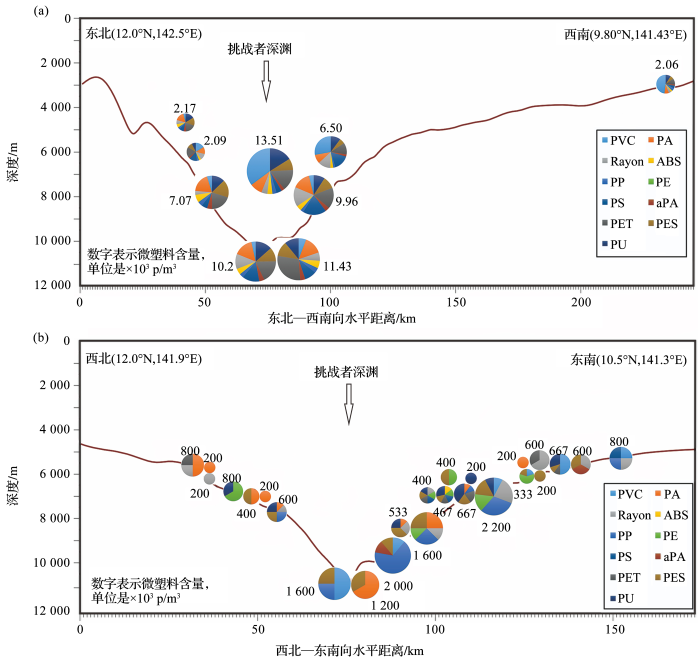
... 海洋水柱也是海洋微塑料聚集的重要环境介质,且在特殊海域异常富集微塑料.东北太平洋近海表(水深4.5 m)微塑料含量的大范围航次调查结果显示,该海域微塑料数量丰度是8~9 180 p/m3 [42 ] .如图3 所示,从加拿大西海岸向东北太平洋延伸,近海表水体中微塑料含量逐渐减少,这与受人类活动影响减弱、陆源微塑料输入量降低有关.但是,即使是远离人类活动影响的海沟,其微塑料含量也非常可观.最近在全球最深的马里亚纳海沟的调查,发现底层海水中微塑料数量高达2 060~13 510 p/m3 (图4 a)[11 ] ,甚至超过了北太平洋环流区的微塑料含量,说明海洋水柱中同样聚集了大量的微塑料. ...
... [
11 ]
Profile of microplastic abundances and compositions in hadal water (a) and sediments (b) from Mariana Trench<sup>[<xref ref-type="bibr" rid="R11">11</xref>]</sup> Fig.4 ![]()
<strong>3.3</strong> 海底表层沉积物 深海海底表层沉积物是微塑料最终的沉积汇,是潜在的海洋微塑料聚集区.大约54%的塑料碎屑密度超过海水,能够沉积到海底.海洋微塑料在河口、海湾和泻湖等区域的沉积物中普遍存在,说明微塑料像陆源碎屑一样,会被困在沉积物堆积的低流速区[21 ,43 ] .深海海底微塑料引起学术界的广泛关注,始于大西洋深海沉积物中首次发现微塑料[7 ] ,随后在地中海、印度洋、太平洋及北冰洋等深海沉积物中同样检测出微塑料[8 ,9 ,10 ,11 ] .但由于采样难度的限制,目前关于深海微塑料丰度和储量的数据仍然有限.北冰洋HAUSGARTEN观测站附近沉积物中检测出的微塑料数量丰度为42~6 595 p/kg[10 ] ,是当前深海沉积物中检测出的微塑料最高含量.最近在马里亚纳海沟沉积物中也检测出微塑料,数量丰度为270~6 200 p/kg(图4 b)[11 ] .深海环境中沉积的微塑料颗粒不断埋藏,很可能聚集了大量的海洋微塑料,有待更多实地调查结果的验证. ...
... [
11 ]
Fig.4 ![]()
<strong>3.3</strong> 海底表层沉积物 深海海底表层沉积物是微塑料最终的沉积汇,是潜在的海洋微塑料聚集区.大约54%的塑料碎屑密度超过海水,能够沉积到海底.海洋微塑料在河口、海湾和泻湖等区域的沉积物中普遍存在,说明微塑料像陆源碎屑一样,会被困在沉积物堆积的低流速区[21 ,43 ] .深海海底微塑料引起学术界的广泛关注,始于大西洋深海沉积物中首次发现微塑料[7 ] ,随后在地中海、印度洋、太平洋及北冰洋等深海沉积物中同样检测出微塑料[8 ,9 ,10 ,11 ] .但由于采样难度的限制,目前关于深海微塑料丰度和储量的数据仍然有限.北冰洋HAUSGARTEN观测站附近沉积物中检测出的微塑料数量丰度为42~6 595 p/kg[10 ] ,是当前深海沉积物中检测出的微塑料最高含量.最近在马里亚纳海沟沉积物中也检测出微塑料,数量丰度为270~6 200 p/kg(图4 b)[11 ] .深海环境中沉积的微塑料颗粒不断埋藏,很可能聚集了大量的海洋微塑料,有待更多实地调查结果的验证. ...
... 深海海底表层沉积物是微塑料最终的沉积汇,是潜在的海洋微塑料聚集区.大约54%的塑料碎屑密度超过海水,能够沉积到海底.海洋微塑料在河口、海湾和泻湖等区域的沉积物中普遍存在,说明微塑料像陆源碎屑一样,会被困在沉积物堆积的低流速区[21 ,43 ] .深海海底微塑料引起学术界的广泛关注,始于大西洋深海沉积物中首次发现微塑料[7 ] ,随后在地中海、印度洋、太平洋及北冰洋等深海沉积物中同样检测出微塑料[8 ,9 ,10 ,11 ] .但由于采样难度的限制,目前关于深海微塑料丰度和储量的数据仍然有限.北冰洋HAUSGARTEN观测站附近沉积物中检测出的微塑料数量丰度为42~6 595 p/kg[10 ] ,是当前深海沉积物中检测出的微塑料最高含量.最近在马里亚纳海沟沉积物中也检测出微塑料,数量丰度为270~6 200 p/kg(图4 b)[11 ] .深海环境中沉积的微塑料颗粒不断埋藏,很可能聚集了大量的海洋微塑料,有待更多实地调查结果的验证. ...
... [11 ].深海环境中沉积的微塑料颗粒不断埋藏,很可能聚集了大量的海洋微塑料,有待更多实地调查结果的验证. ...
Microplastics in the marine environment
3
2011
... 海洋微塑料可以根据起源或聚合物种类划分为不同的类型.根据微塑料起源分为原生微塑料(primary microplastics)和次生微塑料(secondary microplastics).原生微塑料是指为特殊用途生产的塑料制品,比如个人护理品中添加的塑料微珠、3D打印使用的塑料粉末以及工业用树脂粉末等[12 ,13 ] .次生微塑料是指由大块塑料废弃物经过机械破碎、紫外辐射氧化或生物降解等过程形成的微小塑料颗粒,比如塑料制品碎屑、塑料袋碎片、包装薄膜以及合成纤维等[12 ,13 ] .其中,合成纤维是海洋水柱和沉积物中最常见的类型,占全部海洋微塑料颗粒的21.6%~95.9%[14 ] .就海洋微塑料的高分子聚合物成分而言,通常包括:聚乙烯(Polyethylene, PE)、聚丙烯(Poplypropylene, PP)、聚苯乙烯(Polystyrene, PS)、聚氯乙烯(Polyvinyl Chloride, PVC)、聚酯(Polyester, PES)、聚氨酯(Polyurethane, PU)、聚对苯二甲酸乙二醇酯(Polyethylene Terephthalate, PET)、聚酰胺(Polyamide, PA)、聚芳酰胺(Aromatic polyamide, aPA)、聚己内酯(Polycaprolactone, PCL)、乙烯—乙酸乙烯酯(Ethylene Vinyl Acetate, EVA)、乙酸纤维素(Cellulose Acetate, CA)、丙烯腈—丁二烯—苯乙烯(Acrylonitrile Butadiene Styrene, ABS)和聚苯乙烯—丁二烯—苯乙烯(Polystyrene Butadiene Styrene, SBS)等.识别和鉴定微塑料类型及聚合物化学组分是海洋微塑料研究中最为基础的环节,有助于对海洋环境中微塑料丰度进行定量分析. ...
... [12 ,13 ].其中,合成纤维是海洋水柱和沉积物中最常见的类型,占全部海洋微塑料颗粒的21.6%~95.9%[14 ] .就海洋微塑料的高分子聚合物成分而言,通常包括:聚乙烯(Polyethylene, PE)、聚丙烯(Poplypropylene, PP)、聚苯乙烯(Polystyrene, PS)、聚氯乙烯(Polyvinyl Chloride, PVC)、聚酯(Polyester, PES)、聚氨酯(Polyurethane, PU)、聚对苯二甲酸乙二醇酯(Polyethylene Terephthalate, PET)、聚酰胺(Polyamide, PA)、聚芳酰胺(Aromatic polyamide, aPA)、聚己内酯(Polycaprolactone, PCL)、乙烯—乙酸乙烯酯(Ethylene Vinyl Acetate, EVA)、乙酸纤维素(Cellulose Acetate, CA)、丙烯腈—丁二烯—苯乙烯(Acrylonitrile Butadiene Styrene, ABS)和聚苯乙烯—丁二烯—苯乙烯(Polystyrene Butadiene Styrene, SBS)等.识别和鉴定微塑料类型及聚合物化学组分是海洋微塑料研究中最为基础的环节,有助于对海洋环境中微塑料丰度进行定量分析. ...
... 生物淤积在微塑料表面能够有效增加塑料碎屑密度,“压舱作用”使原本具有浮力的微塑料脱离海洋表层下沉[12 ,31 ] .长期浸泡在海水中的塑料废弃物发生高度降解,表面积可增加到原始颗粒的2倍多[51 ] ,为环境中微生物、藻类和无脊椎动物附着提供可能.微生物淤积仅需要1周左右就会形成稳定生物膜[52 ,53 ] ,7周之内能够使漂浮微塑料发生沉降[54 ] .随着水深逐渐增加,到密度和温度跃层深度上,微塑料因密度近似于海水密度而呈悬浮态[55 ] .但根据Kooi等[56 ] 研究,微塑料在生物淤积引起初次沉降后,不会悬浮在固定水位,而是在水柱中不断上升和下降.这是因为浸没在海面之下的微塑料颗粒,由于受光照消减、刮擦和碳酸盐溶解等因素干扰,表面附着的生物污垢可能在短时间内被去除,然后颗粒再次向上运动或重新浮出海面,微塑料在水柱中上下运动与表面附着藻类的生长周期密切相关[56 ] .估计海洋微塑料表面生物量高达0.001~0.015 Mt[57 ] ,对促进海洋表层漂浮微塑料沉降具有重要意义. ...
Microplastics as contaminants in the marine environment: A review
2
2011
... 海洋微塑料可以根据起源或聚合物种类划分为不同的类型.根据微塑料起源分为原生微塑料(primary microplastics)和次生微塑料(secondary microplastics).原生微塑料是指为特殊用途生产的塑料制品,比如个人护理品中添加的塑料微珠、3D打印使用的塑料粉末以及工业用树脂粉末等[12 ,13 ] .次生微塑料是指由大块塑料废弃物经过机械破碎、紫外辐射氧化或生物降解等过程形成的微小塑料颗粒,比如塑料制品碎屑、塑料袋碎片、包装薄膜以及合成纤维等[12 ,13 ] .其中,合成纤维是海洋水柱和沉积物中最常见的类型,占全部海洋微塑料颗粒的21.6%~95.9%[14 ] .就海洋微塑料的高分子聚合物成分而言,通常包括:聚乙烯(Polyethylene, PE)、聚丙烯(Poplypropylene, PP)、聚苯乙烯(Polystyrene, PS)、聚氯乙烯(Polyvinyl Chloride, PVC)、聚酯(Polyester, PES)、聚氨酯(Polyurethane, PU)、聚对苯二甲酸乙二醇酯(Polyethylene Terephthalate, PET)、聚酰胺(Polyamide, PA)、聚芳酰胺(Aromatic polyamide, aPA)、聚己内酯(Polycaprolactone, PCL)、乙烯—乙酸乙烯酯(Ethylene Vinyl Acetate, EVA)、乙酸纤维素(Cellulose Acetate, CA)、丙烯腈—丁二烯—苯乙烯(Acrylonitrile Butadiene Styrene, ABS)和聚苯乙烯—丁二烯—苯乙烯(Polystyrene Butadiene Styrene, SBS)等.识别和鉴定微塑料类型及聚合物化学组分是海洋微塑料研究中最为基础的环节,有助于对海洋环境中微塑料丰度进行定量分析. ...
... ,13 ].其中,合成纤维是海洋水柱和沉积物中最常见的类型,占全部海洋微塑料颗粒的21.6%~95.9%[14 ] .就海洋微塑料的高分子聚合物成分而言,通常包括:聚乙烯(Polyethylene, PE)、聚丙烯(Poplypropylene, PP)、聚苯乙烯(Polystyrene, PS)、聚氯乙烯(Polyvinyl Chloride, PVC)、聚酯(Polyester, PES)、聚氨酯(Polyurethane, PU)、聚对苯二甲酸乙二醇酯(Polyethylene Terephthalate, PET)、聚酰胺(Polyamide, PA)、聚芳酰胺(Aromatic polyamide, aPA)、聚己内酯(Polycaprolactone, PCL)、乙烯—乙酸乙烯酯(Ethylene Vinyl Acetate, EVA)、乙酸纤维素(Cellulose Acetate, CA)、丙烯腈—丁二烯—苯乙烯(Acrylonitrile Butadiene Styrene, ABS)和聚苯乙烯—丁二烯—苯乙烯(Polystyrene Butadiene Styrene, SBS)等.识别和鉴定微塑料类型及聚合物化学组分是海洋微塑料研究中最为基础的环节,有助于对海洋环境中微塑料丰度进行定量分析. ...
Synthetic microfibers in the marine environment: A review on their occurrence in seawater and sediments
1
2018
... 海洋微塑料可以根据起源或聚合物种类划分为不同的类型.根据微塑料起源分为原生微塑料(primary microplastics)和次生微塑料(secondary microplastics).原生微塑料是指为特殊用途生产的塑料制品,比如个人护理品中添加的塑料微珠、3D打印使用的塑料粉末以及工业用树脂粉末等[12 ,13 ] .次生微塑料是指由大块塑料废弃物经过机械破碎、紫外辐射氧化或生物降解等过程形成的微小塑料颗粒,比如塑料制品碎屑、塑料袋碎片、包装薄膜以及合成纤维等[12 ,13 ] .其中,合成纤维是海洋水柱和沉积物中最常见的类型,占全部海洋微塑料颗粒的21.6%~95.9%[14 ] .就海洋微塑料的高分子聚合物成分而言,通常包括:聚乙烯(Polyethylene, PE)、聚丙烯(Poplypropylene, PP)、聚苯乙烯(Polystyrene, PS)、聚氯乙烯(Polyvinyl Chloride, PVC)、聚酯(Polyester, PES)、聚氨酯(Polyurethane, PU)、聚对苯二甲酸乙二醇酯(Polyethylene Terephthalate, PET)、聚酰胺(Polyamide, PA)、聚芳酰胺(Aromatic polyamide, aPA)、聚己内酯(Polycaprolactone, PCL)、乙烯—乙酸乙烯酯(Ethylene Vinyl Acetate, EVA)、乙酸纤维素(Cellulose Acetate, CA)、丙烯腈—丁二烯—苯乙烯(Acrylonitrile Butadiene Styrene, ABS)和聚苯乙烯—丁二烯—苯乙烯(Polystyrene Butadiene Styrene, SBS)等.识别和鉴定微塑料类型及聚合物化学组分是海洋微塑料研究中最为基础的环节,有助于对海洋环境中微塑料丰度进行定量分析. ...
The State of the Marine Environment
1
1991
... 海洋微塑料的源头包括陆地和海洋两种,与人类污染活动密切相关.微塑料的陆地来源包括河流、排污系统、旅游沙滩、水产养殖海滩、港口码头以及大气等多种输入源,而海洋来源包括海洋渔业、船舶运输和油气钻井平台等.据联合国海洋污染科学问题联合专家小组统计,大约80%的海洋塑料碎屑由陆地来源供给[15 ,16 ,17 ] .2010年,从陆地进入海洋的塑料垃圾量为4.8~12.7 Mt,占全球沿海地区塑料垃圾产量的1.7%~4.6%,预计到2025年陆源塑料垃圾量将增加1个数量级[2 ] . ...
Marine debris & plastics: Environmental concerns, sources, impacts and solutions
1
2007
... 海洋微塑料的源头包括陆地和海洋两种,与人类污染活动密切相关.微塑料的陆地来源包括河流、排污系统、旅游沙滩、水产养殖海滩、港口码头以及大气等多种输入源,而海洋来源包括海洋渔业、船舶运输和油气钻井平台等.据联合国海洋污染科学问题联合专家小组统计,大约80%的海洋塑料碎屑由陆地来源供给[15 ,16 ,17 ] .2010年,从陆地进入海洋的塑料垃圾量为4.8~12.7 Mt,占全球沿海地区塑料垃圾产量的1.7%~4.6%,预计到2025年陆源塑料垃圾量将增加1个数量级[2 ] . ...
Proceedings of the GESAMP International Workshop on Microplastic Particles as a Vector in Transporting Persistent, Bio-accumulating and Toxic Substances in the Ocean
1
2010
... 海洋微塑料的源头包括陆地和海洋两种,与人类污染活动密切相关.微塑料的陆地来源包括河流、排污系统、旅游沙滩、水产养殖海滩、港口码头以及大气等多种输入源,而海洋来源包括海洋渔业、船舶运输和油气钻井平台等.据联合国海洋污染科学问题联合专家小组统计,大约80%的海洋塑料碎屑由陆地来源供给[15 ,16 ,17 ] .2010年,从陆地进入海洋的塑料垃圾量为4.8~12.7 Mt,占全球沿海地区塑料垃圾产量的1.7%~4.6%,预计到2025年陆源塑料垃圾量将增加1个数量级[2 ] . ...
River plastic emissions to the world’s oceans
4
2017
... 河流输入是陆地来源微塑料进入海洋环境的主要方式.据估计,全球河流每年向海洋输送的塑料垃圾量为1.15~2.41 Mt[18 ] (或0.41~4.00 Mt[19 ] ),占沿海地区入海塑料垃圾总量的2.8%~18.6%[18 ] .据相关研究显示,亚洲河流是全世界最大的陆源塑料碎屑贡献源,每年向海洋输送1.00~2.06 Mt塑料碎屑,占全球河流输送量的86%[18 ] .其中,我国长江和珠江可能是世界上输运塑料碎屑最多的河流[20 ,21 ,22 ] ,其次是印度、菲律宾和越南等国的入海河流[2 ,18 ,19 ] . ...
... [18 ].据相关研究显示,亚洲河流是全世界最大的陆源塑料碎屑贡献源,每年向海洋输送1.00~2.06 Mt塑料碎屑,占全球河流输送量的86%[18 ] .其中,我国长江和珠江可能是世界上输运塑料碎屑最多的河流[20 ,21 ,22 ] ,其次是印度、菲律宾和越南等国的入海河流[2 ,18 ,19 ] . ...
... [18 ].其中,我国长江和珠江可能是世界上输运塑料碎屑最多的河流[20 ,21 ,22 ] ,其次是印度、菲律宾和越南等国的入海河流[2 ,18 ,19 ] . ...
... ,18 ,19 ]. ...
Export of plastic debris by rivers into the sea
2
2017
... 河流输入是陆地来源微塑料进入海洋环境的主要方式.据估计,全球河流每年向海洋输送的塑料垃圾量为1.15~2.41 Mt[18 ] (或0.41~4.00 Mt[19 ] ),占沿海地区入海塑料垃圾总量的2.8%~18.6%[18 ] .据相关研究显示,亚洲河流是全世界最大的陆源塑料碎屑贡献源,每年向海洋输送1.00~2.06 Mt塑料碎屑,占全球河流输送量的86%[18 ] .其中,我国长江和珠江可能是世界上输运塑料碎屑最多的河流[20 ,21 ,22 ] ,其次是印度、菲律宾和越南等国的入海河流[2 ,18 ,19 ] . ...
... ,19 ]. ...
Suspended microplastics in the surface water of the Yangtze Estuary System, China: First observations on occurrence, distribution
1
86
... 河流输入是陆地来源微塑料进入海洋环境的主要方式.据估计,全球河流每年向海洋输送的塑料垃圾量为1.15~2.41 Mt[18 ] (或0.41~4.00 Mt[19 ] ),占沿海地区入海塑料垃圾总量的2.8%~18.6%[18 ] .据相关研究显示,亚洲河流是全世界最大的陆源塑料碎屑贡献源,每年向海洋输送1.00~2.06 Mt塑料碎屑,占全球河流输送量的86%[18 ] .其中,我国长江和珠江可能是世界上输运塑料碎屑最多的河流[20 ,21 ,22 ] ,其次是印度、菲律宾和越南等国的入海河流[2 ,18 ,19 ] . ...
Hong Kong at the Pearl River Estuary: A hotspot of microplastic pollution
2
99
... 河流输入是陆地来源微塑料进入海洋环境的主要方式.据估计,全球河流每年向海洋输送的塑料垃圾量为1.15~2.41 Mt[18 ] (或0.41~4.00 Mt[19 ] ),占沿海地区入海塑料垃圾总量的2.8%~18.6%[18 ] .据相关研究显示,亚洲河流是全世界最大的陆源塑料碎屑贡献源,每年向海洋输送1.00~2.06 Mt塑料碎屑,占全球河流输送量的86%[18 ] .其中,我国长江和珠江可能是世界上输运塑料碎屑最多的河流[20 ,21 ,22 ] ,其次是印度、菲律宾和越南等国的入海河流[2 ,18 ,19 ] . ...
... 深海海底表层沉积物是微塑料最终的沉积汇,是潜在的海洋微塑料聚集区.大约54%的塑料碎屑密度超过海水,能够沉积到海底.海洋微塑料在河口、海湾和泻湖等区域的沉积物中普遍存在,说明微塑料像陆源碎屑一样,会被困在沉积物堆积的低流速区[21 ,43 ] .深海海底微塑料引起学术界的广泛关注,始于大西洋深海沉积物中首次发现微塑料[7 ] ,随后在地中海、印度洋、太平洋及北冰洋等深海沉积物中同样检测出微塑料[8 ,9 ,10 ,11 ] .但由于采样难度的限制,目前关于深海微塑料丰度和储量的数据仍然有限.北冰洋HAUSGARTEN观测站附近沉积物中检测出的微塑料数量丰度为42~6 595 p/kg[10 ] ,是当前深海沉积物中检测出的微塑料最高含量.最近在马里亚纳海沟沉积物中也检测出微塑料,数量丰度为270~6 200 p/kg(图4 b)[11 ] .深海环境中沉积的微塑料颗粒不断埋藏,很可能聚集了大量的海洋微塑料,有待更多实地调查结果的验证. ...
Lost but can't be neglected: Huge quantities of small microplastics hide in the South China Sea
1
2018
... 河流输入是陆地来源微塑料进入海洋环境的主要方式.据估计,全球河流每年向海洋输送的塑料垃圾量为1.15~2.41 Mt[18 ] (或0.41~4.00 Mt[19 ] ),占沿海地区入海塑料垃圾总量的2.8%~18.6%[18 ] .据相关研究显示,亚洲河流是全世界最大的陆源塑料碎屑贡献源,每年向海洋输送1.00~2.06 Mt塑料碎屑,占全球河流输送量的86%[18 ] .其中,我国长江和珠江可能是世界上输运塑料碎屑最多的河流[20 ,21 ,22 ] ,其次是印度、菲律宾和越南等国的入海河流[2 ,18 ,19 ] . ...
Plastic pollution in the world's oceans: More than 5 trillion plastic pieces weighing over 250,000 tons afloat at sea
4
2014
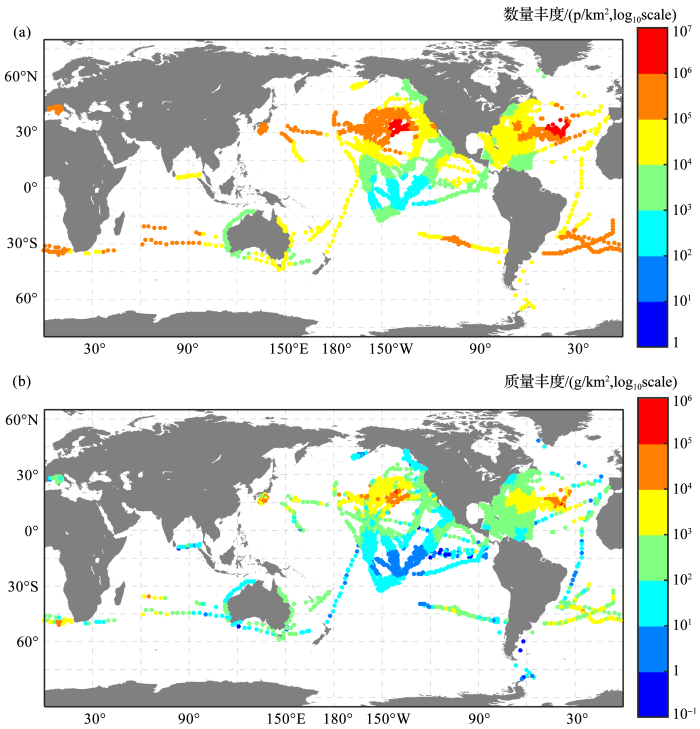
... 海洋表层水体是海洋微塑料最重要的聚集区,尤其是海盆规模的大洋环流区.根据海洋表层塑料碎屑的逐年拖网航次调查,全球90%表层水体中检测出微塑料[23 ] ,总数量估计达到1.5×10¹³ ~5.1×10¹³ 个[24 ] (或≥4.85×10¹² 个[23 ] ),总质量达到0.093~0.236 Mt[24 ] (或≥0.036 Mt[23 ] ),且在近岸、边缘海和开放大洋都有不同程度的分布.同时,调查发现环流中心区微塑料质量丰度呈指数式快速增长[25 ] ,增长速度明显高于环流周边,表明海洋表层微塑料向大洋环流区不断聚集.如图1 所示,北大西洋、南大西洋、北太平洋、南太平洋和印度洋的亚热带环流区都被确定为微塑料显著聚集区[26 ,27 ,28 ,29 ,30 ,31 ] .其中,位于北太平洋亚热带环流区的“太平洋大垃圾带”(25°~41°N, 130°~180°W)最受关注,其微塑料数量平均丰度为6.78×10⁵ p/km2 (个每平方公里),质量平均丰度为2.50×10³ g/km2 [25 ] ,是目前全球开放大洋表层微塑料丰度最高的区域.此外,西北太平洋黑潮海区[32 ] 、东北大西洋环流区[33 ] 和北冰洋巴伦支海区[34 ,35 ] 也被认为是微塑料的重要聚集区. ...
... [23 ]),总质量达到0.093~0.236 Mt[24 ] (或≥0.036 Mt[23 ] ),且在近岸、边缘海和开放大洋都有不同程度的分布.同时,调查发现环流中心区微塑料质量丰度呈指数式快速增长[25 ] ,增长速度明显高于环流周边,表明海洋表层微塑料向大洋环流区不断聚集.如图1 所示,北大西洋、南大西洋、北太平洋、南太平洋和印度洋的亚热带环流区都被确定为微塑料显著聚集区[26 ,27 ,28 ,29 ,30 ,31 ] .其中,位于北太平洋亚热带环流区的“太平洋大垃圾带”(25°~41°N, 130°~180°W)最受关注,其微塑料数量平均丰度为6.78×10⁵ p/km2 (个每平方公里),质量平均丰度为2.50×10³ g/km2 [25 ] ,是目前全球开放大洋表层微塑料丰度最高的区域.此外,西北太平洋黑潮海区[32 ] 、东北大西洋环流区[33 ] 和北冰洋巴伦支海区[34 ,35 ] 也被认为是微塑料的重要聚集区. ...
... [23 ]),且在近岸、边缘海和开放大洋都有不同程度的分布.同时,调查发现环流中心区微塑料质量丰度呈指数式快速增长[25 ] ,增长速度明显高于环流周边,表明海洋表层微塑料向大洋环流区不断聚集.如图1 所示,北大西洋、南大西洋、北太平洋、南太平洋和印度洋的亚热带环流区都被确定为微塑料显著聚集区[26 ,27 ,28 ,29 ,30 ,31 ] .其中,位于北太平洋亚热带环流区的“太平洋大垃圾带”(25°~41°N, 130°~180°W)最受关注,其微塑料数量平均丰度为6.78×10⁵ p/km2 (个每平方公里),质量平均丰度为2.50×10³ g/km2 [25 ] ,是目前全球开放大洋表层微塑料丰度最高的区域.此外,西北太平洋黑潮海区[32 ] 、东北大西洋环流区[33 ] 和北冰洋巴伦支海区[34 ,35 ] 也被认为是微塑料的重要聚集区. ...
... 海洋表层大量粒径较小的微塑料组份“失踪”.正常情况下,由于大块塑料碎屑的不断破碎和降解,海洋表层微塑料碎屑的粒径越小,数量应该越多.但分析全球大洋表层塑料碎屑的粒度组成发现,塑料碎屑数量随粒径呈正态分布,并在2 mm出现峰值[31 ] .当粒径进一步减小时,较小的(≤1 mm)微塑料数量反而快速降低[31 ] .全球海洋表层粒径范围0.33~1.00 mm的微塑料数量估计是1.83×10¹² 个,明显小于粒径范围1.00~4.75 mm的微塑料数量(3.02×10¹² 个)[23 ] .Koelmans等[36 ] 认为“失踪”的微塑料组份实际上是脱离海洋表层潜没到水柱中,下潜的塑料碎屑数量占海洋塑料碎屑总量的99.8%左右,但是不能排除微塑料快速降解成纳米级塑料碎屑或被海洋生物摄食的可能.因此,有必要开展海洋水柱中微塑料含量调查,以便准确地评估海洋微塑料的真实存量. ...
A global inventory of small floating plastic debris
5
2015
... 海洋表层水体是海洋微塑料最重要的聚集区,尤其是海盆规模的大洋环流区.根据海洋表层塑料碎屑的逐年拖网航次调查,全球90%表层水体中检测出微塑料[23 ] ,总数量估计达到1.5×10¹³ ~5.1×10¹³ 个[24 ] (或≥4.85×10¹² 个[23 ] ),总质量达到0.093~0.236 Mt[24 ] (或≥0.036 Mt[23 ] ),且在近岸、边缘海和开放大洋都有不同程度的分布.同时,调查发现环流中心区微塑料质量丰度呈指数式快速增长[25 ] ,增长速度明显高于环流周边,表明海洋表层微塑料向大洋环流区不断聚集.如图1 所示,北大西洋、南大西洋、北太平洋、南太平洋和印度洋的亚热带环流区都被确定为微塑料显著聚集区[26 ,27 ,28 ,29 ,30 ,31 ] .其中,位于北太平洋亚热带环流区的“太平洋大垃圾带”(25°~41°N, 130°~180°W)最受关注,其微塑料数量平均丰度为6.78×10⁵ p/km2 (个每平方公里),质量平均丰度为2.50×10³ g/km2 [25 ] ,是目前全球开放大洋表层微塑料丰度最高的区域.此外,西北太平洋黑潮海区[32 ] 、东北大西洋环流区[33 ] 和北冰洋巴伦支海区[34 ,35 ] 也被认为是微塑料的重要聚集区. ...
... [24 ](或≥0.036 Mt[23 ] ),且在近岸、边缘海和开放大洋都有不同程度的分布.同时,调查发现环流中心区微塑料质量丰度呈指数式快速增长[25 ] ,增长速度明显高于环流周边,表明海洋表层微塑料向大洋环流区不断聚集.如图1 所示,北大西洋、南大西洋、北太平洋、南太平洋和印度洋的亚热带环流区都被确定为微塑料显著聚集区[26 ,27 ,28 ,29 ,30 ,31 ] .其中,位于北太平洋亚热带环流区的“太平洋大垃圾带”(25°~41°N, 130°~180°W)最受关注,其微塑料数量平均丰度为6.78×10⁵ p/km2 (个每平方公里),质量平均丰度为2.50×10³ g/km2 [25 ] ,是目前全球开放大洋表层微塑料丰度最高的区域.此外,西北太平洋黑潮海区[32 ] 、东北大西洋环流区[33 ] 和北冰洋巴伦支海区[34 ,35 ] 也被认为是微塑料的重要聚集区. ...
... [
24 ]
数据来自1972—2013年27项海洋表层漂浮塑料碎屑研究和11 854次表层拖网调查结果 ...
... 数据来自1972—2013年27项海洋表层漂浮塑料碎屑研究和11 854次表层拖网调查结果
Numerical (a) and mass (b) abundance distribution of global plastic debris floating on sea surface<sup>[<xref ref-type="bibr" rid="R24">24</xref>]</sup> Data were obtained from total 27 floating debris studies with 11 854 surface trawls carried out between 1971 and 2013 ...
... 海洋表层洋流系统控制了漂浮微塑料的侧向迁移.微塑料在波浪和洋流等动力作用下可以远距离搬运,基于洋流动力模型能够模拟微塑料分布的时空变化,有助于确定微塑料输入来源、搬运路径和聚集区域[67 ] .北大西洋、南大西洋、北太平洋、南太平洋和印度洋共5个微塑料聚集的亚热带环流区,就是通过洋流模型预测的结果[24 ,34 ,68 ] ,并且得到航次实地调查的证实(图1 )[26 ,27 ] .但是,模型预测与实际观测间往往存在一定差异,比如在北大西洋,模型预测微塑料含量高值应该在60°W左右的中心环流区,但调查发现微塑料含量高值出现在距中心环流区较远的东侧,模型估算的微塑料数量也低于实地调查结果.另一方面,在海洋微塑料扩散模型中假定颗粒大部分淹没在海面以下,忽略了颗粒高出水面部分所受到的风应力作用[69 ] ,估算出微塑料跨越太平洋需要数月甚至数年[42 ] ,很可能低估了表层微塑料随洋流侧向迁移的速度. ...
Evidence that the Great Pacific Garbage Patch is rapidly accumulating plastic
2
2018
... 海洋表层水体是海洋微塑料最重要的聚集区,尤其是海盆规模的大洋环流区.根据海洋表层塑料碎屑的逐年拖网航次调查,全球90%表层水体中检测出微塑料[23 ] ,总数量估计达到1.5×10¹³ ~5.1×10¹³ 个[24 ] (或≥4.85×10¹² 个[23 ] ),总质量达到0.093~0.236 Mt[24 ] (或≥0.036 Mt[23 ] ),且在近岸、边缘海和开放大洋都有不同程度的分布.同时,调查发现环流中心区微塑料质量丰度呈指数式快速增长[25 ] ,增长速度明显高于环流周边,表明海洋表层微塑料向大洋环流区不断聚集.如图1 所示,北大西洋、南大西洋、北太平洋、南太平洋和印度洋的亚热带环流区都被确定为微塑料显著聚集区[26 ,27 ,28 ,29 ,30 ,31 ] .其中,位于北太平洋亚热带环流区的“太平洋大垃圾带”(25°~41°N, 130°~180°W)最受关注,其微塑料数量平均丰度为6.78×10⁵ p/km2 (个每平方公里),质量平均丰度为2.50×10³ g/km2 [25 ] ,是目前全球开放大洋表层微塑料丰度最高的区域.此外,西北太平洋黑潮海区[32 ] 、东北大西洋环流区[33 ] 和北冰洋巴伦支海区[34 ,35 ] 也被认为是微塑料的重要聚集区. ...
... 2 [25 ],是目前全球开放大洋表层微塑料丰度最高的区域.此外,西北太平洋黑潮海区[32 ] 、东北大西洋环流区[33 ] 和北冰洋巴伦支海区[34 ,35 ] 也被认为是微塑料的重要聚集区. ...
Plastic accumulation in the North Atlantic subtropical gyre
2
2010
... 海洋表层水体是海洋微塑料最重要的聚集区,尤其是海盆规模的大洋环流区.根据海洋表层塑料碎屑的逐年拖网航次调查,全球90%表层水体中检测出微塑料[23 ] ,总数量估计达到1.5×10¹³ ~5.1×10¹³ 个[24 ] (或≥4.85×10¹² 个[23 ] ),总质量达到0.093~0.236 Mt[24 ] (或≥0.036 Mt[23 ] ),且在近岸、边缘海和开放大洋都有不同程度的分布.同时,调查发现环流中心区微塑料质量丰度呈指数式快速增长[25 ] ,增长速度明显高于环流周边,表明海洋表层微塑料向大洋环流区不断聚集.如图1 所示,北大西洋、南大西洋、北太平洋、南太平洋和印度洋的亚热带环流区都被确定为微塑料显著聚集区[26 ,27 ,28 ,29 ,30 ,31 ] .其中,位于北太平洋亚热带环流区的“太平洋大垃圾带”(25°~41°N, 130°~180°W)最受关注,其微塑料数量平均丰度为6.78×10⁵ p/km2 (个每平方公里),质量平均丰度为2.50×10³ g/km2 [25 ] ,是目前全球开放大洋表层微塑料丰度最高的区域.此外,西北太平洋黑潮海区[32 ] 、东北大西洋环流区[33 ] 和北冰洋巴伦支海区[34 ,35 ] 也被认为是微塑料的重要聚集区. ...
... 海洋表层洋流系统控制了漂浮微塑料的侧向迁移.微塑料在波浪和洋流等动力作用下可以远距离搬运,基于洋流动力模型能够模拟微塑料分布的时空变化,有助于确定微塑料输入来源、搬运路径和聚集区域[67 ] .北大西洋、南大西洋、北太平洋、南太平洋和印度洋共5个微塑料聚集的亚热带环流区,就是通过洋流模型预测的结果[24 ,34 ,68 ] ,并且得到航次实地调查的证实(图1 )[26 ,27 ] .但是,模型预测与实际观测间往往存在一定差异,比如在北大西洋,模型预测微塑料含量高值应该在60°W左右的中心环流区,但调查发现微塑料含量高值出现在距中心环流区较远的东侧,模型估算的微塑料数量也低于实地调查结果.另一方面,在海洋微塑料扩散模型中假定颗粒大部分淹没在海面以下,忽略了颗粒高出水面部分所受到的风应力作用[69 ] ,估算出微塑料跨越太平洋需要数月甚至数年[42 ] ,很可能低估了表层微塑料随洋流侧向迁移的速度. ...
Distribution of surface plastic debris in the eastern Pacific Ocean from an 11-year data set
2
2014
... 海洋表层水体是海洋微塑料最重要的聚集区,尤其是海盆规模的大洋环流区.根据海洋表层塑料碎屑的逐年拖网航次调查,全球90%表层水体中检测出微塑料[23 ] ,总数量估计达到1.5×10¹³ ~5.1×10¹³ 个[24 ] (或≥4.85×10¹² 个[23 ] ),总质量达到0.093~0.236 Mt[24 ] (或≥0.036 Mt[23 ] ),且在近岸、边缘海和开放大洋都有不同程度的分布.同时,调查发现环流中心区微塑料质量丰度呈指数式快速增长[25 ] ,增长速度明显高于环流周边,表明海洋表层微塑料向大洋环流区不断聚集.如图1 所示,北大西洋、南大西洋、北太平洋、南太平洋和印度洋的亚热带环流区都被确定为微塑料显著聚集区[26 ,27 ,28 ,29 ,30 ,31 ] .其中,位于北太平洋亚热带环流区的“太平洋大垃圾带”(25°~41°N, 130°~180°W)最受关注,其微塑料数量平均丰度为6.78×10⁵ p/km2 (个每平方公里),质量平均丰度为2.50×10³ g/km2 [25 ] ,是目前全球开放大洋表层微塑料丰度最高的区域.此外,西北太平洋黑潮海区[32 ] 、东北大西洋环流区[33 ] 和北冰洋巴伦支海区[34 ,35 ] 也被认为是微塑料的重要聚集区. ...
... 海洋表层洋流系统控制了漂浮微塑料的侧向迁移.微塑料在波浪和洋流等动力作用下可以远距离搬运,基于洋流动力模型能够模拟微塑料分布的时空变化,有助于确定微塑料输入来源、搬运路径和聚集区域[67 ] .北大西洋、南大西洋、北太平洋、南太平洋和印度洋共5个微塑料聚集的亚热带环流区,就是通过洋流模型预测的结果[24 ,34 ,68 ] ,并且得到航次实地调查的证实(图1 )[26 ,27 ] .但是,模型预测与实际观测间往往存在一定差异,比如在北大西洋,模型预测微塑料含量高值应该在60°W左右的中心环流区,但调查发现微塑料含量高值出现在距中心环流区较远的东侧,模型估算的微塑料数量也低于实地调查结果.另一方面,在海洋微塑料扩散模型中假定颗粒大部分淹没在海面以下,忽略了颗粒高出水面部分所受到的风应力作用[69 ] ,估算出微塑料跨越太平洋需要数月甚至数年[42 ] ,很可能低估了表层微塑料随洋流侧向迁移的速度. ...
A comparison of plastic and plankton in the North Pacific central gyre
1
2001
... 海洋表层水体是海洋微塑料最重要的聚集区,尤其是海盆规模的大洋环流区.根据海洋表层塑料碎屑的逐年拖网航次调查,全球90%表层水体中检测出微塑料[23 ] ,总数量估计达到1.5×10¹³ ~5.1×10¹³ 个[24 ] (或≥4.85×10¹² 个[23 ] ),总质量达到0.093~0.236 Mt[24 ] (或≥0.036 Mt[23 ] ),且在近岸、边缘海和开放大洋都有不同程度的分布.同时,调查发现环流中心区微塑料质量丰度呈指数式快速增长[25 ] ,增长速度明显高于环流周边,表明海洋表层微塑料向大洋环流区不断聚集.如图1 所示,北大西洋、南大西洋、北太平洋、南太平洋和印度洋的亚热带环流区都被确定为微塑料显著聚集区[26 ,27 ,28 ,29 ,30 ,31 ] .其中,位于北太平洋亚热带环流区的“太平洋大垃圾带”(25°~41°N, 130°~180°W)最受关注,其微塑料数量平均丰度为6.78×10⁵ p/km2 (个每平方公里),质量平均丰度为2.50×10³ g/km2 [25 ] ,是目前全球开放大洋表层微塑料丰度最高的区域.此外,西北太平洋黑潮海区[32 ] 、东北大西洋环流区[33 ] 和北冰洋巴伦支海区[34 ,35 ] 也被认为是微塑料的重要聚集区. ...
Increased oceanic microplastic debris enhances oviposition in an endemic pelagic insect
1
2012
... 海洋表层水体是海洋微塑料最重要的聚集区,尤其是海盆规模的大洋环流区.根据海洋表层塑料碎屑的逐年拖网航次调查,全球90%表层水体中检测出微塑料[23 ] ,总数量估计达到1.5×10¹³ ~5.1×10¹³ 个[24 ] (或≥4.85×10¹² 个[23 ] ),总质量达到0.093~0.236 Mt[24 ] (或≥0.036 Mt[23 ] ),且在近岸、边缘海和开放大洋都有不同程度的分布.同时,调查发现环流中心区微塑料质量丰度呈指数式快速增长[25 ] ,增长速度明显高于环流周边,表明海洋表层微塑料向大洋环流区不断聚集.如图1 所示,北大西洋、南大西洋、北太平洋、南太平洋和印度洋的亚热带环流区都被确定为微塑料显著聚集区[26 ,27 ,28 ,29 ,30 ,31 ] .其中,位于北太平洋亚热带环流区的“太平洋大垃圾带”(25°~41°N, 130°~180°W)最受关注,其微塑料数量平均丰度为6.78×10⁵ p/km2 (个每平方公里),质量平均丰度为2.50×10³ g/km2 [25 ] ,是目前全球开放大洋表层微塑料丰度最高的区域.此外,西北太平洋黑潮海区[32 ] 、东北大西洋环流区[33 ] 和北冰洋巴伦支海区[34 ,35 ] 也被认为是微塑料的重要聚集区. ...
Plastic pollution in the South Pacific subtropical gyre
1
68
... 海洋表层水体是海洋微塑料最重要的聚集区,尤其是海盆规模的大洋环流区.根据海洋表层塑料碎屑的逐年拖网航次调查,全球90%表层水体中检测出微塑料[23 ] ,总数量估计达到1.5×10¹³ ~5.1×10¹³ 个[24 ] (或≥4.85×10¹² 个[23 ] ),总质量达到0.093~0.236 Mt[24 ] (或≥0.036 Mt[23 ] ),且在近岸、边缘海和开放大洋都有不同程度的分布.同时,调查发现环流中心区微塑料质量丰度呈指数式快速增长[25 ] ,增长速度明显高于环流周边,表明海洋表层微塑料向大洋环流区不断聚集.如图1 所示,北大西洋、南大西洋、北太平洋、南太平洋和印度洋的亚热带环流区都被确定为微塑料显著聚集区[26 ,27 ,28 ,29 ,30 ,31 ] .其中,位于北太平洋亚热带环流区的“太平洋大垃圾带”(25°~41°N, 130°~180°W)最受关注,其微塑料数量平均丰度为6.78×10⁵ p/km2 (个每平方公里),质量平均丰度为2.50×10³ g/km2 [25 ] ,是目前全球开放大洋表层微塑料丰度最高的区域.此外,西北太平洋黑潮海区[32 ] 、东北大西洋环流区[33 ] 和北冰洋巴伦支海区[34 ,35 ] 也被认为是微塑料的重要聚集区. ...
Plastic debris in the open ocean
4
2014
... 海洋表层水体是海洋微塑料最重要的聚集区,尤其是海盆规模的大洋环流区.根据海洋表层塑料碎屑的逐年拖网航次调查,全球90%表层水体中检测出微塑料[23 ] ,总数量估计达到1.5×10¹³ ~5.1×10¹³ 个[24 ] (或≥4.85×10¹² 个[23 ] ),总质量达到0.093~0.236 Mt[24 ] (或≥0.036 Mt[23 ] ),且在近岸、边缘海和开放大洋都有不同程度的分布.同时,调查发现环流中心区微塑料质量丰度呈指数式快速增长[25 ] ,增长速度明显高于环流周边,表明海洋表层微塑料向大洋环流区不断聚集.如图1 所示,北大西洋、南大西洋、北太平洋、南太平洋和印度洋的亚热带环流区都被确定为微塑料显著聚集区[26 ,27 ,28 ,29 ,30 ,31 ] .其中,位于北太平洋亚热带环流区的“太平洋大垃圾带”(25°~41°N, 130°~180°W)最受关注,其微塑料数量平均丰度为6.78×10⁵ p/km2 (个每平方公里),质量平均丰度为2.50×10³ g/km2 [25 ] ,是目前全球开放大洋表层微塑料丰度最高的区域.此外,西北太平洋黑潮海区[32 ] 、东北大西洋环流区[33 ] 和北冰洋巴伦支海区[34 ,35 ] 也被认为是微塑料的重要聚集区. ...
... 海洋表层大量粒径较小的微塑料组份“失踪”.正常情况下,由于大块塑料碎屑的不断破碎和降解,海洋表层微塑料碎屑的粒径越小,数量应该越多.但分析全球大洋表层塑料碎屑的粒度组成发现,塑料碎屑数量随粒径呈正态分布,并在2 mm出现峰值[31 ] .当粒径进一步减小时,较小的(≤1 mm)微塑料数量反而快速降低[31 ] .全球海洋表层粒径范围0.33~1.00 mm的微塑料数量估计是1.83×10¹² 个,明显小于粒径范围1.00~4.75 mm的微塑料数量(3.02×10¹² 个)[23 ] .Koelmans等[36 ] 认为“失踪”的微塑料组份实际上是脱离海洋表层潜没到水柱中,下潜的塑料碎屑数量占海洋塑料碎屑总量的99.8%左右,但是不能排除微塑料快速降解成纳米级塑料碎屑或被海洋生物摄食的可能.因此,有必要开展海洋水柱中微塑料含量调查,以便准确地评估海洋微塑料的真实存量. ...
... [31 ].全球海洋表层粒径范围0.33~1.00 mm的微塑料数量估计是1.83×10¹² 个,明显小于粒径范围1.00~4.75 mm的微塑料数量(3.02×10¹² 个)[23 ] .Koelmans等[36 ] 认为“失踪”的微塑料组份实际上是脱离海洋表层潜没到水柱中,下潜的塑料碎屑数量占海洋塑料碎屑总量的99.8%左右,但是不能排除微塑料快速降解成纳米级塑料碎屑或被海洋生物摄食的可能.因此,有必要开展海洋水柱中微塑料含量调查,以便准确地评估海洋微塑料的真实存量. ...
... 生物淤积在微塑料表面能够有效增加塑料碎屑密度,“压舱作用”使原本具有浮力的微塑料脱离海洋表层下沉[12 ,31 ] .长期浸泡在海水中的塑料废弃物发生高度降解,表面积可增加到原始颗粒的2倍多[51 ] ,为环境中微生物、藻类和无脊椎动物附着提供可能.微生物淤积仅需要1周左右就会形成稳定生物膜[52 ,53 ] ,7周之内能够使漂浮微塑料发生沉降[54 ] .随着水深逐渐增加,到密度和温度跃层深度上,微塑料因密度近似于海水密度而呈悬浮态[55 ] .但根据Kooi等[56 ] 研究,微塑料在生物淤积引起初次沉降后,不会悬浮在固定水位,而是在水柱中不断上升和下降.这是因为浸没在海面之下的微塑料颗粒,由于受光照消减、刮擦和碳酸盐溶解等因素干扰,表面附着的生物污垢可能在短时间内被去除,然后颗粒再次向上运动或重新浮出海面,微塑料在水柱中上下运动与表面附着藻类的生长周期密切相关[56 ] .估计海洋微塑料表面生物量高达0.001~0.015 Mt[57 ] ,对促进海洋表层漂浮微塑料沉降具有重要意义. ...
Floating plastic in the Kuroshio current area, western North Pacific Ocean
1
2007
... 海洋表层水体是海洋微塑料最重要的聚集区,尤其是海盆规模的大洋环流区.根据海洋表层塑料碎屑的逐年拖网航次调查,全球90%表层水体中检测出微塑料[23 ] ,总数量估计达到1.5×10¹³ ~5.1×10¹³ 个[24 ] (或≥4.85×10¹² 个[23 ] ),总质量达到0.093~0.236 Mt[24 ] (或≥0.036 Mt[23 ] ),且在近岸、边缘海和开放大洋都有不同程度的分布.同时,调查发现环流中心区微塑料质量丰度呈指数式快速增长[25 ] ,增长速度明显高于环流周边,表明海洋表层微塑料向大洋环流区不断聚集.如图1 所示,北大西洋、南大西洋、北太平洋、南太平洋和印度洋的亚热带环流区都被确定为微塑料显著聚集区[26 ,27 ,28 ,29 ,30 ,31 ] .其中,位于北太平洋亚热带环流区的“太平洋大垃圾带”(25°~41°N, 130°~180°W)最受关注,其微塑料数量平均丰度为6.78×10⁵ p/km2 (个每平方公里),质量平均丰度为2.50×10³ g/km2 [25 ] ,是目前全球开放大洋表层微塑料丰度最高的区域.此外,西北太平洋黑潮海区[32 ] 、东北大西洋环流区[33 ] 和北冰洋巴伦支海区[34 ,35 ] 也被认为是微塑料的重要聚集区. ...
Microplastic pollution in the Northeast Atlantic Ocean: Validated and opportunistic sampling
1
88
... 海洋表层水体是海洋微塑料最重要的聚集区,尤其是海盆规模的大洋环流区.根据海洋表层塑料碎屑的逐年拖网航次调查,全球90%表层水体中检测出微塑料[23 ] ,总数量估计达到1.5×10¹³ ~5.1×10¹³ 个[24 ] (或≥4.85×10¹² 个[23 ] ),总质量达到0.093~0.236 Mt[24 ] (或≥0.036 Mt[23 ] ),且在近岸、边缘海和开放大洋都有不同程度的分布.同时,调查发现环流中心区微塑料质量丰度呈指数式快速增长[25 ] ,增长速度明显高于环流周边,表明海洋表层微塑料向大洋环流区不断聚集.如图1 所示,北大西洋、南大西洋、北太平洋、南太平洋和印度洋的亚热带环流区都被确定为微塑料显著聚集区[26 ,27 ,28 ,29 ,30 ,31 ] .其中,位于北太平洋亚热带环流区的“太平洋大垃圾带”(25°~41°N, 130°~180°W)最受关注,其微塑料数量平均丰度为6.78×10⁵ p/km2 (个每平方公里),质量平均丰度为2.50×10³ g/km2 [25 ] ,是目前全球开放大洋表层微塑料丰度最高的区域.此外,西北太平洋黑潮海区[32 ] 、东北大西洋环流区[33 ] 和北冰洋巴伦支海区[34 ,35 ] 也被认为是微塑料的重要聚集区. ...
3
2012
... 海洋表层水体是海洋微塑料最重要的聚集区,尤其是海盆规模的大洋环流区.根据海洋表层塑料碎屑的逐年拖网航次调查,全球90%表层水体中检测出微塑料[23 ] ,总数量估计达到1.5×10¹³ ~5.1×10¹³ 个[24 ] (或≥4.85×10¹² 个[23 ] ),总质量达到0.093~0.236 Mt[24 ] (或≥0.036 Mt[23 ] ),且在近岸、边缘海和开放大洋都有不同程度的分布.同时,调查发现环流中心区微塑料质量丰度呈指数式快速增长[25 ] ,增长速度明显高于环流周边,表明海洋表层微塑料向大洋环流区不断聚集.如图1 所示,北大西洋、南大西洋、北太平洋、南太平洋和印度洋的亚热带环流区都被确定为微塑料显著聚集区[26 ,27 ,28 ,29 ,30 ,31 ] .其中,位于北太平洋亚热带环流区的“太平洋大垃圾带”(25°~41°N, 130°~180°W)最受关注,其微塑料数量平均丰度为6.78×10⁵ p/km2 (个每平方公里),质量平均丰度为2.50×10³ g/km2 [25 ] ,是目前全球开放大洋表层微塑料丰度最高的区域.此外,西北太平洋黑潮海区[32 ] 、东北大西洋环流区[33 ] 和北冰洋巴伦支海区[34 ,35 ] 也被认为是微塑料的重要聚集区. ...
... 海洋表层洋流系统控制了漂浮微塑料的侧向迁移.微塑料在波浪和洋流等动力作用下可以远距离搬运,基于洋流动力模型能够模拟微塑料分布的时空变化,有助于确定微塑料输入来源、搬运路径和聚集区域[67 ] .北大西洋、南大西洋、北太平洋、南太平洋和印度洋共5个微塑料聚集的亚热带环流区,就是通过洋流模型预测的结果[24 ,34 ,68 ] ,并且得到航次实地调查的证实(图1 )[26 ,27 ] .但是,模型预测与实际观测间往往存在一定差异,比如在北大西洋,模型预测微塑料含量高值应该在60°W左右的中心环流区,但调查发现微塑料含量高值出现在距中心环流区较远的东侧,模型估算的微塑料数量也低于实地调查结果.另一方面,在海洋微塑料扩散模型中假定颗粒大部分淹没在海面以下,忽略了颗粒高出水面部分所受到的风应力作用[69 ] ,估算出微塑料跨越太平洋需要数月甚至数年[42 ] ,很可能低估了表层微塑料随洋流侧向迁移的速度. ...
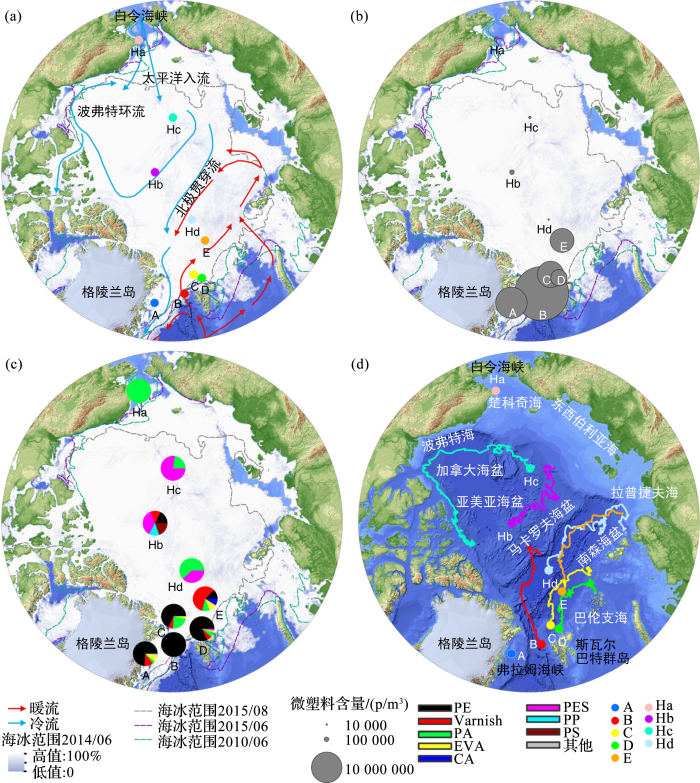
... 漂浮在极地海洋表层的海冰是微塑料搬运和富集的特殊介质.大部分海冰形成于大陆边缘浅海陆架上,在海冰生长过程中,能够清除悬浮在水柱中的微塑料;当海冰冻结到底床时,也能夹带海底微塑料碎屑[73 ,74 ] .极地海冰在洋流作用下能远距离漂移,如图9 所示,根据北冰洋海冰漂移轨迹和冰芯中微塑料聚合物组成,发现海冰在北极贯穿流作用下,携带微塑料穿越北冰洋中央海盆到达边缘的巴伦支海[75 ] .当海冰融化时,大量残留微塑料将会重新释放到海洋中.但在另一方面,海冰也可以作为物理屏障,阻碍微塑料污染严重的大西洋表层水进一步入侵北冰洋[35 ,41 ] .数值模拟和实地调查结果都显示,微塑料在北冰洋巴伦支海区具有富集的趋势,冰芯中检测出微塑料数量为0.11×10⁷ ~1.20×10⁷ p/m3 [75 ] ,该海区未来很可能形成海洋微塑料新的聚集区[34 ,35 ] . ...
The Arctic Ocean as a dead end for floating plastics in the North Atlantic branch of the Thermohaline Circulation
3
2017
... 海洋表层水体是海洋微塑料最重要的聚集区,尤其是海盆规模的大洋环流区.根据海洋表层塑料碎屑的逐年拖网航次调查,全球90%表层水体中检测出微塑料[23 ] ,总数量估计达到1.5×10¹³ ~5.1×10¹³ 个[24 ] (或≥4.85×10¹² 个[23 ] ),总质量达到0.093~0.236 Mt[24 ] (或≥0.036 Mt[23 ] ),且在近岸、边缘海和开放大洋都有不同程度的分布.同时,调查发现环流中心区微塑料质量丰度呈指数式快速增长[25 ] ,增长速度明显高于环流周边,表明海洋表层微塑料向大洋环流区不断聚集.如图1 所示,北大西洋、南大西洋、北太平洋、南太平洋和印度洋的亚热带环流区都被确定为微塑料显著聚集区[26 ,27 ,28 ,29 ,30 ,31 ] .其中,位于北太平洋亚热带环流区的“太平洋大垃圾带”(25°~41°N, 130°~180°W)最受关注,其微塑料数量平均丰度为6.78×10⁵ p/km2 (个每平方公里),质量平均丰度为2.50×10³ g/km2 [25 ] ,是目前全球开放大洋表层微塑料丰度最高的区域.此外,西北太平洋黑潮海区[32 ] 、东北大西洋环流区[33 ] 和北冰洋巴伦支海区[34 ,35 ] 也被认为是微塑料的重要聚集区. ...
... 漂浮在极地海洋表层的海冰是微塑料搬运和富集的特殊介质.大部分海冰形成于大陆边缘浅海陆架上,在海冰生长过程中,能够清除悬浮在水柱中的微塑料;当海冰冻结到底床时,也能夹带海底微塑料碎屑[73 ,74 ] .极地海冰在洋流作用下能远距离漂移,如图9 所示,根据北冰洋海冰漂移轨迹和冰芯中微塑料聚合物组成,发现海冰在北极贯穿流作用下,携带微塑料穿越北冰洋中央海盆到达边缘的巴伦支海[75 ] .当海冰融化时,大量残留微塑料将会重新释放到海洋中.但在另一方面,海冰也可以作为物理屏障,阻碍微塑料污染严重的大西洋表层水进一步入侵北冰洋[35 ,41 ] .数值模拟和实地调查结果都显示,微塑料在北冰洋巴伦支海区具有富集的趋势,冰芯中检测出微塑料数量为0.11×10⁷ ~1.20×10⁷ p/m3 [75 ] ,该海区未来很可能形成海洋微塑料新的聚集区[34 ,35 ] . ...
... ,35 ]. ...
All is not lost: Deriving a top-down mass budget of plastic at sea
1
2017
... 海洋表层大量粒径较小的微塑料组份“失踪”.正常情况下,由于大块塑料碎屑的不断破碎和降解,海洋表层微塑料碎屑的粒径越小,数量应该越多.但分析全球大洋表层塑料碎屑的粒度组成发现,塑料碎屑数量随粒径呈正态分布,并在2 mm出现峰值[31 ] .当粒径进一步减小时,较小的(≤1 mm)微塑料数量反而快速降低[31 ] .全球海洋表层粒径范围0.33~1.00 mm的微塑料数量估计是1.83×10¹² 个,明显小于粒径范围1.00~4.75 mm的微塑料数量(3.02×10¹² 个)[23 ] .Koelmans等[36 ] 认为“失踪”的微塑料组份实际上是脱离海洋表层潜没到水柱中,下潜的塑料碎屑数量占海洋塑料碎屑总量的99.8%左右,但是不能排除微塑料快速降解成纳米级塑料碎屑或被海洋生物摄食的可能.因此,有必要开展海洋水柱中微塑料含量调查,以便准确地评估海洋微塑料的真实存量. ...
The effect of wind mixing on the vertical distribution of buoyant plastic debris
2
2012
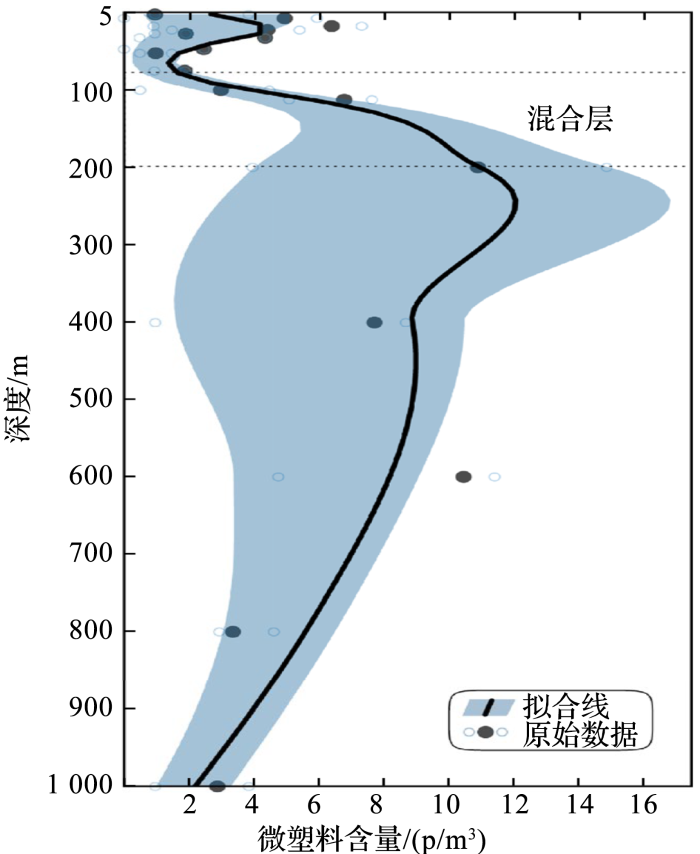
... 海洋微塑料在全水柱中都有分布,并呈现不均一性.据少量浮游生物分层拖网在北大西洋亚热带环流区的航次调查,发现微塑料碎屑广泛分布在水柱顶部0~5 m范围内,其含量随深度呈指数衰减,到5 m深度几乎为0[37 ,38 ,39 ] .美国加州岸外蒙特利湾调查结果显示(图2 ),水柱中微塑料含量峰值为15 p/m3 ,出现在200 m深度的混合层底边界,而低值(2.9 p/m3 )出现在顶部5 m深度和底部1 000 m深度[40 ] .北冰洋中央海盆调查结果也同样发现微塑料含量峰值(0~375 p/m3 )出现在上部混合层水体中[41 ] ,说明海洋微塑料在水柱中的垂直分布受到海水分层的影响. ...
... 海洋动力过程控制微塑料在上层水柱的潜没和垂直分布.通过分析海洋表层微塑料丰度与10 m高度风速及与海水摩擦速度间的关系[37 ] ,以及上层水柱中微塑料含量与蒲福风级间的关系[38 ,39 ] ,证实风力驱动海水混合控制着微塑料在上层水柱中的垂直分布.进一步研究发现,微塑料垂向下潜是风浪驱动的朗缪尔湍流混合作用的结果,与剪切湍流和破碎波引起的湍流动能增强无关(图6 a和6b)[49 ] .通过湍流分解的大尺度涡模拟,发现海表热通量也能影响朗缪尔湍流对水柱中微塑料的垂向搬运:在理想昼夜加热循环模型下,日间海表升温会抑制微塑料颗粒下潜,夜间降温则有助于增加微塑料沉降通量(图6 c)[50 ] . ...
The vertical distribution of buoyant plastics at sea: An observational study in the North Atlantic Gyre
2
2015
... 海洋微塑料在全水柱中都有分布,并呈现不均一性.据少量浮游生物分层拖网在北大西洋亚热带环流区的航次调查,发现微塑料碎屑广泛分布在水柱顶部0~5 m范围内,其含量随深度呈指数衰减,到5 m深度几乎为0[37 ,38 ,39 ] .美国加州岸外蒙特利湾调查结果显示(图2 ),水柱中微塑料含量峰值为15 p/m3 ,出现在200 m深度的混合层底边界,而低值(2.9 p/m3 )出现在顶部5 m深度和底部1 000 m深度[40 ] .北冰洋中央海盆调查结果也同样发现微塑料含量峰值(0~375 p/m3 )出现在上部混合层水体中[41 ] ,说明海洋微塑料在水柱中的垂直分布受到海水分层的影响. ...
... 海洋动力过程控制微塑料在上层水柱的潜没和垂直分布.通过分析海洋表层微塑料丰度与10 m高度风速及与海水摩擦速度间的关系[37 ] ,以及上层水柱中微塑料含量与蒲福风级间的关系[38 ,39 ] ,证实风力驱动海水混合控制着微塑料在上层水柱中的垂直分布.进一步研究发现,微塑料垂向下潜是风浪驱动的朗缪尔湍流混合作用的结果,与剪切湍流和破碎波引起的湍流动能增强无关(图6 a和6b)[49 ] .通过湍流分解的大尺度涡模拟,发现海表热通量也能影响朗缪尔湍流对水柱中微塑料的垂向搬运:在理想昼夜加热循环模型下,日间海表升温会抑制微塑料颗粒下潜,夜间降温则有助于增加微塑料沉降通量(图6 c)[50 ] . ...
The effect of particle properties on the depth profile of buoyant plastics in the ocean
2
2016
... 海洋微塑料在全水柱中都有分布,并呈现不均一性.据少量浮游生物分层拖网在北大西洋亚热带环流区的航次调查,发现微塑料碎屑广泛分布在水柱顶部0~5 m范围内,其含量随深度呈指数衰减,到5 m深度几乎为0[37 ,38 ,39 ] .美国加州岸外蒙特利湾调查结果显示(图2 ),水柱中微塑料含量峰值为15 p/m3 ,出现在200 m深度的混合层底边界,而低值(2.9 p/m3 )出现在顶部5 m深度和底部1 000 m深度[40 ] .北冰洋中央海盆调查结果也同样发现微塑料含量峰值(0~375 p/m3 )出现在上部混合层水体中[41 ] ,说明海洋微塑料在水柱中的垂直分布受到海水分层的影响. ...
... 海洋动力过程控制微塑料在上层水柱的潜没和垂直分布.通过分析海洋表层微塑料丰度与10 m高度风速及与海水摩擦速度间的关系[37 ] ,以及上层水柱中微塑料含量与蒲福风级间的关系[38 ,39 ] ,证实风力驱动海水混合控制着微塑料在上层水柱中的垂直分布.进一步研究发现,微塑料垂向下潜是风浪驱动的朗缪尔湍流混合作用的结果,与剪切湍流和破碎波引起的湍流动能增强无关(图6 a和6b)[49 ] .通过湍流分解的大尺度涡模拟,发现海表热通量也能影响朗缪尔湍流对水柱中微塑料的垂向搬运:在理想昼夜加热循环模型下,日间海表升温会抑制微塑料颗粒下潜,夜间降温则有助于增加微塑料沉降通量(图6 c)[50 ] . ...
The vertical distribution and biological transport of marine microplastics across the epipelagic and mesopelagic water column
3
2019
... 海洋微塑料在全水柱中都有分布,并呈现不均一性.据少量浮游生物分层拖网在北大西洋亚热带环流区的航次调查,发现微塑料碎屑广泛分布在水柱顶部0~5 m范围内,其含量随深度呈指数衰减,到5 m深度几乎为0[37 ,38 ,39 ] .美国加州岸外蒙特利湾调查结果显示(图2 ),水柱中微塑料含量峰值为15 p/m3 ,出现在200 m深度的混合层底边界,而低值(2.9 p/m3 )出现在顶部5 m深度和底部1 000 m深度[40 ] .北冰洋中央海盆调查结果也同样发现微塑料含量峰值(0~375 p/m3 )出现在上部混合层水体中[41 ] ,说明海洋微塑料在水柱中的垂直分布受到海水分层的影响. ...
... [
40 ]
Microplastic concentrations varied across sample depths ranging from 5 to 1 000 m, in the offshore waters of the Monterey Bay<sup>[<xref ref-type="bibr" rid="R40">40</xref>]</sup> Fig.2 ![]()
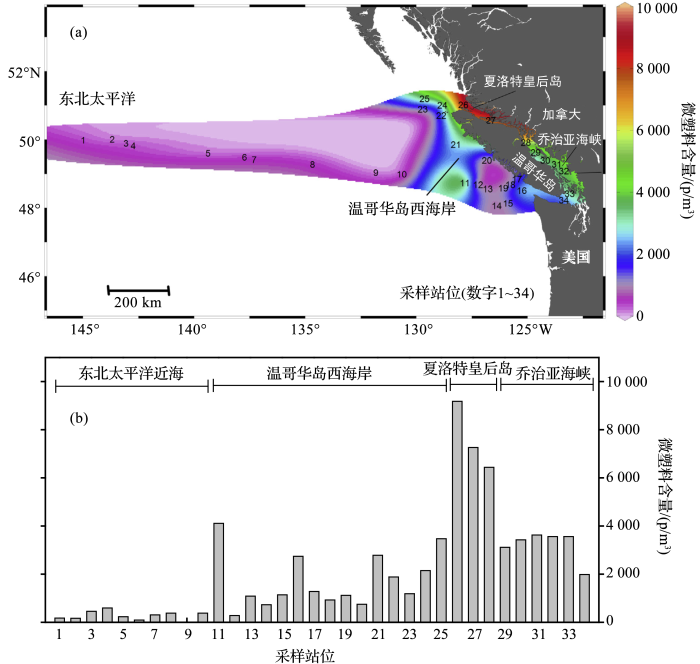
海洋水柱也是海洋微塑料聚集的重要环境介质,且在特殊海域异常富集微塑料.东北太平洋近海表(水深4.5 m)微塑料含量的大范围航次调查结果显示,该海域微塑料数量丰度是8~9 180 p/m3 [42 ] .如图3 所示,从加拿大西海岸向东北太平洋延伸,近海表水体中微塑料含量逐渐减少,这与受人类活动影响减弱、陆源微塑料输入量降低有关.但是,即使是远离人类活动影响的海沟,其微塑料含量也非常可观.最近在全球最深的马里亚纳海沟的调查,发现底层海水中微塑料数量高达2 060~13 510 p/m3 (图4 a)[11 ] ,甚至超过了北太平洋环流区的微塑料含量,说明海洋水柱中同样聚集了大量的微塑料. ...
... [
40 ]
Fig.2 ![]()
海洋水柱也是海洋微塑料聚集的重要环境介质,且在特殊海域异常富集微塑料.东北太平洋近海表(水深4.5 m)微塑料含量的大范围航次调查结果显示,该海域微塑料数量丰度是8~9 180 p/m3 [42 ] .如图3 所示,从加拿大西海岸向东北太平洋延伸,近海表水体中微塑料含量逐渐减少,这与受人类活动影响减弱、陆源微塑料输入量降低有关.但是,即使是远离人类活动影响的海沟,其微塑料含量也非常可观.最近在全球最深的马里亚纳海沟的调查,发现底层海水中微塑料数量高达2 060~13 510 p/m3 (图4 a)[11 ] ,甚至超过了北太平洋环流区的微塑料含量,说明海洋水柱中同样聚集了大量的微塑料. ...
Microplastics in sub-surface waters of the Arctic Central Basin
2
2018
... 海洋微塑料在全水柱中都有分布,并呈现不均一性.据少量浮游生物分层拖网在北大西洋亚热带环流区的航次调查,发现微塑料碎屑广泛分布在水柱顶部0~5 m范围内,其含量随深度呈指数衰减,到5 m深度几乎为0[37 ,38 ,39 ] .美国加州岸外蒙特利湾调查结果显示(图2 ),水柱中微塑料含量峰值为15 p/m3 ,出现在200 m深度的混合层底边界,而低值(2.9 p/m3 )出现在顶部5 m深度和底部1 000 m深度[40 ] .北冰洋中央海盆调查结果也同样发现微塑料含量峰值(0~375 p/m3 )出现在上部混合层水体中[41 ] ,说明海洋微塑料在水柱中的垂直分布受到海水分层的影响. ...
... 漂浮在极地海洋表层的海冰是微塑料搬运和富集的特殊介质.大部分海冰形成于大陆边缘浅海陆架上,在海冰生长过程中,能够清除悬浮在水柱中的微塑料;当海冰冻结到底床时,也能夹带海底微塑料碎屑[73 ,74 ] .极地海冰在洋流作用下能远距离漂移,如图9 所示,根据北冰洋海冰漂移轨迹和冰芯中微塑料聚合物组成,发现海冰在北极贯穿流作用下,携带微塑料穿越北冰洋中央海盆到达边缘的巴伦支海[75 ] .当海冰融化时,大量残留微塑料将会重新释放到海洋中.但在另一方面,海冰也可以作为物理屏障,阻碍微塑料污染严重的大西洋表层水进一步入侵北冰洋[35 ,41 ] .数值模拟和实地调查结果都显示,微塑料在北冰洋巴伦支海区具有富集的趋势,冰芯中检测出微塑料数量为0.11×10⁷ ~1.20×10⁷ p/m3 [75 ] ,该海区未来很可能形成海洋微塑料新的聚集区[34 ,35 ] . ...
Widespread distribution of microplastics in subsurface seawater in the NE Pacific Ocean
4
79
... 海洋水柱也是海洋微塑料聚集的重要环境介质,且在特殊海域异常富集微塑料.东北太平洋近海表(水深4.5 m)微塑料含量的大范围航次调查结果显示,该海域微塑料数量丰度是8~9 180 p/m3 [42 ] .如图3 所示,从加拿大西海岸向东北太平洋延伸,近海表水体中微塑料含量逐渐减少,这与受人类活动影响减弱、陆源微塑料输入量降低有关.但是,即使是远离人类活动影响的海沟,其微塑料含量也非常可观.最近在全球最深的马里亚纳海沟的调查,发现底层海水中微塑料数量高达2 060~13 510 p/m3 (图4 a)[11 ] ,甚至超过了北太平洋环流区的微塑料含量,说明海洋水柱中同样聚集了大量的微塑料. ...
... [
42 ]
Total microplastic concentrations in near-surface waters (4.5 m) of the NE Pacific Ocean<sup>[<xref ref-type="bibr" rid="R42">42</xref>]</sup> Fig.3 ![]()
图4 马里亚纳海沟深层海水(<strong>a</strong>)和海底表层沉积物(<strong>b</strong>)中微塑料分布及组成<sup>[<xref ref-type="bibr" rid="R11">11</xref>]</sup> Profile of microplastic abundances and compositions in hadal water (a) and sediments (b) from Mariana Trench<sup>[<xref ref-type="bibr" rid="R11">11</xref>]</sup> Fig.4 ![]()
<strong>3.3</strong> 海底表层沉积物 深海海底表层沉积物是微塑料最终的沉积汇,是潜在的海洋微塑料聚集区.大约54%的塑料碎屑密度超过海水,能够沉积到海底.海洋微塑料在河口、海湾和泻湖等区域的沉积物中普遍存在,说明微塑料像陆源碎屑一样,会被困在沉积物堆积的低流速区[21 ,43 ] .深海海底微塑料引起学术界的广泛关注,始于大西洋深海沉积物中首次发现微塑料[7 ] ,随后在地中海、印度洋、太平洋及北冰洋等深海沉积物中同样检测出微塑料[8 ,9 ,10 ,11 ] .但由于采样难度的限制,目前关于深海微塑料丰度和储量的数据仍然有限.北冰洋HAUSGARTEN观测站附近沉积物中检测出的微塑料数量丰度为42~6 595 p/kg[10 ] ,是当前深海沉积物中检测出的微塑料最高含量.最近在马里亚纳海沟沉积物中也检测出微塑料,数量丰度为270~6 200 p/kg(图4 b)[11 ] .深海环境中沉积的微塑料颗粒不断埋藏,很可能聚集了大量的海洋微塑料,有待更多实地调查结果的验证. ...
... [
42 ]
Fig.3 ![]()
图4 马里亚纳海沟深层海水(<strong>a</strong>)和海底表层沉积物(<strong>b</strong>)中微塑料分布及组成<sup>[<xref ref-type="bibr" rid="R11">11</xref>]</sup> Profile of microplastic abundances and compositions in hadal water (a) and sediments (b) from Mariana Trench<sup>[<xref ref-type="bibr" rid="R11">11</xref>]</sup> Fig.4 ![]()
<strong>3.3</strong> 海底表层沉积物 深海海底表层沉积物是微塑料最终的沉积汇,是潜在的海洋微塑料聚集区.大约54%的塑料碎屑密度超过海水,能够沉积到海底.海洋微塑料在河口、海湾和泻湖等区域的沉积物中普遍存在,说明微塑料像陆源碎屑一样,会被困在沉积物堆积的低流速区[21 ,43 ] .深海海底微塑料引起学术界的广泛关注,始于大西洋深海沉积物中首次发现微塑料[7 ] ,随后在地中海、印度洋、太平洋及北冰洋等深海沉积物中同样检测出微塑料[8 ,9 ,10 ,11 ] .但由于采样难度的限制,目前关于深海微塑料丰度和储量的数据仍然有限.北冰洋HAUSGARTEN观测站附近沉积物中检测出的微塑料数量丰度为42~6 595 p/kg[10 ] ,是当前深海沉积物中检测出的微塑料最高含量.最近在马里亚纳海沟沉积物中也检测出微塑料,数量丰度为270~6 200 p/kg(图4 b)[11 ] .深海环境中沉积的微塑料颗粒不断埋藏,很可能聚集了大量的海洋微塑料,有待更多实地调查结果的验证. ...
... 海洋表层洋流系统控制了漂浮微塑料的侧向迁移.微塑料在波浪和洋流等动力作用下可以远距离搬运,基于洋流动力模型能够模拟微塑料分布的时空变化,有助于确定微塑料输入来源、搬运路径和聚集区域[67 ] .北大西洋、南大西洋、北太平洋、南太平洋和印度洋共5个微塑料聚集的亚热带环流区,就是通过洋流模型预测的结果[24 ,34 ,68 ] ,并且得到航次实地调查的证实(图1 )[26 ,27 ] .但是,模型预测与实际观测间往往存在一定差异,比如在北大西洋,模型预测微塑料含量高值应该在60°W左右的中心环流区,但调查发现微塑料含量高值出现在距中心环流区较远的东侧,模型估算的微塑料数量也低于实地调查结果.另一方面,在海洋微塑料扩散模型中假定颗粒大部分淹没在海面以下,忽略了颗粒高出水面部分所受到的风应力作用[69 ] ,估算出微塑料跨越太平洋需要数月甚至数年[42 ] ,很可能低估了表层微塑料随洋流侧向迁移的速度. ...
Plastic waste in the marine environment: A review of sources, occurrence and effects
1
2016
... 深海海底表层沉积物是微塑料最终的沉积汇,是潜在的海洋微塑料聚集区.大约54%的塑料碎屑密度超过海水,能够沉积到海底.海洋微塑料在河口、海湾和泻湖等区域的沉积物中普遍存在,说明微塑料像陆源碎屑一样,会被困在沉积物堆积的低流速区[21 ,43 ] .深海海底微塑料引起学术界的广泛关注,始于大西洋深海沉积物中首次发现微塑料[7 ] ,随后在地中海、印度洋、太平洋及北冰洋等深海沉积物中同样检测出微塑料[8 ,9 ,10 ,11 ] .但由于采样难度的限制,目前关于深海微塑料丰度和储量的数据仍然有限.北冰洋HAUSGARTEN观测站附近沉积物中检测出的微塑料数量丰度为42~6 595 p/kg[10 ] ,是当前深海沉积物中检测出的微塑料最高含量.最近在马里亚纳海沟沉积物中也检测出微塑料,数量丰度为270~6 200 p/kg(图4 b)[11 ] .深海环境中沉积的微塑料颗粒不断埋藏,很可能聚集了大量的海洋微塑料,有待更多实地调查结果的验证. ...
Sinking rates of microplastics and potential implications of their alteration by physical, biological, and chemical factors
5
2016
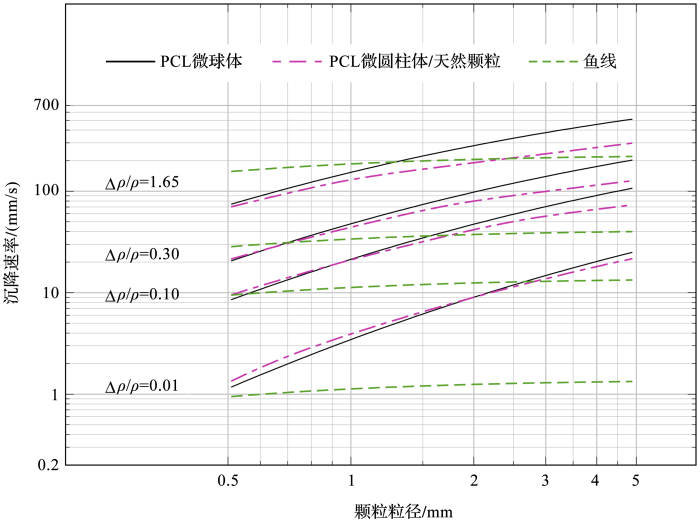
... 微塑料颗粒的物理性质决定了其在海洋环境中的行为.微塑料颗粒在海洋水柱中的垂向搬运涉及颗粒从海洋表层迁移到海底的整个过程,首先要考虑微塑料自身物理性质的影响,比如密度、形状和粒径大小等.利用水柱沉降实验,在不同盐度流体中对不同聚合物类型、密度、粒径尺寸和形状的微塑料颗粒进行试验,测试不同变量对微塑料沉降行为的潜在影响[44 ] .结果表明,微塑料颗粒与流体间的密度差异是控制颗粒沉降速率的主要因素,比如高密度颗粒一般以每秒几到几百毫米速率下沉[44 ,45 ,46 ,47 ] .此外,颗粒形状和大小同样影响其沉降速率,形状越不规则、粒径越小的颗粒,沉降速率越小(图5 )[44 ,45 ] .这些颗粒在自身沉降过程中,会因表面积较大而受到较大的流体压力和摩擦阻力,也会因体积小、稳定性差而发生旋转、振荡或翻滚,最终导致微塑料沉降速率降低[48 ] .可以用球度和平面度指数表征微塑料颗粒规则程度,方便研究微塑料颗粒形状对沉降速率的影响[44 ] .微塑料颗粒物理性质研究适用于分析微塑料在水柱中的沉降行为及沉降速度,为微塑料搬运过程数值模拟提供重要参数. ...
... [44 ,45 ,46 ,47 ].此外,颗粒形状和大小同样影响其沉降速率,形状越不规则、粒径越小的颗粒,沉降速率越小(图5 )[44 ,45 ] .这些颗粒在自身沉降过程中,会因表面积较大而受到较大的流体压力和摩擦阻力,也会因体积小、稳定性差而发生旋转、振荡或翻滚,最终导致微塑料沉降速率降低[48 ] .可以用球度和平面度指数表征微塑料颗粒规则程度,方便研究微塑料颗粒形状对沉降速率的影响[44 ] .微塑料颗粒物理性质研究适用于分析微塑料在水柱中的沉降行为及沉降速度,为微塑料搬运过程数值模拟提供重要参数. ...
... [44 ,45 ].这些颗粒在自身沉降过程中,会因表面积较大而受到较大的流体压力和摩擦阻力,也会因体积小、稳定性差而发生旋转、振荡或翻滚,最终导致微塑料沉降速率降低[48 ] .可以用球度和平面度指数表征微塑料颗粒规则程度,方便研究微塑料颗粒形状对沉降速率的影响[44 ] .微塑料颗粒物理性质研究适用于分析微塑料在水柱中的沉降行为及沉降速度,为微塑料搬运过程数值模拟提供重要参数. ...
... [44 ].微塑料颗粒物理性质研究适用于分析微塑料在水柱中的沉降行为及沉降速度,为微塑料搬运过程数值模拟提供重要参数. ...
... 海洋雪聚集有助于增加微塑料颗粒沉降速率,使其快速穿越水柱沉积到海底[7 ,64 ] .海洋雪是由水柱上层飘落的微小颗粒组成的富含有机物的聚集体,通常包含已死或将死的浮游植物和动物、微生物、粪便颗粒、颗粒有机物和无机陆源碎屑等.Zhao等[65 ] 最早在水柱顶部2 m的天然海洋雪中检测出微塑料,Kowalski等[44 ] 则在模拟破浪带机械应力对微塑料的影响时,观测到微塑料与黏土矿物和石英的聚集.实验室内模拟微塑料与浮游藻类聚集和沉降过程,测得微塑料沉降速率在聚集前后从每天数十米增加到数百米[60 ] ,能够在几天或几年内沉积到海底[7 ] .Porter等[66 ] 更详细地测试了聚合物类型、形状和粒径大小对海洋雪沉降速率的影响,观测到微塑料能够引起海洋雪聚集体密度的增加或减少,从而加速或减缓聚集体沉降过程(图7 ).微塑料与海洋雪聚集不仅改变了微塑料在水柱中的行为,同时改变了海洋雪沉降速率,影响水柱中颗粒有机物沉降通量. ...
Settling velocity of microplastic particles of regular shapes
4
2017
... 微塑料颗粒的物理性质决定了其在海洋环境中的行为.微塑料颗粒在海洋水柱中的垂向搬运涉及颗粒从海洋表层迁移到海底的整个过程,首先要考虑微塑料自身物理性质的影响,比如密度、形状和粒径大小等.利用水柱沉降实验,在不同盐度流体中对不同聚合物类型、密度、粒径尺寸和形状的微塑料颗粒进行试验,测试不同变量对微塑料沉降行为的潜在影响[44 ] .结果表明,微塑料颗粒与流体间的密度差异是控制颗粒沉降速率的主要因素,比如高密度颗粒一般以每秒几到几百毫米速率下沉[44 ,45 ,46 ,47 ] .此外,颗粒形状和大小同样影响其沉降速率,形状越不规则、粒径越小的颗粒,沉降速率越小(图5 )[44 ,45 ] .这些颗粒在自身沉降过程中,会因表面积较大而受到较大的流体压力和摩擦阻力,也会因体积小、稳定性差而发生旋转、振荡或翻滚,最终导致微塑料沉降速率降低[48 ] .可以用球度和平面度指数表征微塑料颗粒规则程度,方便研究微塑料颗粒形状对沉降速率的影响[44 ] .微塑料颗粒物理性质研究适用于分析微塑料在水柱中的沉降行为及沉降速度,为微塑料搬运过程数值模拟提供重要参数. ...
... ,45 ].这些颗粒在自身沉降过程中,会因表面积较大而受到较大的流体压力和摩擦阻力,也会因体积小、稳定性差而发生旋转、振荡或翻滚,最终导致微塑料沉降速率降低[48 ] .可以用球度和平面度指数表征微塑料颗粒规则程度,方便研究微塑料颗粒形状对沉降速率的影响[44 ] .微塑料颗粒物理性质研究适用于分析微塑料在水柱中的沉降行为及沉降速度,为微塑料搬运过程数值模拟提供重要参数. ...
... [
45 ]
微圆柱体(红色虚线)是底面圆直径与高相等的特殊圆柱体,其形状近似天然颗粒;Δρ /ρ 表示微塑料颗粒相对于海水的过剩密度 ...
... 微圆柱体(红色虚线)是底面圆直径与高相等的特殊圆柱体,其形状近似天然颗粒;Δ
ρ /
ρ 表示微塑料颗粒相对于海水的过剩密度
Predicted settling velocities of microplastic particles of different physical characteristics<sup> [<xref ref-type="bibr" rid="R45">45</xref>]</sup> Short isometric cylinders (red dash-dot curves) were circular rods with diameters equal to the length, approximating the natural grains; Δρ/ρ represent the relative excess densities of particles to seawater ...
Physical transport properties of marine microplastic pollution
2
2012
... 微塑料颗粒的物理性质决定了其在海洋环境中的行为.微塑料颗粒在海洋水柱中的垂向搬运涉及颗粒从海洋表层迁移到海底的整个过程,首先要考虑微塑料自身物理性质的影响,比如密度、形状和粒径大小等.利用水柱沉降实验,在不同盐度流体中对不同聚合物类型、密度、粒径尺寸和形状的微塑料颗粒进行试验,测试不同变量对微塑料沉降行为的潜在影响[44 ] .结果表明,微塑料颗粒与流体间的密度差异是控制颗粒沉降速率的主要因素,比如高密度颗粒一般以每秒几到几百毫米速率下沉[44 ,45 ,46 ,47 ] .此外,颗粒形状和大小同样影响其沉降速率,形状越不规则、粒径越小的颗粒,沉降速率越小(图5 )[44 ,45 ] .这些颗粒在自身沉降过程中,会因表面积较大而受到较大的流体压力和摩擦阻力,也会因体积小、稳定性差而发生旋转、振荡或翻滚,最终导致微塑料沉降速率降低[48 ] .可以用球度和平面度指数表征微塑料颗粒规则程度,方便研究微塑料颗粒形状对沉降速率的影响[44 ] .微塑料颗粒物理性质研究适用于分析微塑料在水柱中的沉降行为及沉降速度,为微塑料搬运过程数值模拟提供重要参数. ...
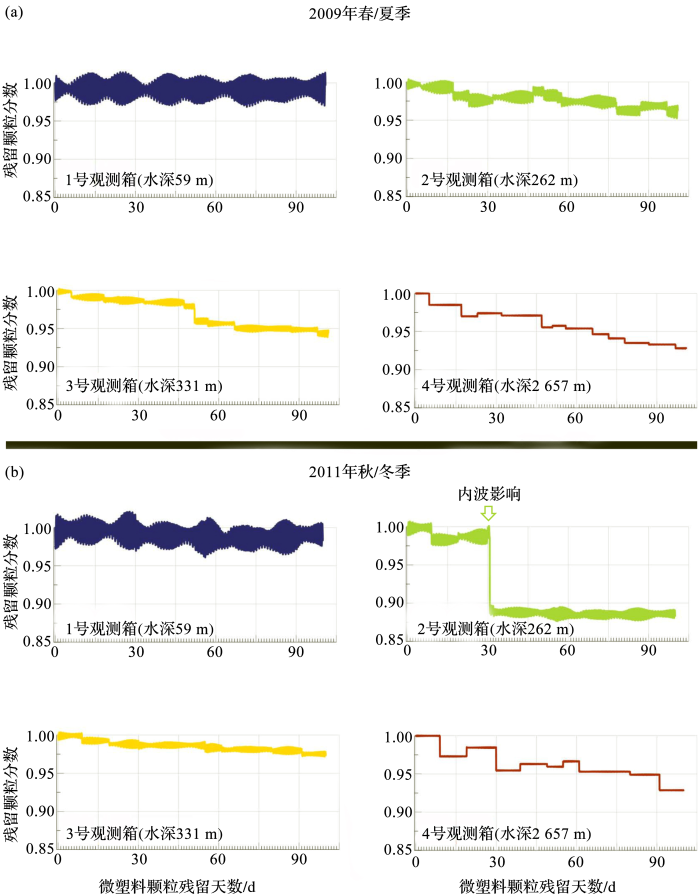
... 沉积在海底的微塑料颗粒能够随再悬浮沉积物向深海侧向运移.海底峡谷是所有陆源碎屑物质由浅海向深海运输的重要通道,其沉积物中塑料碎屑含量也要高于邻近陆架沉积物[70 ,71 ] .基于葡萄牙岸外纳扎雷海底峡谷(Nazaré Canyon)的地形和水动力环境,Ballent等[46 ,47 ] 利用MOHID水体模型模拟高密度微塑料颗粒在海底峡谷的迁移过程.如图8 所示,模型观测箱中微塑料残留颗粒分数呈现十分规律的正弦波振荡,具有全日和半日周期,说明潮汐是控制峡谷底层微塑料搬运的主要因素.模拟结果显示,海底峡谷地形、水动力环境限制了微塑料颗粒在峡谷顶部的搬运过程:微塑料颗粒在潮汐力作用下沿峡谷轴向往复搬运,秋冬季潮汐作用的搬运能力有所增强,但沿峡谷向下的净位移量仍不明显,微塑料从峡谷顶部迁移到深海盆估计需要百年甚至更长时间[47 ] .但是,海底峡谷中突发的内波会引起微塑料颗粒搬运过程中的剧烈扰动(图8 b),强烈增加微塑料搬运速度、缩短搬运时间[47 ] .台风和风暴等极端天气还可能诱发河口—海底峡谷环境中的深海浊流[72 ] ,也会携带海底微塑料在内的沉积物从近岸搬运到深海盆,但深海浊流对微塑料的搬运过程还未有报道,有待深海原位观测结果的验证. ...
Modelled transport of benthic marine microplastic pollution in the Nazaré Canyon
6
2013
... 微塑料颗粒的物理性质决定了其在海洋环境中的行为.微塑料颗粒在海洋水柱中的垂向搬运涉及颗粒从海洋表层迁移到海底的整个过程,首先要考虑微塑料自身物理性质的影响,比如密度、形状和粒径大小等.利用水柱沉降实验,在不同盐度流体中对不同聚合物类型、密度、粒径尺寸和形状的微塑料颗粒进行试验,测试不同变量对微塑料沉降行为的潜在影响[44 ] .结果表明,微塑料颗粒与流体间的密度差异是控制颗粒沉降速率的主要因素,比如高密度颗粒一般以每秒几到几百毫米速率下沉[44 ,45 ,46 ,47 ] .此外,颗粒形状和大小同样影响其沉降速率,形状越不规则、粒径越小的颗粒,沉降速率越小(图5 )[44 ,45 ] .这些颗粒在自身沉降过程中,会因表面积较大而受到较大的流体压力和摩擦阻力,也会因体积小、稳定性差而发生旋转、振荡或翻滚,最终导致微塑料沉降速率降低[48 ] .可以用球度和平面度指数表征微塑料颗粒规则程度,方便研究微塑料颗粒形状对沉降速率的影响[44 ] .微塑料颗粒物理性质研究适用于分析微塑料在水柱中的沉降行为及沉降速度,为微塑料搬运过程数值模拟提供重要参数. ...
... 沉积在海底的微塑料颗粒能够随再悬浮沉积物向深海侧向运移.海底峡谷是所有陆源碎屑物质由浅海向深海运输的重要通道,其沉积物中塑料碎屑含量也要高于邻近陆架沉积物[70 ,71 ] .基于葡萄牙岸外纳扎雷海底峡谷(Nazaré Canyon)的地形和水动力环境,Ballent等[46 ,47 ] 利用MOHID水体模型模拟高密度微塑料颗粒在海底峡谷的迁移过程.如图8 所示,模型观测箱中微塑料残留颗粒分数呈现十分规律的正弦波振荡,具有全日和半日周期,说明潮汐是控制峡谷底层微塑料搬运的主要因素.模拟结果显示,海底峡谷地形、水动力环境限制了微塑料颗粒在峡谷顶部的搬运过程:微塑料颗粒在潮汐力作用下沿峡谷轴向往复搬运,秋冬季潮汐作用的搬运能力有所增强,但沿峡谷向下的净位移量仍不明显,微塑料从峡谷顶部迁移到深海盆估计需要百年甚至更长时间[47 ] .但是,海底峡谷中突发的内波会引起微塑料颗粒搬运过程中的剧烈扰动(图8 b),强烈增加微塑料搬运速度、缩短搬运时间[47 ] .台风和风暴等极端天气还可能诱发河口—海底峡谷环境中的深海浊流[72 ] ,也会携带海底微塑料在内的沉积物从近岸搬运到深海盆,但深海浊流对微塑料的搬运过程还未有报道,有待深海原位观测结果的验证. ...
... [47 ].但是,海底峡谷中突发的内波会引起微塑料颗粒搬运过程中的剧烈扰动(图8 b),强烈增加微塑料搬运速度、缩短搬运时间[47 ] .台风和风暴等极端天气还可能诱发河口—海底峡谷环境中的深海浊流[72 ] ,也会携带海底微塑料在内的沉积物从近岸搬运到深海盆,但深海浊流对微塑料的搬运过程还未有报道,有待深海原位观测结果的验证. ...
... [47 ].台风和风暴等极端天气还可能诱发河口—海底峡谷环境中的深海浊流[72 ] ,也会携带海底微塑料在内的沉积物从近岸搬运到深海盆,但深海浊流对微塑料的搬运过程还未有报道,有待深海原位观测结果的验证. ...
... [
47 ]
(a)2009年春/夏季共101天模拟结果;(b)2011年秋/冬季共101天模拟结果;观测箱按编号1~4沿峡谷轴部向下分布 ...
... (a)2009年春/夏季共101天模拟结果;(b)2011年秋/冬季共101天模拟结果;观测箱按编号1~4沿峡谷轴部向下分布
Residence times of high-density benthic marine microplastic pellets in each monitor box of the Nazaré Canyon model simulation<sup>[<xref ref-type="bibr" rid="R47">47</xref>]</sup> (a) 101-day model run of spring/ summer 2009; (b) 101-day model run of autumn/ winter 2011; Locations of the monitor boxes 1~4 were along the canyon axis ...
Settling velocity of natural particles
1
1982
... 微塑料颗粒的物理性质决定了其在海洋环境中的行为.微塑料颗粒在海洋水柱中的垂向搬运涉及颗粒从海洋表层迁移到海底的整个过程,首先要考虑微塑料自身物理性质的影响,比如密度、形状和粒径大小等.利用水柱沉降实验,在不同盐度流体中对不同聚合物类型、密度、粒径尺寸和形状的微塑料颗粒进行试验,测试不同变量对微塑料沉降行为的潜在影响[44 ] .结果表明,微塑料颗粒与流体间的密度差异是控制颗粒沉降速率的主要因素,比如高密度颗粒一般以每秒几到几百毫米速率下沉[44 ,45 ,46 ,47 ] .此外,颗粒形状和大小同样影响其沉降速率,形状越不规则、粒径越小的颗粒,沉降速率越小(图5 )[44 ,45 ] .这些颗粒在自身沉降过程中,会因表面积较大而受到较大的流体压力和摩擦阻力,也会因体积小、稳定性差而发生旋转、振荡或翻滚,最终导致微塑料沉降速率降低[48 ] .可以用球度和平面度指数表征微塑料颗粒规则程度,方便研究微塑料颗粒形状对沉降速率的影响[44 ] .微塑料颗粒物理性质研究适用于分析微塑料在水柱中的沉降行为及沉降速度,为微塑料搬运过程数值模拟提供重要参数. ...
Passive buoyant tracers in the ocean surface boundary layer: 2. Observations and simulations of microplastic marine debris
3
2015
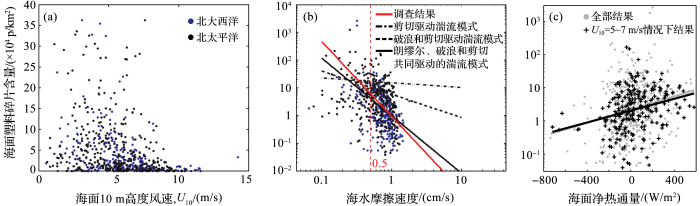
... 海洋动力过程控制微塑料在上层水柱的潜没和垂直分布.通过分析海洋表层微塑料丰度与10 m高度风速及与海水摩擦速度间的关系[37 ] ,以及上层水柱中微塑料含量与蒲福风级间的关系[38 ,39 ] ,证实风力驱动海水混合控制着微塑料在上层水柱中的垂直分布.进一步研究发现,微塑料垂向下潜是风浪驱动的朗缪尔湍流混合作用的结果,与剪切湍流和破碎波引起的湍流动能增强无关(图6 a和6b)[49 ] .通过湍流分解的大尺度涡模拟,发现海表热通量也能影响朗缪尔湍流对水柱中微塑料的垂向搬运:在理想昼夜加热循环模型下,日间海表升温会抑制微塑料颗粒下潜,夜间降温则有助于增加微塑料沉降通量(图6 c)[50 ] . ...
... [
49 ,
50 ]
(a)海洋表层塑料碎屑含量数据来自708个航次调查结果,碎屑含量超过4×10⁵ p/km2 的24个数据点没有显示;(b)航次调查结果(红线)和基于波平均纳维—斯托克斯方程的大尺度涡模拟结果(黑线),模型采用恒定的上浮速度1.4 cm/s;(c)航次调查全部结果(灰点)和海面10 m高度风速5~7 m/s情况下的结果(黑色加号) ...
... (a)海洋表层塑料碎屑含量数据来自708个航次调查结果,碎屑含量超过4×10
5 p/km
2 的24个数据点没有显示;(b)航次调查结果(红线)和基于波平均纳维—斯托克斯方程的大尺度涡模拟结果(黑线),模型采用恒定的上浮速度1.4 cm/s;(c)航次调查全部结果(灰点)和海面10 m高度风速5~7 m/s情况下的结果(黑色加号)
Sea surface (<0.25 m)plastic concentrations influenced by ocean dynamic state<sup>[<xref ref-type="bibr" rid="R49">49</xref>,<xref ref-type="bibr" rid="R50">50</xref>]</sup> (a) Surface plastic concentrations derived from a total of 708 observations, the 24 largest plastic concentration values greater than 4×10⁵ p/km2 are not shown; (b) Regression lines for the observations (red line) and for the large eddy simulations (black lines) of the wave-averaged Navier-Stokes equation, given a terminal buoyant rise velocity as 1.4 cm/s; (c) Surface plastic concentrations of all observations (gray dots) and subsampled observations (black pluses) for 5<U 10 <7 m/s ...
Evidence for the influence of surface heat fluxes on turbulent mixing of microplastic marine debris
3
2016
... 海洋动力过程控制微塑料在上层水柱的潜没和垂直分布.通过分析海洋表层微塑料丰度与10 m高度风速及与海水摩擦速度间的关系[37 ] ,以及上层水柱中微塑料含量与蒲福风级间的关系[38 ,39 ] ,证实风力驱动海水混合控制着微塑料在上层水柱中的垂直分布.进一步研究发现,微塑料垂向下潜是风浪驱动的朗缪尔湍流混合作用的结果,与剪切湍流和破碎波引起的湍流动能增强无关(图6 a和6b)[49 ] .通过湍流分解的大尺度涡模拟,发现海表热通量也能影响朗缪尔湍流对水柱中微塑料的垂向搬运:在理想昼夜加热循环模型下,日间海表升温会抑制微塑料颗粒下潜,夜间降温则有助于增加微塑料沉降通量(图6 c)[50 ] . ...
... ,
50 ]
(a)海洋表层塑料碎屑含量数据来自708个航次调查结果,碎屑含量超过4×10⁵ p/km2 的24个数据点没有显示;(b)航次调查结果(红线)和基于波平均纳维—斯托克斯方程的大尺度涡模拟结果(黑线),模型采用恒定的上浮速度1.4 cm/s;(c)航次调查全部结果(灰点)和海面10 m高度风速5~7 m/s情况下的结果(黑色加号) ...
... (a)海洋表层塑料碎屑含量数据来自708个航次调查结果,碎屑含量超过4×10
5 p/km
2 的24个数据点没有显示;(b)航次调查结果(红线)和基于波平均纳维—斯托克斯方程的大尺度涡模拟结果(黑线),模型采用恒定的上浮速度1.4 cm/s;(c)航次调查全部结果(灰点)和海面10 m高度风速5~7 m/s情况下的结果(黑色加号)
Sea surface (<0.25 m)plastic concentrations influenced by ocean dynamic state<sup>[<xref ref-type="bibr" rid="R49">49</xref>,<xref ref-type="bibr" rid="R50">50</xref>]</sup> (a) Surface plastic concentrations derived from a total of 708 observations, the 24 largest plastic concentration values greater than 4×10⁵ p/km2 are not shown; (b) Regression lines for the observations (red line) and for the large eddy simulations (black lines) of the wave-averaged Navier-Stokes equation, given a terminal buoyant rise velocity as 1.4 cm/s; (c) Surface plastic concentrations of all observations (gray dots) and subsampled observations (black pluses) for 5<U 10 <7 m/s ...
Microplastic pollution identified in deep-sea water and ingested by benthic invertebrates in the Rockall Trough, North Atlantic Ocean
1
2017
... 生物淤积在微塑料表面能够有效增加塑料碎屑密度,“压舱作用”使原本具有浮力的微塑料脱离海洋表层下沉[12 ,31 ] .长期浸泡在海水中的塑料废弃物发生高度降解,表面积可增加到原始颗粒的2倍多[51 ] ,为环境中微生物、藻类和无脊椎动物附着提供可能.微生物淤积仅需要1周左右就会形成稳定生物膜[52 ,53 ] ,7周之内能够使漂浮微塑料发生沉降[54 ] .随着水深逐渐增加,到密度和温度跃层深度上,微塑料因密度近似于海水密度而呈悬浮态[55 ] .但根据Kooi等[56 ] 研究,微塑料在生物淤积引起初次沉降后,不会悬浮在固定水位,而是在水柱中不断上升和下降.这是因为浸没在海面之下的微塑料颗粒,由于受光照消减、刮擦和碳酸盐溶解等因素干扰,表面附着的生物污垢可能在短时间内被去除,然后颗粒再次向上运动或重新浮出海面,微塑料在水柱中上下运动与表面附着藻类的生长周期密切相关[56 ] .估计海洋微塑料表面生物量高达0.001~0.015 Mt[57 ] ,对促进海洋表层漂浮微塑料沉降具有重要意义. ...
The size, mass, and composition of plastic debris in the western North Atlantic Ocean
1
2010
... 生物淤积在微塑料表面能够有效增加塑料碎屑密度,“压舱作用”使原本具有浮力的微塑料脱离海洋表层下沉[12 ,31 ] .长期浸泡在海水中的塑料废弃物发生高度降解,表面积可增加到原始颗粒的2倍多[51 ] ,为环境中微生物、藻类和无脊椎动物附着提供可能.微生物淤积仅需要1周左右就会形成稳定生物膜[52 ,53 ] ,7周之内能够使漂浮微塑料发生沉降[54 ] .随着水深逐渐增加,到密度和温度跃层深度上,微塑料因密度近似于海水密度而呈悬浮态[55 ] .但根据Kooi等[56 ] 研究,微塑料在生物淤积引起初次沉降后,不会悬浮在固定水位,而是在水柱中不断上升和下降.这是因为浸没在海面之下的微塑料颗粒,由于受光照消减、刮擦和碳酸盐溶解等因素干扰,表面附着的生物污垢可能在短时间内被去除,然后颗粒再次向上运动或重新浮出海面,微塑料在水柱中上下运动与表面附着藻类的生长周期密切相关[56 ] .估计海洋微塑料表面生物量高达0.001~0.015 Mt[57 ] ,对促进海洋表层漂浮微塑料沉降具有重要意义. ...
Early microbial biofilm formation on marine plastic debris
1
2011
... 生物淤积在微塑料表面能够有效增加塑料碎屑密度,“压舱作用”使原本具有浮力的微塑料脱离海洋表层下沉[12 ,31 ] .长期浸泡在海水中的塑料废弃物发生高度降解,表面积可增加到原始颗粒的2倍多[51 ] ,为环境中微生物、藻类和无脊椎动物附着提供可能.微生物淤积仅需要1周左右就会形成稳定生物膜[52 ,53 ] ,7周之内能够使漂浮微塑料发生沉降[54 ] .随着水深逐渐增加,到密度和温度跃层深度上,微塑料因密度近似于海水密度而呈悬浮态[55 ] .但根据Kooi等[56 ] 研究,微塑料在生物淤积引起初次沉降后,不会悬浮在固定水位,而是在水柱中不断上升和下降.这是因为浸没在海面之下的微塑料颗粒,由于受光照消减、刮擦和碳酸盐溶解等因素干扰,表面附着的生物污垢可能在短时间内被去除,然后颗粒再次向上运动或重新浮出海面,微塑料在水柱中上下运动与表面附着藻类的生长周期密切相关[56 ] .估计海洋微塑料表面生物量高达0.001~0.015 Mt[57 ] ,对促进海洋表层漂浮微塑料沉降具有重要意义. ...
Fouling of floating plastic debris under Biscayne Bay exposure conditions
1
1991
... 生物淤积在微塑料表面能够有效增加塑料碎屑密度,“压舱作用”使原本具有浮力的微塑料脱离海洋表层下沉[12 ,31 ] .长期浸泡在海水中的塑料废弃物发生高度降解,表面积可增加到原始颗粒的2倍多[51 ] ,为环境中微生物、藻类和无脊椎动物附着提供可能.微生物淤积仅需要1周左右就会形成稳定生物膜[52 ,53 ] ,7周之内能够使漂浮微塑料发生沉降[54 ] .随着水深逐渐增加,到密度和温度跃层深度上,微塑料因密度近似于海水密度而呈悬浮态[55 ] .但根据Kooi等[56 ] 研究,微塑料在生物淤积引起初次沉降后,不会悬浮在固定水位,而是在水柱中不断上升和下降.这是因为浸没在海面之下的微塑料颗粒,由于受光照消减、刮擦和碳酸盐溶解等因素干扰,表面附着的生物污垢可能在短时间内被去除,然后颗粒再次向上运动或重新浮出海面,微塑料在水柱中上下运动与表面附着藻类的生长周期密切相关[56 ] .估计海洋微塑料表面生物量高达0.001~0.015 Mt[57 ] ,对促进海洋表层漂浮微塑料沉降具有重要意义. ...
The behaviors of microplastics in the marine environment
1
2016
... 生物淤积在微塑料表面能够有效增加塑料碎屑密度,“压舱作用”使原本具有浮力的微塑料脱离海洋表层下沉[12 ,31 ] .长期浸泡在海水中的塑料废弃物发生高度降解,表面积可增加到原始颗粒的2倍多[51 ] ,为环境中微生物、藻类和无脊椎动物附着提供可能.微生物淤积仅需要1周左右就会形成稳定生物膜[52 ,53 ] ,7周之内能够使漂浮微塑料发生沉降[54 ] .随着水深逐渐增加,到密度和温度跃层深度上,微塑料因密度近似于海水密度而呈悬浮态[55 ] .但根据Kooi等[56 ] 研究,微塑料在生物淤积引起初次沉降后,不会悬浮在固定水位,而是在水柱中不断上升和下降.这是因为浸没在海面之下的微塑料颗粒,由于受光照消减、刮擦和碳酸盐溶解等因素干扰,表面附着的生物污垢可能在短时间内被去除,然后颗粒再次向上运动或重新浮出海面,微塑料在水柱中上下运动与表面附着藻类的生长周期密切相关[56 ] .估计海洋微塑料表面生物量高达0.001~0.015 Mt[57 ] ,对促进海洋表层漂浮微塑料沉降具有重要意义. ...
Ups and downs in the ocean: Effects of biofouling on vertical transport of microplastics
2
2017
... 生物淤积在微塑料表面能够有效增加塑料碎屑密度,“压舱作用”使原本具有浮力的微塑料脱离海洋表层下沉[12 ,31 ] .长期浸泡在海水中的塑料废弃物发生高度降解,表面积可增加到原始颗粒的2倍多[51 ] ,为环境中微生物、藻类和无脊椎动物附着提供可能.微生物淤积仅需要1周左右就会形成稳定生物膜[52 ,53 ] ,7周之内能够使漂浮微塑料发生沉降[54 ] .随着水深逐渐增加,到密度和温度跃层深度上,微塑料因密度近似于海水密度而呈悬浮态[55 ] .但根据Kooi等[56 ] 研究,微塑料在生物淤积引起初次沉降后,不会悬浮在固定水位,而是在水柱中不断上升和下降.这是因为浸没在海面之下的微塑料颗粒,由于受光照消减、刮擦和碳酸盐溶解等因素干扰,表面附着的生物污垢可能在短时间内被去除,然后颗粒再次向上运动或重新浮出海面,微塑料在水柱中上下运动与表面附着藻类的生长周期密切相关[56 ] .估计海洋微塑料表面生物量高达0.001~0.015 Mt[57 ] ,对促进海洋表层漂浮微塑料沉降具有重要意义. ...
... [56 ].估计海洋微塑料表面生物量高达0.001~0.015 Mt[57 ] ,对促进海洋表层漂浮微塑料沉降具有重要意义. ...
Life in the “plastisphere”: Microbial communities on plastic marine debris
1
2013
... 生物淤积在微塑料表面能够有效增加塑料碎屑密度,“压舱作用”使原本具有浮力的微塑料脱离海洋表层下沉[12 ,31 ] .长期浸泡在海水中的塑料废弃物发生高度降解,表面积可增加到原始颗粒的2倍多[51 ] ,为环境中微生物、藻类和无脊椎动物附着提供可能.微生物淤积仅需要1周左右就会形成稳定生物膜[52 ,53 ] ,7周之内能够使漂浮微塑料发生沉降[54 ] .随着水深逐渐增加,到密度和温度跃层深度上,微塑料因密度近似于海水密度而呈悬浮态[55 ] .但根据Kooi等[56 ] 研究,微塑料在生物淤积引起初次沉降后,不会悬浮在固定水位,而是在水柱中不断上升和下降.这是因为浸没在海面之下的微塑料颗粒,由于受光照消减、刮擦和碳酸盐溶解等因素干扰,表面附着的生物污垢可能在短时间内被去除,然后颗粒再次向上运动或重新浮出海面,微塑料在水柱中上下运动与表面附着藻类的生长周期密切相关[56 ] .估计海洋微塑料表面生物量高达0.001~0.015 Mt[57 ] ,对促进海洋表层漂浮微塑料沉降具有重要意义. ...
Marine Anthropogenic Litter
1
2015
... 海洋动物摄食和排泄过程是生物影响微塑料垂向搬运的另一个重要机制.微塑料颗粒大小恰好符合海洋生物摄食范围,其表面附着的生物及其产物(如细胞外聚合物)使微塑料“闻”起来更像营养颗粒,很容易引起海洋生物误食.据统计,海洋生态系统各营养级生物都有直接或间接地摄食微塑料的行为,至少557种海洋生物体内检测出微塑料,包括浮游动物、底栖动物、鱼类、哺乳动物以及海鸟等[58 ,59 ,60 ] ,甚至包括生活在水深超过万米的超深渊生物[61 ,62 ] .Katija等[63 ] 记录了滤食性浮游动物巨型尾海鞘(giant larvaceans)摄食和排泄微塑料的过程,微塑料随废弃“黏液房”和粪球沉积到海底的速率分别是800和300 m/d. ...
Assessing the relationship between the abundance and properties of microplastics in water and in mussels
1
2018
... 海洋动物摄食和排泄过程是生物影响微塑料垂向搬运的另一个重要机制.微塑料颗粒大小恰好符合海洋生物摄食范围,其表面附着的生物及其产物(如细胞外聚合物)使微塑料“闻”起来更像营养颗粒,很容易引起海洋生物误食.据统计,海洋生态系统各营养级生物都有直接或间接地摄食微塑料的行为,至少557种海洋生物体内检测出微塑料,包括浮游动物、底栖动物、鱼类、哺乳动物以及海鸟等[58 ,59 ,60 ] ,甚至包括生活在水深超过万米的超深渊生物[61 ,62 ] .Katija等[63 ] 记录了滤食性浮游动物巨型尾海鞘(giant larvaceans)摄食和排泄微塑料的过程,微塑料随废弃“黏液房”和粪球沉积到海底的速率分别是800和300 m/d. ...
Progress and prospect on the study of the ecological risk of microplastics in the ocean
2
2016
... 海洋动物摄食和排泄过程是生物影响微塑料垂向搬运的另一个重要机制.微塑料颗粒大小恰好符合海洋生物摄食范围,其表面附着的生物及其产物(如细胞外聚合物)使微塑料“闻”起来更像营养颗粒,很容易引起海洋生物误食.据统计,海洋生态系统各营养级生物都有直接或间接地摄食微塑料的行为,至少557种海洋生物体内检测出微塑料,包括浮游动物、底栖动物、鱼类、哺乳动物以及海鸟等[58 ,59 ,60 ] ,甚至包括生活在水深超过万米的超深渊生物[61 ,62 ] .Katija等[63 ] 记录了滤食性浮游动物巨型尾海鞘(giant larvaceans)摄食和排泄微塑料的过程,微塑料随废弃“黏液房”和粪球沉积到海底的速率分别是800和300 m/d. ...
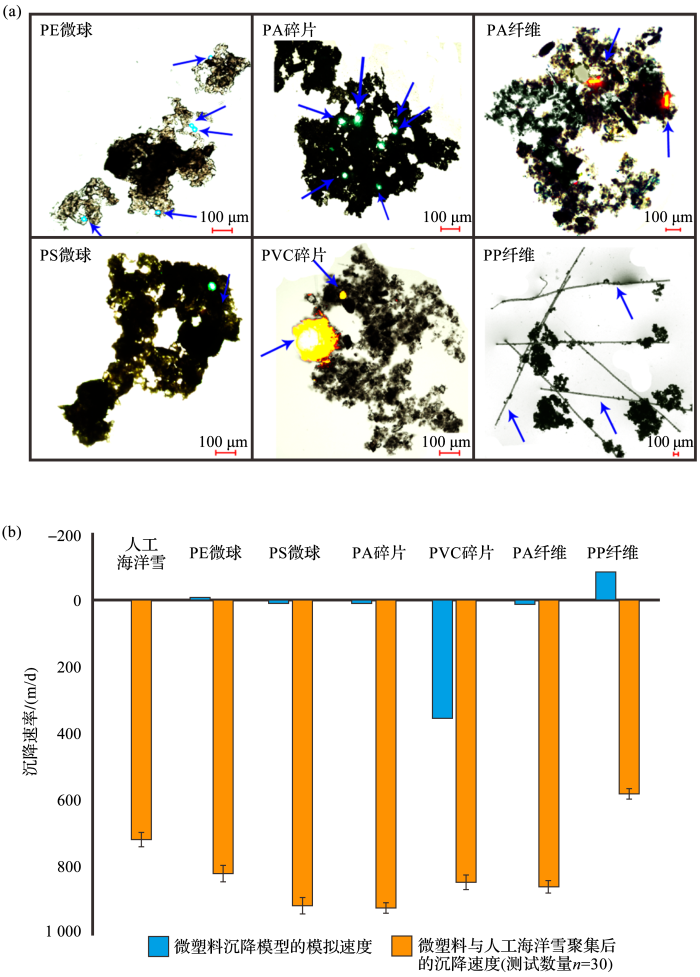
... 海洋雪聚集有助于增加微塑料颗粒沉降速率,使其快速穿越水柱沉积到海底[7 ,64 ] .海洋雪是由水柱上层飘落的微小颗粒组成的富含有机物的聚集体,通常包含已死或将死的浮游植物和动物、微生物、粪便颗粒、颗粒有机物和无机陆源碎屑等.Zhao等[65 ] 最早在水柱顶部2 m的天然海洋雪中检测出微塑料,Kowalski等[44 ] 则在模拟破浪带机械应力对微塑料的影响时,观测到微塑料与黏土矿物和石英的聚集.实验室内模拟微塑料与浮游藻类聚集和沉降过程,测得微塑料沉降速率在聚集前后从每天数十米增加到数百米[60 ] ,能够在几天或几年内沉积到海底[7 ] .Porter等[66 ] 更详细地测试了聚合物类型、形状和粒径大小对海洋雪沉降速率的影响,观测到微塑料能够引起海洋雪聚集体密度的增加或减少,从而加速或减缓聚集体沉降过程(图7 ).微塑料与海洋雪聚集不仅改变了微塑料在水柱中的行为,同时改变了海洋雪沉降速率,影响水柱中颗粒有机物沉降通量. ...
海洋微塑料生态风险研究进展与展望
2
2016
... 海洋动物摄食和排泄过程是生物影响微塑料垂向搬运的另一个重要机制.微塑料颗粒大小恰好符合海洋生物摄食范围,其表面附着的生物及其产物(如细胞外聚合物)使微塑料“闻”起来更像营养颗粒,很容易引起海洋生物误食.据统计,海洋生态系统各营养级生物都有直接或间接地摄食微塑料的行为,至少557种海洋生物体内检测出微塑料,包括浮游动物、底栖动物、鱼类、哺乳动物以及海鸟等[58 ,59 ,60 ] ,甚至包括生活在水深超过万米的超深渊生物[61 ,62 ] .Katija等[63 ] 记录了滤食性浮游动物巨型尾海鞘(giant larvaceans)摄食和排泄微塑料的过程,微塑料随废弃“黏液房”和粪球沉积到海底的速率分别是800和300 m/d. ...
... 海洋雪聚集有助于增加微塑料颗粒沉降速率,使其快速穿越水柱沉积到海底[7 ,64 ] .海洋雪是由水柱上层飘落的微小颗粒组成的富含有机物的聚集体,通常包含已死或将死的浮游植物和动物、微生物、粪便颗粒、颗粒有机物和无机陆源碎屑等.Zhao等[65 ] 最早在水柱顶部2 m的天然海洋雪中检测出微塑料,Kowalski等[44 ] 则在模拟破浪带机械应力对微塑料的影响时,观测到微塑料与黏土矿物和石英的聚集.实验室内模拟微塑料与浮游藻类聚集和沉降过程,测得微塑料沉降速率在聚集前后从每天数十米增加到数百米[60 ] ,能够在几天或几年内沉积到海底[7 ] .Porter等[66 ] 更详细地测试了聚合物类型、形状和粒径大小对海洋雪沉降速率的影响,观测到微塑料能够引起海洋雪聚集体密度的增加或减少,从而加速或减缓聚集体沉降过程(图7 ).微塑料与海洋雪聚集不仅改变了微塑料在水柱中的行为,同时改变了海洋雪沉降速率,影响水柱中颗粒有机物沉降通量. ...
Bioaccumulation of persistent organic pollutants in the deepest ocean fauna
1
2017
... 海洋动物摄食和排泄过程是生物影响微塑料垂向搬运的另一个重要机制.微塑料颗粒大小恰好符合海洋生物摄食范围,其表面附着的生物及其产物(如细胞外聚合物)使微塑料“闻”起来更像营养颗粒,很容易引起海洋生物误食.据统计,海洋生态系统各营养级生物都有直接或间接地摄食微塑料的行为,至少557种海洋生物体内检测出微塑料,包括浮游动物、底栖动物、鱼类、哺乳动物以及海鸟等[58 ,59 ,60 ] ,甚至包括生活在水深超过万米的超深渊生物[61 ,62 ] .Katija等[63 ] 记录了滤食性浮游动物巨型尾海鞘(giant larvaceans)摄食和排泄微塑料的过程,微塑料随废弃“黏液房”和粪球沉积到海底的速率分别是800和300 m/d. ...
Microplastics and synthetic particles ingested by deep-sea amphipods in six of the deepest marine ecosystems on Earth
1
2019
... 海洋动物摄食和排泄过程是生物影响微塑料垂向搬运的另一个重要机制.微塑料颗粒大小恰好符合海洋生物摄食范围,其表面附着的生物及其产物(如细胞外聚合物)使微塑料“闻”起来更像营养颗粒,很容易引起海洋生物误食.据统计,海洋生态系统各营养级生物都有直接或间接地摄食微塑料的行为,至少557种海洋生物体内检测出微塑料,包括浮游动物、底栖动物、鱼类、哺乳动物以及海鸟等[58 ,59 ,60 ] ,甚至包括生活在水深超过万米的超深渊生物[61 ,62 ] .Katija等[63 ] 记录了滤食性浮游动物巨型尾海鞘(giant larvaceans)摄食和排泄微塑料的过程,微塑料随废弃“黏液房”和粪球沉积到海底的速率分别是800和300 m/d. ...
From the surface to the seafloor: How giant larvaceans transport microplastics into the deep sea
1
2017
... 海洋动物摄食和排泄过程是生物影响微塑料垂向搬运的另一个重要机制.微塑料颗粒大小恰好符合海洋生物摄食范围,其表面附着的生物及其产物(如细胞外聚合物)使微塑料“闻”起来更像营养颗粒,很容易引起海洋生物误食.据统计,海洋生态系统各营养级生物都有直接或间接地摄食微塑料的行为,至少557种海洋生物体内检测出微塑料,包括浮游动物、底栖动物、鱼类、哺乳动物以及海鸟等[58 ,59 ,60 ] ,甚至包括生活在水深超过万米的超深渊生物[61 ,62 ] .Katija等[63 ] 记录了滤食性浮游动物巨型尾海鞘(giant larvaceans)摄食和排泄微塑料的过程,微塑料随废弃“黏液房”和粪球沉积到海底的速率分别是800和300 m/d. ...
Interactions between microplastics and phytoplankton aggregates: Impact on their respective fates
1
2015
... 海洋雪聚集有助于增加微塑料颗粒沉降速率,使其快速穿越水柱沉积到海底[7 ,64 ] .海洋雪是由水柱上层飘落的微小颗粒组成的富含有机物的聚集体,通常包含已死或将死的浮游植物和动物、微生物、粪便颗粒、颗粒有机物和无机陆源碎屑等.Zhao等[65 ] 最早在水柱顶部2 m的天然海洋雪中检测出微塑料,Kowalski等[44 ] 则在模拟破浪带机械应力对微塑料的影响时,观测到微塑料与黏土矿物和石英的聚集.实验室内模拟微塑料与浮游藻类聚集和沉降过程,测得微塑料沉降速率在聚集前后从每天数十米增加到数百米[60 ] ,能够在几天或几年内沉积到海底[7 ] .Porter等[66 ] 更详细地测试了聚合物类型、形状和粒径大小对海洋雪沉降速率的影响,观测到微塑料能够引起海洋雪聚集体密度的增加或减少,从而加速或减缓聚集体沉降过程(图7 ).微塑料与海洋雪聚集不仅改变了微塑料在水柱中的行为,同时改变了海洋雪沉降速率,影响水柱中颗粒有机物沉降通量. ...
An approach for extraction, characterization and quantitation of microplastic in natural marine snow using Raman microscopy
1
2017
... 海洋雪聚集有助于增加微塑料颗粒沉降速率,使其快速穿越水柱沉积到海底[7 ,64 ] .海洋雪是由水柱上层飘落的微小颗粒组成的富含有机物的聚集体,通常包含已死或将死的浮游植物和动物、微生物、粪便颗粒、颗粒有机物和无机陆源碎屑等.Zhao等[65 ] 最早在水柱顶部2 m的天然海洋雪中检测出微塑料,Kowalski等[44 ] 则在模拟破浪带机械应力对微塑料的影响时,观测到微塑料与黏土矿物和石英的聚集.实验室内模拟微塑料与浮游藻类聚集和沉降过程,测得微塑料沉降速率在聚集前后从每天数十米增加到数百米[60 ] ,能够在几天或几年内沉积到海底[7 ] .Porter等[66 ] 更详细地测试了聚合物类型、形状和粒径大小对海洋雪沉降速率的影响,观测到微塑料能够引起海洋雪聚集体密度的增加或减少,从而加速或减缓聚集体沉降过程(图7 ).微塑料与海洋雪聚集不仅改变了微塑料在水柱中的行为,同时改变了海洋雪沉降速率,影响水柱中颗粒有机物沉降通量. ...
Role of marine snows in microplastic fate and bioavailability
3
2018
... 海洋雪聚集有助于增加微塑料颗粒沉降速率,使其快速穿越水柱沉积到海底[7 ,64 ] .海洋雪是由水柱上层飘落的微小颗粒组成的富含有机物的聚集体,通常包含已死或将死的浮游植物和动物、微生物、粪便颗粒、颗粒有机物和无机陆源碎屑等.Zhao等[65 ] 最早在水柱顶部2 m的天然海洋雪中检测出微塑料,Kowalski等[44 ] 则在模拟破浪带机械应力对微塑料的影响时,观测到微塑料与黏土矿物和石英的聚集.实验室内模拟微塑料与浮游藻类聚集和沉降过程,测得微塑料沉降速率在聚集前后从每天数十米增加到数百米[60 ] ,能够在几天或几年内沉积到海底[7 ] .Porter等[66 ] 更详细地测试了聚合物类型、形状和粒径大小对海洋雪沉降速率的影响,观测到微塑料能够引起海洋雪聚集体密度的增加或减少,从而加速或减缓聚集体沉降过程(图7 ).微塑料与海洋雪聚集不仅改变了微塑料在水柱中的行为,同时改变了海洋雪沉降速率,影响水柱中颗粒有机物沉降通量. ...
... [
66 ]
Images of marine snows with incorporated polymers and effect on sinking rates<sup>[<xref ref-type="bibr" rid="R66">66</xref>]</sup> Fig.7 ![]()
5 海洋微塑料侧向搬运过程 <strong>5.1</strong> 海洋表层微塑料的侧向搬运 海洋表层洋流系统控制了漂浮微塑料的侧向迁移.微塑料在波浪和洋流等动力作用下可以远距离搬运,基于洋流动力模型能够模拟微塑料分布的时空变化,有助于确定微塑料输入来源、搬运路径和聚集区域[67 ] .北大西洋、南大西洋、北太平洋、南太平洋和印度洋共5个微塑料聚集的亚热带环流区,就是通过洋流模型预测的结果[24 ,34 ,68 ] ,并且得到航次实地调查的证实(图1 )[26 ,27 ] .但是,模型预测与实际观测间往往存在一定差异,比如在北大西洋,模型预测微塑料含量高值应该在60°W左右的中心环流区,但调查发现微塑料含量高值出现在距中心环流区较远的东侧,模型估算的微塑料数量也低于实地调查结果.另一方面,在海洋微塑料扩散模型中假定颗粒大部分淹没在海面以下,忽略了颗粒高出水面部分所受到的风应力作用[69 ] ,估算出微塑料跨越太平洋需要数月甚至数年[42 ] ,很可能低估了表层微塑料随洋流侧向迁移的速度. ...
... [
66 ]
Fig.7 ![]()
5 海洋微塑料侧向搬运过程 <strong>5.1</strong> 海洋表层微塑料的侧向搬运 海洋表层洋流系统控制了漂浮微塑料的侧向迁移.微塑料在波浪和洋流等动力作用下可以远距离搬运,基于洋流动力模型能够模拟微塑料分布的时空变化,有助于确定微塑料输入来源、搬运路径和聚集区域[67 ] .北大西洋、南大西洋、北太平洋、南太平洋和印度洋共5个微塑料聚集的亚热带环流区,就是通过洋流模型预测的结果[24 ,34 ,68 ] ,并且得到航次实地调查的证实(图1 )[26 ,27 ] .但是,模型预测与实际观测间往往存在一定差异,比如在北大西洋,模型预测微塑料含量高值应该在60°W左右的中心环流区,但调查发现微塑料含量高值出现在距中心环流区较远的东侧,模型估算的微塑料数量也低于实地调查结果.另一方面,在海洋微塑料扩散模型中假定颗粒大部分淹没在海面以下,忽略了颗粒高出水面部分所受到的风应力作用[69 ] ,估算出微塑料跨越太平洋需要数月甚至数年[42 ] ,很可能低估了表层微塑料随洋流侧向迁移的速度. ...
Numerical simulation of transportation of marine microplastics: A review
1
2019
... 海洋表层洋流系统控制了漂浮微塑料的侧向迁移.微塑料在波浪和洋流等动力作用下可以远距离搬运,基于洋流动力模型能够模拟微塑料分布的时空变化,有助于确定微塑料输入来源、搬运路径和聚集区域[67 ] .北大西洋、南大西洋、北太平洋、南太平洋和印度洋共5个微塑料聚集的亚热带环流区,就是通过洋流模型预测的结果[24 ,34 ,68 ] ,并且得到航次实地调查的证实(图1 )[26 ,27 ] .但是,模型预测与实际观测间往往存在一定差异,比如在北大西洋,模型预测微塑料含量高值应该在60°W左右的中心环流区,但调查发现微塑料含量高值出现在距中心环流区较远的东侧,模型估算的微塑料数量也低于实地调查结果.另一方面,在海洋微塑料扩散模型中假定颗粒大部分淹没在海面以下,忽略了颗粒高出水面部分所受到的风应力作用[69 ] ,估算出微塑料跨越太平洋需要数月甚至数年[42 ] ,很可能低估了表层微塑料随洋流侧向迁移的速度. ...
海洋微塑料输运的数值模拟研究进展
1
2019
... 海洋表层洋流系统控制了漂浮微塑料的侧向迁移.微塑料在波浪和洋流等动力作用下可以远距离搬运,基于洋流动力模型能够模拟微塑料分布的时空变化,有助于确定微塑料输入来源、搬运路径和聚集区域[67 ] .北大西洋、南大西洋、北太平洋、南太平洋和印度洋共5个微塑料聚集的亚热带环流区,就是通过洋流模型预测的结果[24 ,34 ,68 ] ,并且得到航次实地调查的证实(图1 )[26 ,27 ] .但是,模型预测与实际观测间往往存在一定差异,比如在北大西洋,模型预测微塑料含量高值应该在60°W左右的中心环流区,但调查发现微塑料含量高值出现在距中心环流区较远的东侧,模型估算的微塑料数量也低于实地调查结果.另一方面,在海洋微塑料扩散模型中假定颗粒大部分淹没在海面以下,忽略了颗粒高出水面部分所受到的风应力作用[69 ] ,估算出微塑料跨越太平洋需要数月甚至数年[42 ] ,很可能低估了表层微塑料随洋流侧向迁移的速度. ...
Numerical modelling of floating debris in the world’s oceans
1
2012
... 海洋表层洋流系统控制了漂浮微塑料的侧向迁移.微塑料在波浪和洋流等动力作用下可以远距离搬运,基于洋流动力模型能够模拟微塑料分布的时空变化,有助于确定微塑料输入来源、搬运路径和聚集区域[67 ] .北大西洋、南大西洋、北太平洋、南太平洋和印度洋共5个微塑料聚集的亚热带环流区,就是通过洋流模型预测的结果[24 ,34 ,68 ] ,并且得到航次实地调查的证实(图1 )[26 ,27 ] .但是,模型预测与实际观测间往往存在一定差异,比如在北大西洋,模型预测微塑料含量高值应该在60°W左右的中心环流区,但调查发现微塑料含量高值出现在距中心环流区较远的东侧,模型估算的微塑料数量也低于实地调查结果.另一方面,在海洋微塑料扩散模型中假定颗粒大部分淹没在海面以下,忽略了颗粒高出水面部分所受到的风应力作用[69 ] ,估算出微塑料跨越太平洋需要数月甚至数年[42 ] ,很可能低估了表层微塑料随洋流侧向迁移的速度. ...
Modeling the transport and accumulation floating debris generated by the 11 March 2011 Tohoku tsunami
1
66
... 海洋表层洋流系统控制了漂浮微塑料的侧向迁移.微塑料在波浪和洋流等动力作用下可以远距离搬运,基于洋流动力模型能够模拟微塑料分布的时空变化,有助于确定微塑料输入来源、搬运路径和聚集区域[67 ] .北大西洋、南大西洋、北太平洋、南太平洋和印度洋共5个微塑料聚集的亚热带环流区,就是通过洋流模型预测的结果[24 ,34 ,68 ] ,并且得到航次实地调查的证实(图1 )[26 ,27 ] .但是,模型预测与实际观测间往往存在一定差异,比如在北大西洋,模型预测微塑料含量高值应该在60°W左右的中心环流区,但调查发现微塑料含量高值出现在距中心环流区较远的东侧,模型估算的微塑料数量也低于实地调查结果.另一方面,在海洋微塑料扩散模型中假定颗粒大部分淹没在海面以下,忽略了颗粒高出水面部分所受到的风应力作用[69 ] ,估算出微塑料跨越太平洋需要数月甚至数年[42 ] ,很可能低估了表层微塑料随洋流侧向迁移的速度. ...
Debris in the deep: Using a 22-year video annotation database to survey marine litter in Monterey Canyon, central California, USA
1
2013
... 沉积在海底的微塑料颗粒能够随再悬浮沉积物向深海侧向运移.海底峡谷是所有陆源碎屑物质由浅海向深海运输的重要通道,其沉积物中塑料碎屑含量也要高于邻近陆架沉积物[70 ,71 ] .基于葡萄牙岸外纳扎雷海底峡谷(Nazaré Canyon)的地形和水动力环境,Ballent等[46 ,47 ] 利用MOHID水体模型模拟高密度微塑料颗粒在海底峡谷的迁移过程.如图8 所示,模型观测箱中微塑料残留颗粒分数呈现十分规律的正弦波振荡,具有全日和半日周期,说明潮汐是控制峡谷底层微塑料搬运的主要因素.模拟结果显示,海底峡谷地形、水动力环境限制了微塑料颗粒在峡谷顶部的搬运过程:微塑料颗粒在潮汐力作用下沿峡谷轴向往复搬运,秋冬季潮汐作用的搬运能力有所增强,但沿峡谷向下的净位移量仍不明显,微塑料从峡谷顶部迁移到深海盆估计需要百年甚至更长时间[47 ] .但是,海底峡谷中突发的内波会引起微塑料颗粒搬运过程中的剧烈扰动(图8 b),强烈增加微塑料搬运速度、缩短搬运时间[47 ] .台风和风暴等极端天气还可能诱发河口—海底峡谷环境中的深海浊流[72 ] ,也会携带海底微塑料在内的沉积物从近岸搬运到深海盆,但深海浊流对微塑料的搬运过程还未有报道,有待深海原位观测结果的验证. ...
Marine litter on the floor of deep submarine canyons of the Northwestern Mediterranean Sea: The role of hydrodynamic processes
1
2015
... 沉积在海底的微塑料颗粒能够随再悬浮沉积物向深海侧向运移.海底峡谷是所有陆源碎屑物质由浅海向深海运输的重要通道,其沉积物中塑料碎屑含量也要高于邻近陆架沉积物[70 ,71 ] .基于葡萄牙岸外纳扎雷海底峡谷(Nazaré Canyon)的地形和水动力环境,Ballent等[46 ,47 ] 利用MOHID水体模型模拟高密度微塑料颗粒在海底峡谷的迁移过程.如图8 所示,模型观测箱中微塑料残留颗粒分数呈现十分规律的正弦波振荡,具有全日和半日周期,说明潮汐是控制峡谷底层微塑料搬运的主要因素.模拟结果显示,海底峡谷地形、水动力环境限制了微塑料颗粒在峡谷顶部的搬运过程:微塑料颗粒在潮汐力作用下沿峡谷轴向往复搬运,秋冬季潮汐作用的搬运能力有所增强,但沿峡谷向下的净位移量仍不明显,微塑料从峡谷顶部迁移到深海盆估计需要百年甚至更长时间[47 ] .但是,海底峡谷中突发的内波会引起微塑料颗粒搬运过程中的剧烈扰动(图8 b),强烈增加微塑料搬运速度、缩短搬运时间[47 ] .台风和风暴等极端天气还可能诱发河口—海底峡谷环境中的深海浊流[72 ] ,也会携带海底微塑料在内的沉积物从近岸搬运到深海盆,但深海浊流对微塑料的搬运过程还未有报道,有待深海原位观测结果的验证. ...
Long-term in situ observations on typhoon-triggered turbidity currents in the deep sea
1
2018
... 沉积在海底的微塑料颗粒能够随再悬浮沉积物向深海侧向运移.海底峡谷是所有陆源碎屑物质由浅海向深海运输的重要通道,其沉积物中塑料碎屑含量也要高于邻近陆架沉积物[70 ,71 ] .基于葡萄牙岸外纳扎雷海底峡谷(Nazaré Canyon)的地形和水动力环境,Ballent等[46 ,47 ] 利用MOHID水体模型模拟高密度微塑料颗粒在海底峡谷的迁移过程.如图8 所示,模型观测箱中微塑料残留颗粒分数呈现十分规律的正弦波振荡,具有全日和半日周期,说明潮汐是控制峡谷底层微塑料搬运的主要因素.模拟结果显示,海底峡谷地形、水动力环境限制了微塑料颗粒在峡谷顶部的搬运过程:微塑料颗粒在潮汐力作用下沿峡谷轴向往复搬运,秋冬季潮汐作用的搬运能力有所增强,但沿峡谷向下的净位移量仍不明显,微塑料从峡谷顶部迁移到深海盆估计需要百年甚至更长时间[47 ] .但是,海底峡谷中突发的内波会引起微塑料颗粒搬运过程中的剧烈扰动(图8 b),强烈增加微塑料搬运速度、缩短搬运时间[47 ] .台风和风暴等极端天气还可能诱发河口—海底峡谷环境中的深海浊流[72 ] ,也会携带海底微塑料在内的沉积物从近岸搬运到深海盆,但深海浊流对微塑料的搬运过程还未有报道,有待深海原位观测结果的验证. ...
Global warming releases microplastic legacy frozen in Arctic Sea ice
1
2014
... 漂浮在极地海洋表层的海冰是微塑料搬运和富集的特殊介质.大部分海冰形成于大陆边缘浅海陆架上,在海冰生长过程中,能够清除悬浮在水柱中的微塑料;当海冰冻结到底床时,也能夹带海底微塑料碎屑[73 ,74 ] .极地海冰在洋流作用下能远距离漂移,如图9 所示,根据北冰洋海冰漂移轨迹和冰芯中微塑料聚合物组成,发现海冰在北极贯穿流作用下,携带微塑料穿越北冰洋中央海盆到达边缘的巴伦支海[75 ] .当海冰融化时,大量残留微塑料将会重新释放到海洋中.但在另一方面,海冰也可以作为物理屏障,阻碍微塑料污染严重的大西洋表层水进一步入侵北冰洋[35 ,41 ] .数值模拟和实地调查结果都显示,微塑料在北冰洋巴伦支海区具有富集的趋势,冰芯中检测出微塑料数量为0.11×10⁷ ~1.20×10⁷ p/m3 [75 ] ,该海区未来很可能形成海洋微塑料新的聚集区[34 ,35 ] . ...
Microplastics in polar regions: The role of long range transport
1
2018
... 漂浮在极地海洋表层的海冰是微塑料搬运和富集的特殊介质.大部分海冰形成于大陆边缘浅海陆架上,在海冰生长过程中,能够清除悬浮在水柱中的微塑料;当海冰冻结到底床时,也能夹带海底微塑料碎屑[73 ,74 ] .极地海冰在洋流作用下能远距离漂移,如图9 所示,根据北冰洋海冰漂移轨迹和冰芯中微塑料聚合物组成,发现海冰在北极贯穿流作用下,携带微塑料穿越北冰洋中央海盆到达边缘的巴伦支海[75 ] .当海冰融化时,大量残留微塑料将会重新释放到海洋中.但在另一方面,海冰也可以作为物理屏障,阻碍微塑料污染严重的大西洋表层水进一步入侵北冰洋[35 ,41 ] .数值模拟和实地调查结果都显示,微塑料在北冰洋巴伦支海区具有富集的趋势,冰芯中检测出微塑料数量为0.11×10⁷ ~1.20×10⁷ p/m3 [75 ] ,该海区未来很可能形成海洋微塑料新的聚集区[34 ,35 ] . ...
Arctic sea ice is an important temporal sink and means of transport for microplastic
4
2018
... 漂浮在极地海洋表层的海冰是微塑料搬运和富集的特殊介质.大部分海冰形成于大陆边缘浅海陆架上,在海冰生长过程中,能够清除悬浮在水柱中的微塑料;当海冰冻结到底床时,也能夹带海底微塑料碎屑[73 ,74 ] .极地海冰在洋流作用下能远距离漂移,如图9 所示,根据北冰洋海冰漂移轨迹和冰芯中微塑料聚合物组成,发现海冰在北极贯穿流作用下,携带微塑料穿越北冰洋中央海盆到达边缘的巴伦支海[75 ] .当海冰融化时,大量残留微塑料将会重新释放到海洋中.但在另一方面,海冰也可以作为物理屏障,阻碍微塑料污染严重的大西洋表层水进一步入侵北冰洋[35 ,41 ] .数值模拟和实地调查结果都显示,微塑料在北冰洋巴伦支海区具有富集的趋势,冰芯中检测出微塑料数量为0.11×10⁷ ~1.20×10⁷ p/m3 [75 ] ,该海区未来很可能形成海洋微塑料新的聚集区[34 ,35 ] . ...
... 3 [75 ],该海区未来很可能形成海洋微塑料新的聚集区[34 ,35 ] . ...
... [
75 ]
(a)冰芯(A~E和Ha~Hd)位置和北冰洋表层洋流系统;(b)微塑料总数量分布;(c)微塑料组份含量分布;(d)除A和Ha外的海冰冰芯漂移轨迹 ...
... (a)冰芯(A~E和Ha~Hd)位置和北冰洋表层洋流系统;(b)微塑料总数量分布;(c)微塑料组份含量分布;(d)除A和Ha外的海冰冰芯漂移轨迹
Microplastic content and pathway of sea ice cores in the Central Arctic<sup>[<xref ref-type="bibr" rid="R75">75</xref>]</sup> (a)Positions of sea ice cores (A~E and Ha~Hd) and a schematic view of surface current systems in the Arctic; (b) Total microplastic particle load; (c) Average % composition of microplastic polymers; (d) Drift trajectories of sea ice cores except core A and Ha ...






 甘公网安备62010202000687


