
黄土地区深埋隧道诱发地表建筑物开裂机理研究
收稿日期: 2025-08-06
修回日期: 2025-08-30
网络出版日期: 2025-08-31
基金资助
甘肃省建筑设计研究院有限公司2023年度科技项目(KY2023-04)
Ground Surface Building Cracking Mechanism due to Deep Tunnels in Loess Areas
Received date: 2025-08-06
Revised date: 2025-08-30
Online published: 2025-08-31
Supported by
the 2023 Annual Science and Technology Project of Gansu Institute of Architectural Design and Research Co., Ltd(KY2023-04)
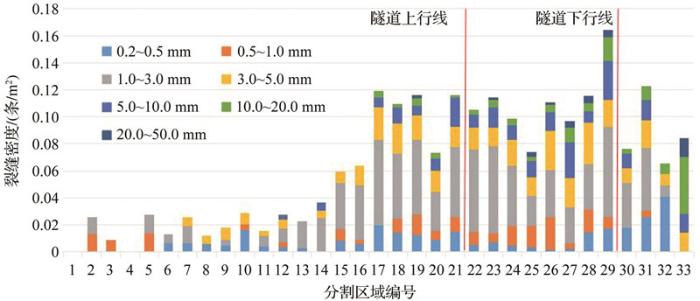
城市隧道(地铁)开挖引起的地表建筑物破坏事故频发,学术界对此开展了深入研究。但针对深埋隧道开挖是否会引起地表建筑物破坏的案例与系统研究均较少。近年来,在黄土高原西南部某隧道施工过程中,位于其上方210 m的自然村建筑物出现了多处变形和开裂等破坏现象。为探明建筑物开裂与隧道施工的相关性及建筑物开裂机理,对研究区建筑物裂缝进行了现场测绘和统计,使用高密度电法,对研究区地层结构和地下水迁移等情况进行探查。结果显示:①建筑物变形、开裂与隧道开挖呈现高度的时空一致性,裂缝主要分布在隧道中轴线3倍隧洞直径范围内;②物探结果表明,当隧道围岩稳定性较差时,深埋隧道开挖过程中的震(振)动会破坏地下岩土体原生结构,形成地下水下渗通道并引起地下水位下降。饱和黄土失水固结,在建筑物荷载作用下产生不均匀沉降,是导致地表建筑物的开裂破坏的根本原因。此外,在相同条件下,相比砖混结构建筑物,土木结构建筑物对隧道施工的响应更为强烈,发育裂缝数量更多、宽度更大。
张海峰 , 李振军 , 滕光亮 . 黄土地区深埋隧道诱发地表建筑物开裂机理研究[J]. 地球科学进展, 2025 , 40(9) : 916 -924 . DOI: 10.11867/j.issn.1001-8166.2025.071
Urban tunnel excavations have caused frequent incidents of surface building damage, attracting the interest of the academic community. However, case studies on surface building damage caused by deep tunnel excavations are lacking. Therefore, it is imperative to study the impact mechanism of deep tunnel construction on surface buildings, develop response modes, and formulate protection measures. This study examines a representative case from a village in the southwest of the Loess Plateau, where tunnel construction at 210 m depth has coincided with excessive deformations, cracks, and other damages in surface buildings. Specifically, this study explored the impact of tunnel construction on surface buildings through on-site investigations, surveying and mapping, mathematical statistics, geophysical exploration, and model analysis. The crack mapping and statistical results showed that the building deformation, cracking, and tunnel excavation exhibited high spatiotemporal consistency. Temporally, the occurrence and development of building cracks were almost synchronous with deep tunnel construction, while crack development lagged slightly. Spatially, the degree of development of building cracks, building settlement, and the displacement vector of building cracks were closely related to tunnel construction. Building cracks mainly developed within three times the diameter of the tunnel on either side of the tunnel axes in the plane. The building type had a significant impact on the response to tunnel construction: unengineered civil structures were more sensitive to tunnel construction than masonry-concrete structures and more prone to severe damage. Geophysical survey results indicated that when the surrounding rock stability was poor, the vibration during deep tunnel excavation damaged the original structure of the rock and soil mass, forming a channel for underground water infiltration and leading to a rapid drop in the groundwater table. The resulting desaturation and uneven consolidation of loess under building loads emerged as a fundamental cause of ground-surface building cracking. To avoid surface building cracking induced by deep tunnel construction, it is necessary to conduct a detailed engineering geological exploration before tunnel construction to identify the engineering geological and hydrogeological conditions, develop reasonable construction excavation and support, and develop an underground water seepage prevention plan. It is also important to conduct long-term safety monitoring of surface buildings.
| [1] | BOBYLEV N, STERLING R. Urban underground space: a growing imperative perspectives and current research in planning and design for underground space use[J]. Tunnelling and Underground Space Technology, 2016, 55: 1-4. |
| [2] | GODARD J P. Why go underground?[EB/OL]. 2002. [2025-08-01]. . |
| [3] | BOBYLEV N. Mainstreaming sustainable development into a city’s master plan: a case of urban underground space use[J]. Land Use Policy, 2009, 26(4): 1 128-1 137. |
| [4] | SHI Yujin, LI Mingguang, WU Wei, et al. Analysis of characteristics of long-term longitudinal deformation of tunnel on Shanghai metro line No.4 and its safety evaluation[J]. Tunnel Construction, 2018, 38(): 1-6. |
| 史玉金, 李明广, 吴威, 等. 上海地铁4号线隧道长期纵向变形特征分析与安全评估[J]. 隧道建设, 2018, 38(): 1-6. | |
| [5] | CHANG P S, LO W. Damage control and restoration of tunnel collapses of Kaohsiung MRT project[J]. Advanced Materials Research, 2011, 243/244/245/246/247/248/249: 5 236-5 241. |
| [6] | PINTO A, SILVA W. Examining 2007 S?o Paulo City subway line-4 construction site accident[C]// Proceedings of the 2011 IAJC-ASEE International Conference. 2008. |
| [7] | SHIN J H, LEE I K, LEE Y H, et al. Lessons from serial tunnel collapses during construction of the Seoul subway Line 5[J]. Tunnelling and Underground Space Technology, 2006, 21(3/4): 296-297. |
| [8] | VIGNA B, FIORUCCI A, BANZATO C, et al. Hypogene gypsum karst and sinkhole formation at Moncalvo (Asti, Italy)[J]. Zeitschrift Für Geomorphologie, Supplementary Issues, 2010, 54(2): 285-306. |
| [9] | PANDO L, PULGAR J A, GUTIéRREZ-CLAVEROL M. A case of man-induced ground subsidence and building settlement related to karstified gypsum (Oviedo, NW Spain)[J]. Environmental Earth Sciences, 2013, 68(2): 507-519. |
| [10] | HOU Y J, FANG Q, ZHANG D L, et al. Excavation failure due to pipeline damage during shallow tunnelling in soft ground[J]. Tunnelling and Underground Space Technology, 2015, 46: 76-84. |
| [11] | OUYANG Z H. The role of potential soil cavity on ground subsidence and collapse in coal mining area[J]. Journal of Coal Science and Engineering, 2010, 16(3): 240-245. |
| [12] | SHI H, LI Q M, ZHANG Q L, et al. Mechanism of shallow soil cave-type karst collapse induced by water inrush in underground engineering construction[J]. Journal of Performance of Constructed Facilities, 2020, 34. DOI:10.1061/(ASCE)CF.1943-5509.0001353 . |
| [13] | CAMóS C, MOLINS C. 3D analytical prediction of building damage due to ground subsidence produced by tunneling[J]. Tunnelling and Underground Space Technology, 2015, 50: 424-437. |
| [14] | LI H J, TONG L Y, LIU S Y. Multistage-based evaluation of tunnelling effects on the skin friction of adjacent building piles in layered media[J]. Structures, 2021, 32: 96-105. |
| [15] | SON M, CORDING E J. Estimation of building damage in a 3D distorting structure to tunnel and underground excavation-induced ground movements[J]. Tunnelling and Underground Space Technology, 2020, 97. DOI:10.1016/j.tust.2019.103222 . |
| [16] | LIU Zhao, GU Boyuan, SHI Baotong, et al. Research on the change of groundwater system in tunnel construction[J]. Construction Technology, 2015, 44(): 155-159. |
| 刘昭, 顾博渊, 史宝童, 等. 隧道建设对地下水系统影响研究[J]. 施工技术, 2015, 44(): 155-159. | |
| [17] | ZHENG Bangyou, LIU Jiyao, LEI Mingfeng, et al. Calculation method and engineering application of water level drawdown induced by tunnel water leakage [J]. Modern Tunnelling Technology, 2020, 57(6): 86-92. |
| 郑邦友,刘济遥,雷明锋,等. 隧道漏水诱发的地层水位降深计算方法与工程应用[J]. 现代隧道技术,2020, 57(6): 86-92. | |
| [18] | ZHANG P, CHEN R P, WU H N, et al. Ground settlement induced by tunneling crossing interface of water-bearing mixed ground: a lesson from Changsha, China[J]. Tunnelling and Underground Space Technology, 2020, 96. DOI:10.1016/j.tust.2019.103224 . |
| [19] | LIU C, SHI B, GU K, et al. Negative pore water pressure in aquitard enhances land subsidence: field, laboratory, and numerical evidence[J]. Water Resources Research, 2022, 58(1). DOI:10.1029/2021WR030085 . |
| [20] | STROZZI T, CADUFF R, WEGMüLLER U, et al. Widespread surface subsidence measured with satellite SAR interferometry in the Swiss alpine range associated with the construction of the Gotthard Base Tunnel[J]. Remote Sensing of Environment, 2017, 190: 1-12. |
| [21] | BAMLER R, HARTL P. Synthetic aperture radar interferometry[J]. Inverse Problems, 1998, 14(4). DOI:10.1088/0266-5611/14/4/001 . |
| [22] | ROSEN P A, HENSLEY S, JOUGHIN I R, et al. Synthetic aperture radar interferometry[J]. Proceedings of the IEEE, 2000, 88(3): 333-382. |
| [23] | ZANGERL C, EVANS K F, EBERHARDT E, et al. Consolidation settlements above deep tunnels in fractured crystalline rock: part 1: investigations above the Gotthard highway tunnel[J]. International Journal of Rock Mechanics and Mining Sciences, 2008, 45(8): 1 195-1 210. |
| [24] | ZANGERL C, EBERHARDT E, EVANS K F, et al. Consolidation settlements above deep tunnels in fractured crystalline rock: part 2: numerical analysis of the Gotthard highway tunnel case study[J]. International Journal of Rock Mechanics and Mining Sciences, 2008, 45(8): 1 211-1 225. |
| [25] | LIU X J, YAO Z W, WAN X Q, et al. Research on risk assessment on large deformation of loess tunnels underneath residential areas[J]. KSCE Journal of Civil Engineering, 2022, 26(6): 2 826-2 834. |
| [26] | ZHAO Y, LI P F. A statistical analysis of China’s traffic tunnel development data[J]. Engineering, 2018, 4(1): 3-5. |
| [27] | MEUNIER P, HOVIUS N, HAINES A J. Regional patterns of earthquake-triggered landslides and their relation to ground motion[J]. Geophysical Research Letters, 2007, 34(20). DOI:10.1029/2007gl031337 . |
| [28] | SANDWELL D T. Biharmonic spline interpolation of GEOS-3 and SEASAT altimeter data[J]. Geophysical Research Letters, 1987, 14(2): 139-142. |
| [29] | TANG Fuquan, BAI Feng. Calculation method of surface subsidence caused by water loss in thick loess mining area[J]. Journal of Xi’an University of Science and Technology, 2011, 31(4): 448-452. |
| 汤伏全, 白峰. 厚黄土层矿区采动失水引起的地表沉降计算方法[J]. 西安科技大学学报, 2011, 31(4): 448-452. |
/
| 〈 |
|
〉 |
 甘公网安备62010202000687